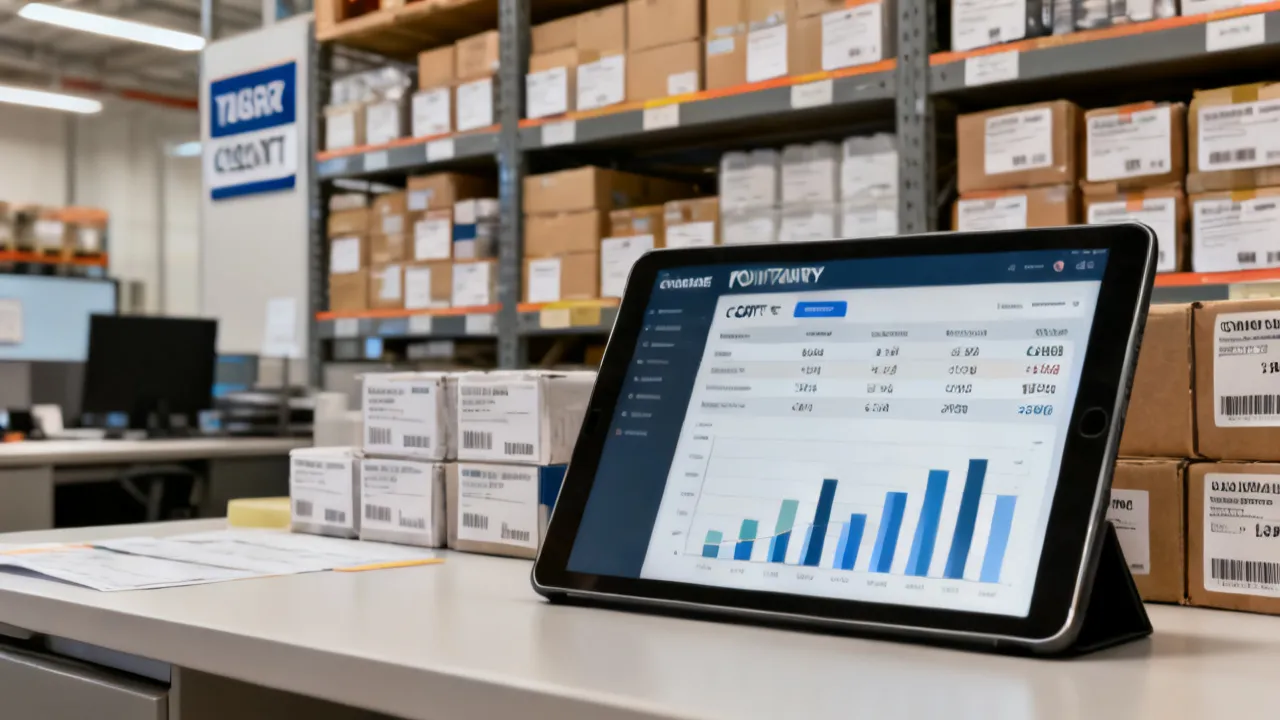
Bia Procurement Guide: Suppliers, Pricing, and Requirements
This guide explains how to evaluate Bia procurement options, compare supplier offerings, and understand pricing factors that affect total cost. Background sections clarify what “Bia” typically refers to in sourcing contexts, how buyers assess quality and continuity, and which documentation reduces risk. The article then provides objective conditions and step-by-step actions for decision-making.

Start With Bia: Use a structured supplier and pricing review
If you’re planning to procure Bia, the fastest path to a sound decision is to compare suppliers using consistent criteria—specifically product specification, quality assurance, lead times, documentation, and landed cost. In many purchasing workflows, Bia is handled as a material or component whose total cost depends on packaging, testing, logistics, and compliance requirements—not only the sticker price. This article outlines an objective, industry-style approach to help you evaluate Bia offers responsibly.
Procurement failures often don’t happen because buyers “couldn’t tell the difference” between suppliers; they happen because buyers compare offers using inconsistent assumptions. For example: Supplier A quotes a base unit price but doesn’t include pre-shipment inspection, while Supplier B includes third-party testing and correct labeling; or Supplier A ships in a packaging configuration that is technically acceptable but causes handling damage risk at the receiving dock. With Bia, those differences can compound quickly into delays, rework, rejects, or compliance exposure. A structured review process gives you a repeatable method to avoid that trap.
What “Bia” means in procurement contexts (objective background)
The term Bia can appear in sourcing documents as a product name, internal code, shorthand, or category label. Because the meaning can vary by industry and buyer-supplier agreement, professional buyers treat it as a defined procurement item rather than an ambiguous general label. In practice, you confirm “Bia” by requesting a specification sheet, technical data, intended use, and the applicable quality standard from the supplier.
From an operational standpoint, teams evaluate whether “Bia” is suitable for the receiving process, storage conditions, and downstream performance requirements. That is why reliable procurement decisions are typically grounded in documentation and verification procedures, not assumptions.
In many organizations, “Bia” may be used as a stand-in term for an item that could exist in multiple grades, formulations, or dimensional variants (depending on the sector). For example, where “Bia” is a component in manufacturing, the term might cover a family of materials that look similar at the order stage but differ in tolerance, chemical composition ranges, surface treatments, or test method requirements. In service or logistics contexts, “Bia” may refer to a service tier or bundled offering that includes different documentation deliverables and operational guarantees. Either way, procurement best practice is the same: define exactly what you are buying, then verify that what is delivered matches that definition.
Key pricing drivers for Bia (how costs are built, not guessed)
Even when two vendors quote the same “Bia,” the final price can differ due to several common cost components. To compare offers fairly, focus on landed cost and the service package included in the quote.
Before comparing unit prices, it’s useful to separate the total cost of procurement into layers:
- Ex-works or base item cost: the cost of the product itself at the supplier’s location, before logistics and additional requirements.
- Packaging and protection layer: how the item is packed, protected, labeled, and loaded to reduce damage risk and facilitate receiving.
- Verification and compliance layer: the cost of tests, COAs, SDS provision, labeling compliance, inspection service, and any documentation handling.
- Transportation and risk layer: freight charges, insurance, route selection, transit times, and any measures to reduce temperature/time sensitivity or handling loss.
- Import and regulatory layer: customs duties, tariffs, tax-related charges, and compliance paperwork where relevant.
- Commercial layer: payment terms, rush fees, and contract terms that affect total cost of ownership (TCO).
When you treat pricing as a bundle of cost drivers, it becomes easier to ask targeted questions and spot mismatches between quotes.
- Specification conformity: Higher-grade versions, tighter tolerances, and additional tests usually change pricing. A supplier offering “Bia” with a broader acceptable variance may quote lower, but you still pay the downstream cost if your application requires tighter control.
- Batch traceability: If the supplier provides lot/batch traceability, COA-style reporting, or controlled sampling, it can affect costs. Traceability is often non-negotiable in regulated environments, and a “cheap” offer without traceability can create a hidden risk premium.
- Minimum order quantity (MOQ): Unit price often depends on order size; smaller quantities may have higher per-unit pricing. Consider whether you can consolidate orders without violating shelf-life or batch compatibility constraints.
- Packaging and handling: Packaging materials, labeling, and protective measures influence shipping cost and damage risk. “Standard packaging” may not be adequate for your receiving dock conditions or storage setup.
- Testing and inspection: Pre-shipment inspection, third-party verification, or extra documentation can add expense. However, inspection can be cheaper than replacing nonconforming product after it arrives.
- Freight, insurance, and customs duties: Logistics costs frequently dominate variance between quotes. Air freight vs. sea freight can swing totals dramatically; so can route selection and handling requirements.
- Payment terms and lead time: Faster production, shorter lead times, or favorable payment terms can be priced into the offer. A “higher price but faster delivery” may still be lower total cost if it prevents production downtime.
Important note: If you are provided a specific price for Bia by a supplier, treat it as a quote valid under defined conditions. Prices can change with demand, raw-material inputs, batch characteristics, and logistical routes. For best practice, request a quotation breakdown (item cost, packaging, inspection, and freight assumptions) so comparisons stay objective.
In addition, ask whether the price is firm for a defined period (quote validity), whether it is dependent on lead time commitments, and whether the supplier reserves the right to substitute materials. A substitution clause can be acceptable in some non-critical contexts if it’s controlled via change control, but it is rarely acceptable without written approval when Bia is tied to safety, regulatory approval, or performance-critical specifications.
Supplier evaluation: what to verify before you buy Bia
Professional procurement teams evaluate suppliers using a blend of technical, operational, and compliance checks. For Bia, the goal is to confirm consistency across batches and to ensure the supplier can meet your timeline without compromising quality.
Supplier evaluation should be structured like a risk assessment. You’re not only asking “Can they deliver?” but also “Will they deliver the right thing, the same way, at the same quality level, with the documentation we need, on a schedule that supports our operations?”
1) Technical documentation and traceability
Ask for specification sheets, certificates of analysis (COA) or equivalent, and traceability records by batch/lot. A strong supplier should be able to explain manufacturing conditions and provide documentary proof of compliance with the agreed requirements.
To make traceability practical, specify what you want the supplier to provide on each shipment: lot number format, label content, COA fields, and whether records are available electronically ahead of delivery. If your organization performs root-cause analysis after a nonconformance, the traceability method is what turns an investigation from guesswork into a targeted audit.
2) Quality assurance process
Request details about incoming material checks, in-process controls, final inspection methods, and sample retention policies. This is especially relevant for items where minor variations could impact performance.
When evaluating QA processes, don’t stop at “they have a system.” Ask what they measure. For example: What parameters are tested? What are acceptance thresholds? What sampling plan is used (e.g., 100% test vs. statistical sampling)? Do they retain samples for a defined time window to resolve disputes?
3) Consistency and change control
Suppliers should have a change control process for formulation, processing steps, packaging, and supplier-of-record components. If a supplier cannot commit to controlled change notifications, you face higher variation risk.
Change control is particularly critical for items that can silently drift due to supply chain variability—such as raw material sourcing, manufacturing equipment upgrades, or new chemical suppliers used in formulation. Ask for how change requests are reviewed, who approves them, and how customers are notified. In contracts, define the required notification time and whether approval is mandatory before implementing changes.
4) Lead times and continuity planning
Verify production capacity and lead time ranges. Ask how the supplier handles disruptions, and whether they can provide safety stock or alternative sourcing options if demand or logistics changes.
Lead time evaluation should include volatility, not just averages. A supplier with a 4-week average lead time but frequent delays is operationally risky. Ask for delivery performance history and whether they can commit to a delivery window with remedies if they fail.
5) Compliance and safety documentation
Depending on your sector, you may need compliance statements for environmental, chemical, labeling, and handling requirements. Request SDS (Safety Data Sheet) where applicable and confirm labeling standards.
Beyond SDS, verify that labeling matches the jurisdiction and receiving requirements. For certain regulated markets, you may also need regulatory filings, conformity declarations, or documentation that supports your internal audit trail. If you’re importing, ensure the supplier can support the documentation required by customs and downstream compliance processes.
Where “nearby” sourcing can change your trade-offs
If your procurement intent includes nearby suppliers—whether for faster replenishment, reduced shipping exposure, or simplified coordination—the evaluation should still stay documentation-first. “Nearby” can improve responsiveness and decrease transit-related variation, but it does not replace quality verification. In many buyer cultures, especially in logistics-focused regional hubs, procurement managers may prioritize responsiveness and communication cadence. Still, they confirm technical alignment through the same specification and testing checks.
Nearby sourcing can also reduce operational complexity. For example, a supplier located closer to your facilities might allow you to:
- Conduct receiving inspections more easily (shorter turnaround to resolve discrepancies).
- Use more consistent transportation conditions, especially when time or temperature sensitivity exists.
- Reduce downtime risk if you maintain smaller inventories but require rapid replenishment.
- Improve communication speed for change control notifications and corrective actions.
However, proximity doesn’t automatically mean better quality or better documentation. A supplier can be geographically close and still provide incomplete COAs, ambiguous specifications, or inconsistent batch traceability. Therefore, include “nearby” evaluation as part of operational risk scoring rather than replacing the evidence requirements.
Comparison table: decision criteria for Bia supplier selection
| Criterion | What to ask for | Why it matters for Bia | Typical requirement / acceptance condition |
|---|---|---|---|
| Product specification | Specification sheet, part/item description, intended use | Ensures you are buying the correct procurement item | Matches your internal spec or agreed written requirements |
| Quality evidence | COA or equivalent test results; sampling plan details | Reduces risk of batch-to-batch inconsistency | Meets agreed thresholds; provides traceable lot results |
| Traceability | Lot/batch numbering approach and records | Enables investigation if issues arise | Traceable records available for each shipment |
| Lead time and reliability | Lead time range, production capacity notes, past delivery performance (qualitative) | Protects your production schedule | Lead time fits your planning window; supplier confirms feasibility in writing |
| Documentation completeness | SDS (if applicable), labeling information, compliance statements | Prevents receiving delays and regulatory gaps | All documents provided before or with shipment as agreed |
| Pricing transparency | Quote breakdown assumptions: packaging, freight, inspection, taxes/duties | Enables accurate comparison and budgeting | Landed cost comparable across vendors; quote terms clearly stated |
| Risk and contingency | Change control and disruption management approach | Limits supply shocks and specification drift | Documented change notifications and mitigation plan |
To make this table even more actionable, some buyers convert these criteria into a scorecard with weights. For instance, if Bia is performance-critical and regulated, quality evidence and documentation completeness might have the highest weight. If timing is crucial due to production scheduling, lead time reliability might carry more weight. The key is to apply the same weights to each supplier so your decision remains evidence-based.
Step-by-step guide: procurement workflow for Bia
Below is a practical, step-by-step process commonly used in professional sourcing. It assumes you are comparing multiple options and want a defensible decision.
Step 1: Define “Bia” precisely
Request the full product description, intended use, and official specification. If your team uses an internal code, map it to the supplier’s description and confirm the exact equivalence.
In this step, also define “what happens if it’s wrong.” That may include acceptance rejection criteria, maximum allowable deviation, and whether any substitution is allowed. If you don’t define that upfront, disputes later can consume time and damage supplier relationships.
Step 2: Standardize the comparison package
Ask every supplier for the same quote structure: item price, packaging description, inspection/testing included (yes/no), freight assumptions, and document list. This prevents apples-to-oranges comparisons.
Standardizing the comparison package also means standardizing the payment terms and commercial structure where possible. If Supplier A offers net-30 and Supplier B offers net-60 (or vice versa), you can adjust your evaluation for cash flow impact, but don’t ignore it. Similarly, if one supplier includes expedited manufacturing or special handling, it should be reflected in the pricing breakdown.
Step 3: Validate quality documentation
Require recent COA or equivalent test records for relevant parameters. Confirm that the sampling plan matches your risk tolerance and that the test methods are appropriate for the product.
To avoid surprises, ask whether the COA is based on the actual batch shipped or on a typical or historical average. For some products, suppliers may provide “typical values” rather than actual batch results; procurement teams should challenge that when Bia is expected to meet exact thresholds.
Step 4: Assess operational capability
Review lead time windows, production capacity statements, and whether the supplier can commit to delivery schedules in writing. For replenishment-sensitive operations, request a backorder or substitution policy.
Operational capability evaluation can include whether the supplier can support split shipments, partial deliveries, and revised schedules. If your operation cannot tolerate a full delivery delay, ensure the commercial arrangement supports partial shipment logistics (or specify alternate actions).
Step 5: Confirm compliance and labeling requirements
Where applicable, collect SDS, labeling details, storage/handling recommendations, and any regulatory declarations needed for your receiving environment.
Make sure labeling requirements aren’t treated as an afterthought. Many receiving delays come from missing labels, unclear lot numbers, or documentation delivered late (after the shipment arrives). Define when labeling and documents must be available, and whether failure triggers a hold or return.
Step 6: Calculate landed cost and total procurement cost
Include transport, inspection, documentation handling, and any special packaging or receiving requirements. If a supplier’s base price is lower but documentation or inspection costs are higher, the total cost may be unfavorable.
A practical landed cost worksheet often includes:
- Unit item cost
- Freight (incoterms-based allocation)
- Insurance (if applicable)
- Customs duties/taxes (if applicable)
- Third-party testing or inspection fees
- Special packaging or repacking fees
- Document preparation or compliance fees (if applicable)
- Expected receiving costs (e.g., inspection labor)
- Expected risk cost (optional): using a risk factor for nonconformance probability and impact
Even if you don’t fully quantify risk cost, you can still include a “risk adjustment” approach. For example, a slightly higher landed cost supplier with better traceability and documentation may be economically safer than a lower-cost supplier with higher ambiguity.
Step 7: Run a controlled pilot or first-article validation
For critical applications, start with a pilot batch. Set acceptance criteria upfront and perform receiving checks aligned with your specification.
Pilot validation should be designed like a test, not like “just trying it.” Confirm the exact parameters you will test upon receipt, who performs testing, how you handle nonconforming results, and whether the supplier pays or replaces if the pilot fails. If you are regulated, align pilot sampling with your internal validation procedures.
Step 8: Establish ongoing monitoring
After initial acceptance, define how you will review subsequent shipments: COA review cadence, random sampling, and change-control notifications.
Ongoing monitoring is where supplier relationships become measurable. A supplier that performs consistently should not require the same intensive inspection forever. But if performance issues occur, you may need to escalate sampling, require additional testing, or temporarily revert to pilot-style verification. Define escalation and de-escalation rules in the quality agreement.
Industry considerations: how experts think about supplier risk
In mature procurement programs, “cheap” is rarely the winning strategy. Experts aim for predictable quality and repeatable delivery. For Bia, the central risk is not only whether a shipment is acceptable once, but whether it remains acceptable across future lots under the same spec.
Therefore, evaluation commonly emphasizes:
- Process capability and stability: evidence that variability is controlled. Buyers often look for statistical process control (SPC) signals, trends in COA results, or historical performance data.
- Governance: documented change control and communication. Governance reduces the chance that a supplier makes a “small change” that breaks your application.
- Contract clarity: explicit acceptance criteria, remedies, and documentation timelines. Clear terms reduce the cost of disputes.
- Receiving readiness: whether your facility can verify the specification efficiently. If your receiving process can’t validate the item quickly, you may face hold-ups regardless of whether the product is correct.
Experts also consider the “failure mode” of nonconformance. Not all defects are equal. For Bia, a failure could manifest as:
- Specification noncompliance discovered at receipt (paper mismatch or actual test mismatch)
- Performance degradation discovered later in the process (harder to trace)
- Traceability gaps that block investigation and lead to extended holds
- Documentation issues that prevent use or violate internal policies
The supplier evaluation should reflect which failure modes matter most in your operation. If documentation issues can prevent use, then documentation completeness becomes a key procurement requirement even if product quality appears acceptable on initial tests.
Finally, experts assess supplier maturity: do they operate under recognized quality management principles, do they support audits, and do they show transparency when issues occur? A supplier that responds constructively to nonconformance often reduces long-term cost even if their initial price is slightly higher.
Practical checklist for your Bia purchase order
To reduce disputes and receiving delays, include clear requirements in the purchase order and receiving plan.
- Exact Bia specification reference (document version/date)
- Required test methods and acceptance thresholds
- Lot/traceability requirements
- Documentation delivery timeline
- Inspection responsibility (supplier pre-shipment vs. buyer receiving)
- Packaging and labeling standards
- Lead time commitment and delivery schedule
- Remedy terms (rework, replacement, credit) if nonconforming
- Change control notification requirements (what changes require approval)
- Nonconformance reporting and response time expectations
- Return, scrap, or disposition rules (including freight responsibilities)
- Incoterms (if logistics terms matter) and responsibilities for claims
Additionally, many procurement teams include a “documentation deliverables list” as a contract exhibit. For example: SDS version, COA format, labeling photos, packing list requirements, and batch number mapping. When documentation is standardized, receiving becomes faster and fewer shipments get held pending missing paperwork.
FAQs
What does “Bia” typically refer to when sourcing?
“Bia” often functions as a product name, category label, or internal code in procurement documents. Because usage can vary by industry, the best practice is to confirm the exact item through specification sheets, technical data, and agreed acceptance criteria.
How should I compare Bia pricing across suppliers?
Compare landed cost and quote components—item price, packaging, inspection/testing inclusions, freight assumptions, and document-related deliverables. Ask for a structured quote breakdown so differences are visible and apples-to-apples.
When comparing, pay attention to quote validity dates, incoterms, and any exclusions. A supplier may quote a lower price but exclude packaging upgrades or exclude inspection that your internal quality requirements require. If you don’t reconcile those differences, you might accidentally choose the supplier that produces the higher operational cost.
Do nearby suppliers always offer better value for Bia?
Nearby suppliers can reduce transit time and logistical uncertainty, which may lower risk and administrative friction. However, value depends on quality evidence, documentation completeness, lead-time reliability, and the total landed cost—not proximity alone.
In some contexts, nearby sourcing also reduces lead time variability. For example, if your operation is sensitive to schedule changes, a regional supplier might provide smaller but more frequent deliveries, reducing the impact of transportation delays. But even in those cases, ensure the “Bia” definition and quality evidence are consistent with your specification.
What documentation should I request for Bia before the first order?
Request a specification sheet and quality evidence such as COA or equivalent test results, plus traceability practices and any required safety/compliance documentation (for example, SDS where applicable). Confirm labeling and packaging requirements upfront.
It can also be helpful to request a sample of the packaging label format and the COA template (or an example COA). This allows your receiving team to confirm that the batch numbers and document fields match what they require operationally.
Is a pilot purchase recommended for Bia?
For critical applications or when supplier history is limited, a controlled pilot or first-article validation is strongly recommended. It allows you to confirm performance against your acceptance criteria and reduces uncertainty before scaling volumes.
Even if you’ve worked with a supplier previously, a pilot can be useful when demand or logistics changes. If you are buying a different production lot, a new packaging configuration, or a different source-of-record component, validation can prevent issues caused by change drift.
What requirements should be included in the contract or purchase order?
Include explicit specification references, acceptance thresholds, lot traceability requirements, documentation delivery timelines, inspection responsibilities, and remedy terms for nonconforming supply. Clear language reduces receiving disputes and improves accountability.
In practice, contract language can also define escalation steps for recurring issues. For example: if documentation is missing twice within a quarter, require corrective action and implement additional controls (such as pre-shipment document verification). If quality failures exceed a defined rate, trigger supplier performance review or temporary sampling escalation.
How can I reduce batch-to-batch variation risk for Bia?
Require batch traceability, confirm sampling and testing methods, and insist on change control procedures. Maintain an ongoing review process for COA or test evidence and define what triggers escalation.
Many organizations also set up “trend monitoring.” Instead of only accepting/rejecting shipments individually, they review parameter trends over time. If a parameter shifts but remains inside tolerance, the supplier can be asked to investigate and correct root causes before the shift crosses your acceptance threshold.
Sources (reliable references for procurement and supplier risk concepts)
For general best practices on supplier management, risk considerations, and purchasing governance, refer to recognized guidance from ISO and established procurement bodies, including:
- ISO 9001 (Quality management systems)—for quality assurance and process documentation principles.
- ISO 28000 (Security management)—relevant when logistics and supply chain resilience matter.
- ISO/IEC 17025 (Testing and calibration labs)—for test method credibility where applicable.
- ISM/Institute for Supply Management (procurement and supply management educational resources), where available for buyer-focused guidance.
If you tell me the industry (e.g., chemicals, manufacturing components, logistics services, or another domain) and what “Bia” stands for in your documents, I can tailor the checklist, required documents, and acceptance conditions more precisely—while keeping the evaluation objective and evidence-based.
-

A Guide to Cost-Efficient Small Electric Cars for Seniors
-
Mastering Debt Consolidation: Boost Your Credit Score and Manage Interest Rates
-
Your Guide to Loans, Credit Checks, and Interest Rates
-
Affordable Independent Living: Finding the Right Senior Housing
-
Guide to Senior Living Apartments: Affordable and Comfortable Environments