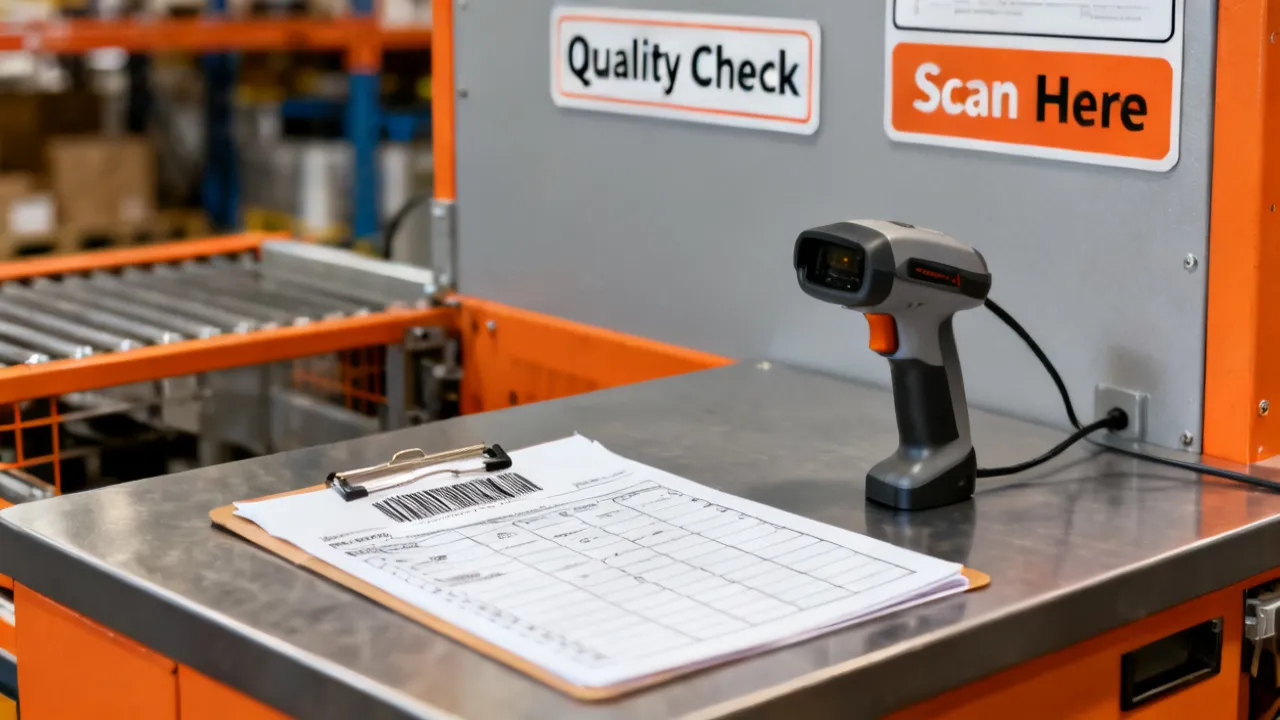
Understanding 030.929.994-28 for Sourcing and Compliance
This guide explains how 030.929.994-28 is used in sourcing, record-keeping, and supplier vetting to support compliance and traceability. Objectively, identifiers like this are commonly tied to product, batch, or regulatory documentation systems. You’ll learn practical evaluation steps, typical conditions, and FAQs to help reduce procurement risk and improve audit readiness.

Critical overview: why 030.929.994-28 matters in procurement
Identifier 030.929.994-28 is best understood as a structured reference used to connect a specific item, record, or documentation set to a sourcing decision. In day-to-day procurement, the value of an identifier isn’t in its appearance—it’s in what it reliably links: quotations, technical files, shipment documentation, and audit trails. When buyers treat 030.929.994-28 as a traceability anchor, they can evaluate suppliers more consistently, verify document alignment, and reduce the chance that a “similar” item is delivered under an incorrect reference.
Procurement failures frequently have a documentation dimension even when the physical product seems correct at first glance. For instance, a buyer may receive the intended component but lack the correct inspection evidence, certificates, or revision-level documentation required by the contract. Conversely, a supplier may provide documents for a closely related configuration, leaving the buyer unable to prove the delivered unit matches contractual requirements. In both scenarios, the underlying issue is traceability: the buyer cannot confidently connect “what was ordered” to “what was supplied.” When an identifier like 030.929.994-28 is used consistently, it becomes a bridging mechanism across systems and time, strengthening both operational control and defensibility.
To make that happen, procurement teams must treat 030.929.994-28 as more than a reference printed on a single document. The identifier should be present—and match—across the end-to-end chain: requisition, quotation, purchase order line, goods receipt, packing list, certificate of conformity, inspection/test records, and any compliance statements needed for downstream use. The more critical the downstream impact (safety, regulatory exposure, mission critical performance, or high cost of failure), the more procurement should invest in rigorous “source-to-receipt” verification anchored to 030.929.994-28.
Background context: objective role of identifiers in supplier ecosystems
Across manufacturing and B2B services, structured identifiers (often numeric) are used to support traceability and document control. While formats vary by industry and jurisdiction, the underlying logic tends to be similar: buyers need to ensure the product or record they ordered matches the product or record they received. An identifier such as 030.929.994-28 may correspond to:
- A product or part record reference used in enterprise resource planning (ERP) systems.
- A documentation index pointing to technical data, inspection results, certificates, or compliance statements.
- A batch or lot linkage so that quality outcomes can be associated with a specific production run.
- A revision-controlled configuration reference linking to drawings, specifications, software/firmware versions, or controlled technical documents.
- A contract or tender reference used to distinguish between multiple scope variants for the same basic offering.
From an objective compliance standpoint, the strongest procurement systems don’t rely on visual cues alone. Instead, they use identifiers to enforce a “source-to-receipt” logic: the same reference appears across orders, invoices, packing lists, and quality documentation. This consistency is often the difference between a clean audit trail and a confusing, time-consuming reconciliation after the fact. It is also the difference between “we believe this is correct” and “we can prove it is correct,” which matters in quality audits, customer claims, and internal governance reviews.
It’s also important to recognize that identifiers exist inside complex supplier ecosystems. Suppliers may operate with multiple internal systems—engineering change systems, quality management databases, and logistics/warehouse tracking tools—each of which may use slightly different identifiers for the same underlying object. A well-designed identifier scheme, and procurement’s disciplined use of it, helps reduce the risk that those systems drift apart. Even if 030.929.994-28 is only a key in a supplier’s internal database, buyers can still demand that the supplier uses it consistently across deliverables so the buyer’s internal systems can connect the same key across documents.
What procurement teams should do first when handling 030.929.994-28
If 030.929.994-28 appears in a quotation request, technical dossier, or supplier communication, treat it as a key that unlocks the correct documentation. The most effective approach is to verify that the identifier is consistently used in both commercial and technical records before the purchase is finalized. Procurement teams should assume that any identifier embedded in a quotation context will later become a required reference during goods receipt and quality review unless the contract states otherwise.
An industry expert would typically recommend starting with four checks:
- Reference consistency: Confirm the identifier matches across the purchase request, supplier quote, and any technical specification sheets.
- Document traceability: Ensure the identifier appears on quality documents (e.g., inspection or test records) and not only in email text.
- Scope clarity: Verify whether 030.929.994-28 relates to a product family, a specific batch/lot, or a documentation set.
- Version control: Confirm the supplier’s documentation version aligns with the order date and contract terms.
To expand these checks into practical action, procurement can add two additional early-stage controls: (1) confirm that 030.929.994-28 is entered correctly in your ERP or procurement system as a structured field (not merely typed into a description), and (2) ensure the identifier is attached to the correct line item and quantity breaks. Quantity breaks matter because suppliers may quote multiple variants or pack sizes tied to different documentation sets, and it’s easy for a single identifier to become misapplied when multiple configurations are ordered in one PO.
Finally, procurement should establish an internal decision: who is responsible for verifying the identifier mapping? In many organizations, this is shared across procurement (commercial alignment), quality/compliance (documentation and test evidence), and receiving/logistics (physical delivery documentation). When responsibilities are clear, issues are detected earlier, reducing the cost of rework and claim resolution.
Industry perspective: how expert buyers reduce procurement risk
Procurement risk often emerges at the boundary between “what was ordered” and “what was supplied.” Identifiers like 030.929.994-28 help tighten that boundary, but only if the organization uses them correctly. In practice, experienced buyers do not simply store the identifier—they operationalize it. Operationalizing means turning the identifier into a set of enforceable steps rather than leaving it as a passive reference.
Three operational behaviors are especially effective:
- Make the identifier mandatory in records: In your internal workflow, require the identifier to appear in the order line item and in the received goods confirmation.
- Use a document mapping step: Before goods arrive, map which documents should be linked to 030.929.994-28 (technical data, certificates, inspection reports). Then compare what the supplier provides.
- Perform a receipt verification: Upon delivery, confirm packaging labels, batch/lot details (if applicable), and paperwork match the same identifier.
To make these behaviors more concrete, an expert buyer will typically implement a small “pre-receipt checklist” tied directly to 030.929.994-28. For example, they might require that the supplier upload the associated certificate set into a controlled portal before shipment release, so the buyer can confirm it matches the identifier before physical goods arrive. This reduces the chance of accepting delivery based on assumed document correctness. It also creates a clear moment to raise issues—before the supplier ships and before the receiving team has to make difficult hold/release decisions.
Another expert behavior is “risk-based enforcement.” Not every purchase needs the same level of rigor. However, the decision often begins with criticality. If 030.929.994-28 relates to components that will be used in regulated environments (pressure-bearing parts, medical-related materials, aerospace components, cybersecurity-relevant software, or safety-related systems), expert buyers increase the rigor around documentary completeness and version control. Conversely, for low-risk internal consumables, the same identifier may be used simply to ensure correct item matching and to maintain basic traceability.
Supplier evaluation lens: where 030.929.994-28 appears in due diligence
Supplier qualification typically covers capability, reliability, and compliance readiness. In due diligence, references like 030.929.994-28 can indicate whether a supplier has a controlled documentation approach. However, you should evaluate the supplier’s process, not just the existence of an identifier.
Look for evidence that the supplier can:
- Produce consistent records on request (responding with the correct documentation set tied to 030.929.994-28).
- Maintain controlled revisions (clear documentation dates and version numbers).
- Support audit traceability (ability to explain how the identifier is generated and maintained).
- Demonstrate segregation of configurations (ensuring that similar products do not share documentation improperly).
- Implement change management (notifying buyers when revisions impact deliverables or acceptance criteria).
It’s also helpful to request a sample of past documentation sets tied to 030.929.994-28 for comparable work. The buyer can evaluate not only whether documents exist, but whether they are complete, internally consistent, and aligned to the procurement context. If the supplier cannot demonstrate how 030.929.994-28 is used within their internal quality system, that uncertainty should be treated as a procurement risk requiring mitigation—such as additional inspections or contractual documentation requirements.
Mitigation may include placing conditional acceptance criteria into the purchase agreement: for example, the goods may be accepted for use only after the supplier provides controlled documentation mapped to 030.929.994-28. Alternatively, the contract may require that documentation be reviewed before shipment release for certain risk categories. This approach shifts the burden away from the buyer’s ad-hoc reconciliations and toward supplier-controlled discipline.
Commercial clarity: managing pricing, scope, and deliverables
You may also see 030.929.994-28 alongside price or commercial terms. In many purchasing workflows, price is quoted per configuration, revision, or documentation scope. Therefore, pricing validity depends on whether the identifier corresponds to the same configuration the supplier intends to deliver.
To keep commercial discussions objective and auditable, ask for:
- Price breakdown alignment: Confirm the quoted price applies to the same product/document set associated with 030.929.994-28.
- Deliverable list: Identify which documents are included (and which are optional) for the identifier.
- Change notification terms: Specify what happens if the supplier changes documentation versions or related records after quotation.
- Scope boundaries: Clarify whether 030.929.994-28 includes only technical documentation, or also includes certificates, test reports, and compliance statements.
This protects both parties by ensuring there is a shared understanding of what is priced and what is delivered. From a procurement governance standpoint, it also helps avoid the “scope creep by documentation confusion” problem—where the buyer later discovers that certain required test reports were considered optional by the supplier because they were not explicitly attached to 030.929.994-28.
In practice, procurement can formalize this clarity by including a deliverables matrix in the purchase order attachments. The matrix can specify each deliverable and reference the identifier 030.929.994-28 for the related revision. Where possible, procurement should avoid “generic documents” language (“provide certificates”) without linking them to the identifier. Instead, use explicit language that ties deliverables to the reference so the supplier can’t substitute adjacent documentation sets without detection.
Comparison table: supplementing evaluation with practical requirements
The table below rephrases common “additional information” into decision-oriented requirements. It does not represent legal advice and should be adapted to your organization’s procurement and compliance policies.
| Aspect | What to check for with 030.929.994-28 | Requirement/Condition | Why it matters |
|---|---|---|---|
| Traceability linkage | Does 030.929.994-28 appear on both commercial and technical records? | Identifier must be present on PO line reference and receiving documentation. | Supports “source-to-receipt” verification. |
| Document control | Are there dates and revision identifiers tied to 030.929.994-28? | Supplier provides controlled documentation with clear revision status. | Prevents mismatches due to outdated files. |
| Scope definition | Is 030.929.994-28 a batch/lot, product family, or record index? | Supplier states the scope explicitly in writing. | Clarifies what exactly the identifier guarantees. |
| Inspection evidence | Does the supplier provide inspection/test records associated with 030.929.994-28? | Quality records provided prior to or at delivery, per contract terms. | Improves audit readiness and dispute resolution. |
| Change management | How are changes to documentation handled for 030.929.994-28? | Contractual notification before substitutions or document revisions. | Reduces risk of silent configuration drift. |
| Consistency checks | Do packing lists, serial/batch markings (if applicable), and certificates align to 030.929.994-28? | Supplier cannot mix documentation sets across deliveries. | Prevents the “paper is right, product is wrong” scenario. |
| Retrieval capability | Can the supplier retrieve the exact documentation set again later using 030.929.994-28? | Supplier demonstrates traceability retrieval process during qualification or on request. | Supports long-term audit and customer claim handling. |
Step-by-step procurement guide: using 030.929.994-28 responsibly
Below is a practical, step-by-step guide aligned to common industry controls. Adjust the level of rigor based on risk class (criticality, regulatory exposure, and downstream impact).
-
Capture the identifier correctly
Ensure 030.929.994-28 is entered as structured data in your system (not copied as free-form text only). This improves matching later during receiving. -
Request the supplier’s documentation mapping
Ask the supplier to state what 030.929.994-28 references—product family, batch/lot, or a specific documentation set—and which documents correspond to it. -
Validate revision status before purchase
Confirm that the supplier’s technical files and quality records align with the version expected for the order tied to 030.929.994-28. -
Define acceptance criteria
If receiving verification is needed, define what “pass” looks like: matching documentation, correct label details (where applicable), and correct serial/batch linkage when used. -
Perform receiving verification
At delivery, compare packing lists, certificates, and inspection records against 030.929.994-28. -
Retain records for audit
Store the identifier-linked documentation so that internal and external reviewers can trace procurement decisions without ambiguity.
To strengthen the guide, procurement can also add “pre- and post-receipt checkpoints.” Pre-receipt checkpoints focus on verifying documentation completeness before goods are released from supplier custody. Post-receipt checkpoints focus on ensuring the internal receiving records capture the same identifier and that any gaps are escalated quickly.
For example, after goods receipt, procurement can run a reconciliation step: compare the identifier tied to the PO line against the identifier printed on certificates of conformity and inspection reports. If the certificates mention a different revision or use a different identifier format, the reconciliation will flag the issue early. When the organization treats 030.929.994-28 as a key for reconciliation, the process becomes repeatable rather than reliant on individual diligence.
In addition, if your procurement system uses vendor managed inventory or blanket releases, ensure that 030.929.994-28 is preserved across multiple shipments and releases. Blanket agreements can lead to scenarios where the receiving team sees the “correct” item description but receives documents that correspond to an earlier revision. A proper reconciliation anchored to 030.929.994-28 prevents that confusion.
Conditions and requirements buyers commonly set
Because identifiers can support multiple systems, procurement contracts often clarify how references must be used. Typical conditions include:
- Document inclusion: Quality and compliance documents related to 030.929.994-28 must be provided within a specified timeframe.
- No substitution without notice: If the underlying configuration changes, the supplier must notify and provide updated documentation tied to the new reference.
- Record integrity: Suppliers should not alter document content retroactively without issuing controlled revisions.
- Defined responsibility: Buyers specify what they will validate at receiving; suppliers specify what they certify.
- Identifier labeling and marking: Where applicable, packaging or material labels should include information sufficient to align to the identifier set (e.g., batch/lot markings).
- Right to audit or request re-submittal: Procurement reserves the right to request clarification, re-submission, or additional inspection evidence if documents do not align to 030.929.994-28.
These requirements aim to make outcomes defensible during internal review or third-party audit.
It is also wise to define what happens if the identifier appears but the documents don’t match. Contracts sometimes include a clause requiring the supplier to provide an “evidence package” tied to 030.929.994-28 that proves equivalence if a change occurred. However, “equivalence” must be defined: equivalence of what criteria—performance tests, materials, tolerances, certifications, or software versions? Without clear definitions, suppliers may offer documentation that looks similar but doesn’t match the critical acceptance evidence the buyer needs.
Localization note for “nearby” sourcing decision-making
If you are assessing suppliers “nearby,” you often balance cost and lead time against documentation quality. In many regions, local logistics can reduce transit variability, which helps receiving verification—but it does not remove the need for identifier-based document control. Even for short-haul deliveries, mismatches tied to 030.929.994-28 can occur if paperwork is updated incorrectly or if multiple versions of similar items exist in the supply chain.
Local sourcing can still produce documentation risks due to business practices that differ by region. For example, some suppliers may batch production and ship under one documentation set but later update certificates as records are finalized. If the buyer relies on the identifier only as a static “label number,” they may miss that the certificate revision was updated after shipment release. This is why procurement’s emphasis on version control and revision alignment remains crucial even when lead times are short.
Moreover, regional suppliers may use different data exchange formats with customers—email attachments, portal uploads, or QR-coded packing documentation. Procurement should ensure that regardless of format, 030.929.994-28 remains consistent and machine-readable where possible. If your receiving team manually transcribes identifiers, you increase the risk of typographical errors and mismatches. Therefore, “nearby” sourcing should not mean “less documentation discipline.” It should mean faster document resolution cycles once mismatches are discovered.
FAQ: common questions about 030.929.994-28 in sourcing
1) What is 030.929.994-28 used for?
030.929.994-28 is used as an identifier to connect procurement records to the correct documentation or product reference. The exact scope (batch, family, or documentation set) must be confirmed with the supplier or specification.
2) Should I rely on the identifier alone?
No. An expert approach combines 030.929.994-28 verification with document revision checks, receiving acceptance criteria, and supplier process evaluation. If the identifier appears but revision or scope is unclear, the buyer still faces traceability risk.
3) What if the supplier provides documents that don’t mention 030.929.994-28?
That mismatch is a risk signal. Ask the supplier to clarify whether the identifier is referenced differently in their system, or request documents that explicitly map to 030.929.994-28. If the supplier claims the identifier is internal only, procurement can mitigate by requiring a mapping statement, document cover page, or cross-reference that shows how their documentation corresponds to your reference key.
4) How does this relate to pricing?
Pricing is often tied to configuration and documentation scope. You should confirm that the quoted price corresponds to the same reference and revision represented by 030.929.994-28. If price is quoted per configuration, ensure the configuration tied to the identifier is exactly the one ordered, especially when multiple revisions share similar product descriptions.
5) Is 030.929.994-28 a regulatory code?
It might be used that way in some contexts, but there’s no universal meaning. You should treat it as an internal or documentation identifier unless your supplier or governing requirements specify otherwise. Where regulatory compliance is involved, procurement should ensure that identifiers map to certified evidence required by the regulation, rather than assuming a numeric reference inherently signals regulatory compliance.
6) What evidence best demonstrates supplier compliance readiness?
Look for controlled documentation practices: revision identifiers, inspection/test evidence mapped to 030.929.994-28, and a clear explanation of how the identifier is maintained across systems. Evidence can include documented procedures, samples of prior delivery packs, and demonstrated retrieval of controlled records tied to the identifier.
7) What should be written into the contract?
Common clauses clarify deliverables, document revision expectations, substitution rules, and the identifier-based acceptance process. The goal is to ensure both parties can verify what was supplied against what was referenced by 030.929.994-28. Strong contracts specify the consequences of mismatch—rework, replacement, delayed acceptance, or other remedies—so the identifier has operational meaning.
8) Where can I find authoritative standards relevant to traceability and documentation?
Quality and documentation traceability practices are commonly aligned with established management system frameworks. For example, organizations often reference ISO 9001 for quality management principles and process control, which supports controlled documentation and traceability thinking. When your industry is regulated, additional sector-specific standards may apply.
In procurement practice, it’s often useful to translate abstract management system requirements into specific procurement controls. For instance, “document control” can translate into requirements that the supplier provide controlled revision status and that the buyer validates the revision corresponds to 030.929.994-28. “Records control” can translate into retention requirements so that audit evidence can be retrieved later. “Nonconforming product control” can translate into clear rules for how documentation mismatches are handled (hold, re-inspection, re-certification) rather than treating them as informal clerical issues.
Reliability and sourcing note
This article provides an objective procurement and compliance lens on identifiers like 030.929.994-28. It does not claim that this specific number maps to a universal category, regulatory regime, or price tier without additional context. For standards-based guidance, consult recognized frameworks such as ISO 9001 (quality management system concepts, including document control and process consistency) and any applicable sector regulations used by your organization or jurisdiction.
Because the meaning of 030.929.994-28 depends on supplier usage and internal system mapping, procurement should avoid “assuming meaning” and instead verify what the identifier points to. The discipline is consistent: treat identifiers as the bridge between systems and evidence, and demand clarity about scope, revision, and mapping. When procurement does that, the identifier becomes reliable—regardless of what the number “means” in human terms.
Closing guidance: turn 030.929.994-28 into an audit-ready workflow
When handled well, 030.929.994-28 becomes more than a number. It becomes a workflow control that links what you intend to buy to what you actually receive, supported by consistent documents and clear acceptance criteria. By implementing the step-by-step process and the conditions outlined above, procurement teams can strengthen supplier evaluation, improve traceability, and maintain credible records for internal reviews and external audits.
To make the workflow truly audit-ready, ensure that your processes create three artifacts: (1) a decision trail showing that 030.929.994-28 was verified during sourcing (reference consistency and scope clarity), (2) an evidence trail showing that the supplier provided documents tied to the same identifier and revision (document mapping and controlled revisions), and (3) an outcomes trail showing that receiving verification and acceptance criteria were met (inspection evidence and reconciliation).
Finally, treat mismatch handling as part of the workflow—not an emergency response. If a supplier sends documents that don’t align to 030.929.994-28, you should have a pre-defined escalation path: who reviews the mismatch, what evidence is requested, what the acceptance status becomes, and how the supplier corrects the record. This turns traceability from a passive promise into an operational system. In that state, 030.929.994-28 meaningfully reduces procurement risk by making “similar” not “assumed” and “documented” not “guessed.”
-

A Guide to Cost-Efficient Small Electric Cars for Seniors
-
Mastering Debt Consolidation: Boost Your Credit Score and Manage Interest Rates
-
Your Guide to Loans, Credit Checks, and Interest Rates
-
Affordable Independent Living: Finding the Right Senior Housing
-
Guide to Senior Living Apartments: Affordable and Comfortable Environments