Understanding 996⁸1298⁰⁶ Codes and Supply Decisions
This guide explains how identifiers like 996⁸1298⁰⁶ support traceability and decision-making across sourcing, inspection, and logistics workflows. Objectively, such code-like strings are commonly used in inventory control, batch/lot tracking, and quality documentation. You’ll learn how to evaluate suppliers, confirm documentation, and align internal processes with audit-ready requirements.

Key Takeaways on 996⁸1298⁰⁶ and Supplier-Driven Traceability
When you encounter identifier strings such as 996⁸1298⁰⁶, treat them as a traceability and governance signal—not merely a reference. In practical sourcing operations, these code formats often appear in systems that coordinate inventory control, quality assurance records, and logistics handoffs. A robust approach is to verify what the code maps to (batch, lot, specification revision, or internal job ID), then align it with supplier documentation, inspection checkpoints, and audit trails.
Because traceability failures can cascade into delays, returns, and rework, the very critical step is ensuring every use of 996⁸1298⁰⁶ is tied to a documented data model: who generated it, what it represents, where it is stored, and how it is validated throughout the procurement cycle.
In mature supply chain organizations, identifiers like 996⁸1298⁰⁶ are considered “governance anchors.” That means they are not interpreted casually by different departments. Instead, their meaning is defined, their representation is standardized, their capture is enforced, and their downstream usage is audited. When those disciplines are in place, the identifier becomes a stable thread that connects the supplier’s manufacturing reality to your receiving, testing, and disposition decisions.
What “996⁸1298⁰⁶” Typically Signals in Industry Workflows
Identifier strings like 996⁸1298⁰⁶ are frequently used to make complex supply chains manageable. While the exact meaning depends on the organization’s internal schema, the underlying operational purpose is usually consistent:
- Traceability: linking a product or component instance to a specific production or receiving event.
- Quality documentation: connecting tests, inspections, or compliance statements to the exact batch/lot.
- Change control: capturing versioning or revision states that affect specification adherence.
- Inventory accuracy: enabling stock reconciliation, shelf-life management, and controlled issuing.
From an industry expert perspective, the value is not the string itself, but the discipline around what the string means and how consistently it is used. If the mapping is unclear, even the very carefully designed logistics system can become unreliable. In practice, the “meaning” behind a code determines whether traceability supports decision-making or merely creates a paper trail that fails under stress.
To make this more concrete, consider typical points in a procurement workflow where such identifiers show up:
- Supplier manufacturing execution (or production tracking): where a lot, run, or production order generates a trace reference.
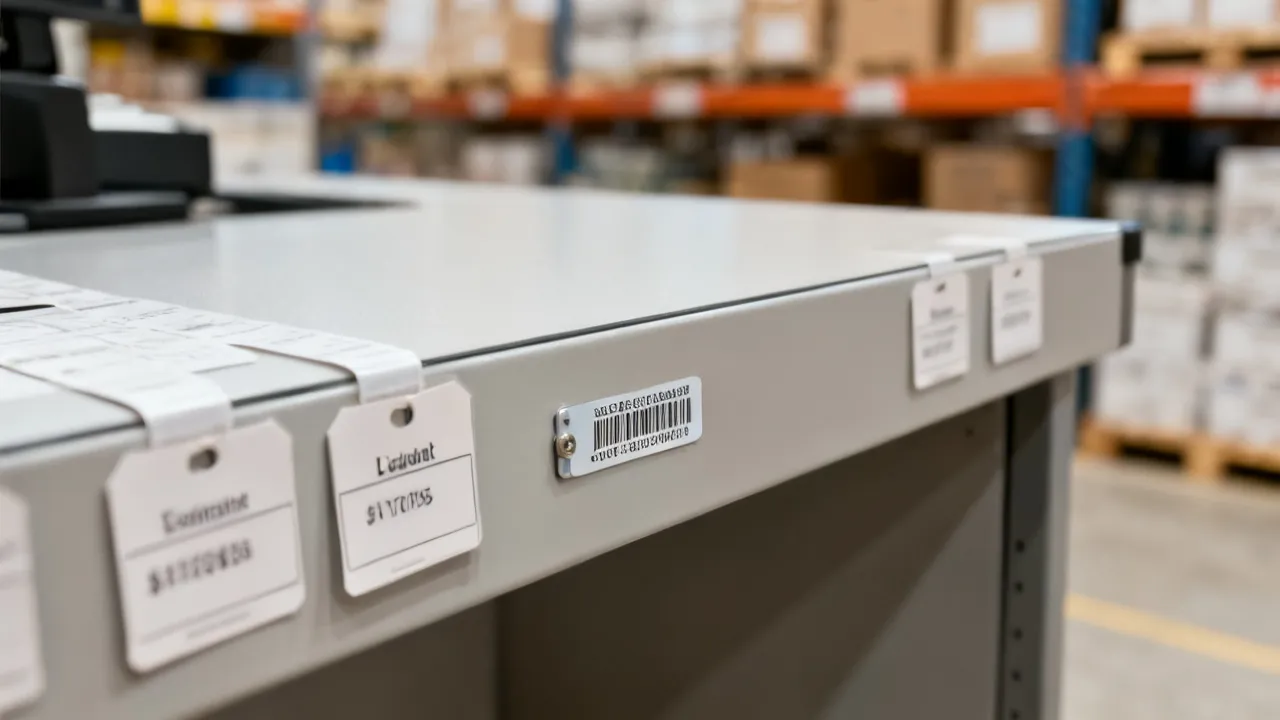
- Packaging and labeling: where the reference is physically printed or encoded on cartons, bags, or individual labels.
- Shipping/dispatch documents: where the reference is added to packing lists, advance ship notices, or shipping labels.
- Receiving processes: where the buyer captures the reference into an ERP/WMS/warehouse scanning flow and ties it to goods receipt records.
- Quarantine and QA inspection: where the reference scopes the inspection results and release/disposition outcomes.
- Inventory release into stock: where the buyer issues the goods into active inventory while preserving the trace mapping.
- Downstream usage: where the reference may carry further into work orders, maintenance records, or end-use documentation.
In many organizations, the identifier’s presence in more than one “system of record” is what elevates it from a label-level detail into a controllable governance mechanism. If it appears only in one document, it may help someone locate information later, but it does not reliably prevent incorrect actions during receipt or QA.
Why These Identifiers Matter for Supplier Decisions
In supplier selection and ongoing supplier management, identifiers like 996⁸1298⁰⁶ often become a proxy for process maturity. Strong suppliers tend to demonstrate:
- Documentation readiness: they can produce records that connect the code to production lots and inspection results.
- Controlled data entry: they avoid ad-hoc naming conventions that break audit trails.
- Consistent labeling practices: they ensure the same identifier appears across packaging, invoices, packing slips, and quality reports.
- System interoperability: they can integrate or export data to your receiving and QA workflows.
When reviewing supplier proposals or onboarding, the question to ask is straightforward: “If we had to trace a single unit from receipt back to production and forward to final use, could you support that path with the identifier 996⁸1298⁰⁶ (or its equivalent schema) without ambiguity?”
However, the “supplier decision” aspect should not be limited to yes/no compliance. Mature procurement organizations treat this as a diagnostic exercise. They ask for evidence of:
- Consistency: does the supplier use the same reference across labels, shipping docs, and certificates?
- Completeness: does the supplier provide not only the identifier but also what it represents (batch/lot, revision, production order)?
- Timeliness: can they provide supporting records when requested during nonconformance investigations?
- Scalability: can they maintain trace integrity when volume increases or product variants multiply?
- Correct handling under change: when a revision occurs, do they update identifiers and documentation in a disciplined way?
In practice, the supplier’s ability to answer these questions quickly and accurately often correlates with their operational robustness. If a supplier cannot clarify mapping for identifiers like 996⁸1298⁰⁶, it signals a risk that your own systems will not reliably support downstream quality decisions.
Critical Evaluation Criteria (Inverted Pyramid: Start With What Must Be True)
Before discussing convenience or cost, ensure the following non-negotiables are satisfied:
- Meaning is defined: establish what 996⁸1298⁰⁶ represents in your context (e.g., batch/lot, revision ID, receiving reference).
- It is captured at the right points: verify that the identifier is recorded during procurement, goods receipt, QA inspection, and dispatch (as applicable).
- It is consistent across documents: confirm it appears on packing slips, certificates/inspection reports, and any downstream paperwork.
- It is validated: define how your team checks that the identifier matches the physical goods and the expected documentation.
Only after these are addressed should you optimize lead times, warehouse processes, or procurement terms.
One way to understand this inverted pyramid is to treat traceability as “truth management.” If the identifier is not truthful—meaning it is not linked to a specific evidence chain—then no amount of process speed can compensate. In many organizations, the biggest cost events arise not at the moment of purchase but later during investigations, customer complaints, or regulatory inquiries. Those events expose whether the identifier supports real causal reasoning (“what was tested and released?”) rather than superficial referencing (“what label did it have?”).
Therefore, evaluation criteria must include verification of the evidence chain. For example:
- When 996⁸1298⁰⁶ appears on a certificate, does the certificate specify tests performed for that same identifier?
- When a lot is split, does the identifier remain consistent or does the supplier generate sub-identifiers? If so, how are those represented?
- When goods are reworked, does the supplier generate updated trace identifiers or annotate the existing ones in a controlled manner?
- When a revision changes, does 996⁸1298⁰⁶ encode the revision or does it point to a revision record stored separately?
How to Integrate 996⁸1298⁰⁶ Into Traceability and Quality Systems
Industry practice generally treats these identifiers as the “key” that links records stored across multiple functions. Here’s the practical way experts often design it:
- Data model alignment: create fields that separate “identifier value” from “identifier meaning” (so the same string can map to different contexts if needed).
- Receiving workflow mapping: at goods receipt, record the identifier in your ERP/WMS/QA tools before items leave quarantine.
- Inspection linkages: attach test results and inspection outcomes to the same identifier to preserve causality (“what was tested” → “what was released”).
- Corrective action trace: when nonconformities occur, use the identifier to scope affected units and expedite containment.
This design pattern supports internal audit readiness and reduces disputes with suppliers because it narrows disagreement to an evidence-based question: does the documentation and labeling correspond to the identifier instance?
To strengthen this approach, it helps to adopt a “single source of mapping” philosophy. Even if multiple systems store data, there should be a controlled set of rules and relationships that define how identifier values map to product, lot, revision, and disposition states. Without that, teams often create inconsistent interpretations in different tools—leading to the classic scenario where the warehouse “thinks” identifier A refers to one lot, QA “thinks” it refers to another, and procurement “thinks” it refers to a supplier order line.
In robust implementations, the identifier governance design often includes:
- Explicit relationship tables: a defined table that links identifier values to product records, production runs, and documentation references.
- Disambiguation rules: if 996⁸1298⁰⁶ can appear in multiple contexts, your model clarifies which context it belongs to (e.g., supplier lot vs. internal receipt lot).
- Data validation constraints: checks to prevent invalid or malformed identifier entries from reaching active workflows.
- Immutable audit logging: changes to identifier mapping must be recorded with timestamps and user approvals.
- Versioned schemas for meaning: if the organizational meaning definition changes over time, the schema keeps a record of what the meaning was when the identifier was captured.
Another important integration consideration is how your system handles exceptions. For example, if the supplier prints 996⁸1298⁰⁶ on packaging but QA discovers a mismatch against incoming inventory records, your workflow must specify:
- Whether QA can accept “identifier variance” with approval.
- Whether relabeling is permitted and under whose authority.
- Whether re-testing is required after relabeling.
- Whether the original identifier remains tied to the physical lot for audit evidence or is superseded.
Supplier Documentation: What You Should Require
Even without knowing a supplier’s internal code logic, you can demand clarity in deliverables. For identifiers like 996⁸1298⁰⁶, the documentation should make traceability verifiable. Common requirements include:
- Batch/lot or equivalent trace reference: whatever the identifier represents, it must correspond to production/lot governance.
- Quality evidence: inspection results, certificates, or test reports that reference the identifier.
- Packaging and labeling policy: confirmation that the identifier appears on relevant labels or packing components.
- Change-control notes (when applicable): if the identifier encodes a revision, include a description of what changed and why.
From an operations standpoint, the very helpful documents are those that are machine-readable or consistently formatted so your team can validate them quickly at receiving.
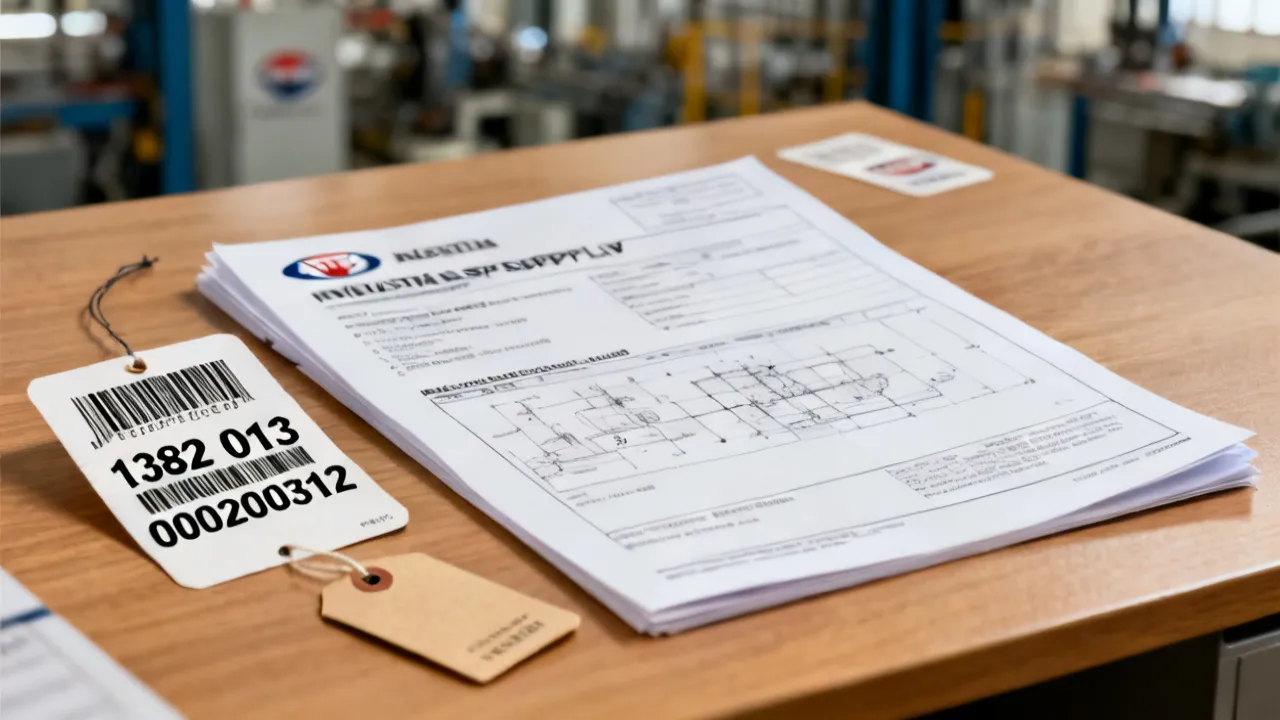
To make “verifiable” concrete, many buyer organizations require a minimal documentation package for each shipment or each lot group. A good package may include:
- Certificate of conformity or inspection summary referencing 996⁸1298⁰⁶.
- Batch/lot certificate that includes production date/time (or window), batch size, and identifying references.
- Test report attachments listing test methods, acceptance criteria, measured values, and pass/fail results tied to the identifier.
- Labeling diagram (or specification) that shows where the identifier appears physically on cartons or units.
- Revision/change record where applicable, linking specification revision to the identifier’s context.
When the supplier documentation references 996⁸1298⁰⁶ but does not explain what it corresponds to (batch vs. revision vs. receiving reference), buyers often face downstream disputes. Those disputes can be costly because during a nonconformance investigation, teams must determine which evidence is relevant. The best practice is to require both the identifier and a short descriptive mapping of what it means.
Additionally, consider whether the supplier’s documentation includes:
- Document control metadata: issue date, revision level, document ID, and authorized signatory or system attestation.
- Consistency of formatting: if the supplier’s certificates vary wildly between shipments, receiving validation becomes unreliable and labor-intensive.
- Electronic signature or attestation: in environments where audit readiness matters, stronger evidence integrity reduces the time and effort needed to validate authenticity.
Commercial Considerations: Price, Costs, and Process Efficiency
While the prompt does not provide explicit price figures or named supplier entities, the procurement reality is clear: traceability identifiers like 996⁸1298⁰⁶ affect total cost of ownership. The “price” you pay is rarely the full picture; your overall expenses can shift due to:
- Receiving time: faster verification reduces dock-to-stock delays.
- Rework and returns: clearer documentation reduces the probability of shipping the wrong lot or failing release checks.
- Audit overhead: consistent identifiers reduce time spent reconciling mismatched paperwork.
- Risk exposure: better traceability lowers the burden of containment during nonconforming events.
Industry guidance emphasizes that supply chain risk management and quality systems are cost reducers over time, not only overhead generators. For broader context on quality management and audit practices, ISO frameworks (where applicable) are widely referenced by manufacturers and distributors worldwide.
It can be useful to translate traceability discipline into “economic terms” that procurement and finance teams understand:
- Cost of nonconformance: wrong-lot shipments, failed inspections, or missing documentation often produce direct costs (rework, replacement) and indirect costs (line stoppages, expedited shipping).
- Cost of investigation: if the identifier mapping is unclear, investigations become slower and involve multiple teams.
- Cost of inventory risk: poor traceability can require larger quarantine buffers or longer hold times “just in case.”
- Cost of customer exposure: inadequate traceability can increase the scope of customer returns or recalls.
- Cost of compliance: audit readiness and evidence integrity can reduce the time spent responding to audit findings or corrective action requests.
In many procurement organizations, supplier scoring systems incorporate traceability and documentation maturity as a component of total cost. A supplier with slightly higher unit price may still win if it reduces nonconformance rates, reduces quarantine time, and improves documentation quality—especially when the identifier like 996⁸1298⁰⁶ is reliably included and validated.
Furthermore, traceability discipline often improves operational planning. For example, if inventory managers can confidently manage shelf life and expiry windows based on lot-level identifiers, they can reduce write-offs. That is particularly important for items where expiry drives cost—chemicals, consumables, medical-adjacent products, and certain regulated components.
Operational Risks When Identifiers Are Missing or Inconsistent
If 996⁸1298⁰⁶ (or its equivalent) cannot be consistently tracked, organizations often encounter repeat problems:
- Misalignment at receiving: the physical goods do not match the documentation references.
- QA release delays: quarantine cannot be lifted because inspection results cannot be confidently attached.
- Supplier disputes: disagreements become evidence-based only if the identifier is present across all artifacts.
- Downstream recall complexity: scope expands when traceability granularity collapses.
Experts commonly mitigate this by enforcing controlled labeling, strict acceptance criteria, and a single source of truth for identifier mappings.
It is also useful to describe the “failure modes” that typically occur when identifiers are inconsistent. For instance:
- Failure mode 1: Missing identifier value — the label lacks 996⁸1298⁰⁶, but the certificate includes it. Receiving teams cannot associate physical units to evidence records, leading to hold/retest.
- Failure mode 2: Identifier appears but means different things — the supplier uses it as a production run reference, but your systems treat it as a lot. The mismatch creates confusion and can invalidate the evidence chain.
- Failure mode 3: Identifier formatting differs — leading zeros, special characters, or encoding rules differ between label printing and certificate formatting. The mapping fails due to data entry constraints.
- Failure mode 4: Identifier split across multiple sub-lots — one shipment may include multiple lots; the packaging uses one identifier, while the certificate uses another, or vice versa. Without clear scoping rules, QA may test only a portion of the shipment.
- Failure mode 5: Identifier captured too late — if you only capture 996⁸1298⁰⁶ after QA release, you lose the ability to prove what was tested, which can undermine audit readiness.
In high-reliability environments, these failure modes are addressed through preventive controls: standardized label templates, supplier packaging requirements, receiving scanning automation, and reconciliation workflows that require explicit approvals for exceptions.
Another risk category is data integrity risk. Even when a supplier includes 996⁸1298⁰⁶, if the receiving system accepts manual entry without validation, typos or formatting errors can enter the dataset. That creates “false traceability,” where the system believes it has traceability but the evidence chain is broken. Therefore, validation should include:
- format checking (allowed characters, length, structure)
- cross-field consistency checks (e.g., supplier order line, item number, batch date)
- physical-to-document verification (scan label and compare to certificate line item)
- exception logging when checks fail
Comparison Table: Identifier-Driven Supply Chain Handling (No Links)
| Aspect | Strong Practice Using Identifiers (e.g., 996⁸1298⁰⁶) | Weak Practice Without Clear Mapping |
|---|---|---|
| Definition of the code | Documented meaning (batch/lot, revision, or receiving reference) tied to your internal schema | Code treated as “just a reference,” causing ambiguity during audits or investigations |
| Where it appears | Consistent use across labels, packing slips, QA records, and ERP/WMS entries | Present in some documents but missing in others, requiring manual reconciliation |
| Validation at receiving | Formal checks confirm physical labeling matches documentation and expected records | Validation is informal or delayed, increasing quarantine duration |
| Quality evidence linkage | Tests and inspections reference the identifier instance for audit-ready traceability | Quality data stored separately, making it difficult to prove which lot was tested |
| Corrective actions | Containment and CAPA actions use the identifier to scope affected units precisely | Containment scope expands due to unclear trace granularity |
| Supplier collaboration | Clear onboarding and shared mapping expectations reduce recurring errors | Frequent rework because parties interpret the identifier differently |
Step-by-Step Guide: Implementing 996⁸1298⁰⁶ Governance in Your Process
- Capture the identifier instance at first contact: When receiving goods or initiating QA, record 996⁸1298⁰⁶ exactly as provided in the supplier documentation.
- Define what it represents: Confirm with your internal stakeholders whether it denotes batch/lot, revision state, or another reference type.
- Map it to your data model: Store the identifier in a dedicated field, and separately store the “meaning” and the related attributes (e.g., product, spec, date).
- Validate across documents: Check packing slip, invoice line references, and QA documentation. The goal is consistency—not interpretation.
- Attach QA results before release: Any inspection outcome must be linked to the same identifier instance used at receiving.
- Establish exception handling rules: If the identifier mismatches expected records, define who approves release, re-labeling, or returns.
- Audit periodically: Sample multiple receipts and verify that traceability from receipt to disposition remains intact.
- Communicate supplier expectations: Provide onboarding notes that explain where the identifier must appear and what format is required.
To extend this step-by-step approach into something you can operationalize quickly, consider adding practical sub-steps that reduce error rates:
- Define a “receiving validation checklist”: a short, repeatable set of checks that receiving staff perform every time. The checklist can include: scan label → compare to packing slip line → compare to certificate reference → verify item number match.
- Define “identifier acceptance criteria”: decide what constitutes an acceptable match (exact character match vs. normalized formatting). If you allow normalization (such as removing hyphens), document it and apply it consistently.
- Define the granularity of traceability: determine whether 996⁸1298⁰⁶ traces to individual units, cartons, pallets, or lot groups. The granularity affects how QA plans inspections and how warehouses manage split shipments.
- Define “data retention rules”: specify how long supplier certificates and inspection records tied to 996⁸1298⁰⁶ must be retained. Retention policies often need to satisfy internal audit cycles or regulatory requirements.
- Define the escalation path: if mismatch occurs, define the timeline and roles: who investigates, who contacts supplier, and who authorizes containment actions.
Another useful practice is to create a mapping worksheet during onboarding. Even if your systems already have fields for lots and revisions, you may need a temporary crosswalk document for supplier-specific codes. That worksheet should record:
- the supplier’s identifier value (996⁸1298⁰⁶ as provided)
- what it means (batch/lot/revision/production order)
- the relationship to your internal item/part number
- where it appears (label, certificate, packing slip)
- any formatting rules
- example shipments for validation
Conditions and Requirements (Operational Readiness Checklist)
- Documented identifier meaning: your team must agree internally on the interpretation of 996⁸1298⁰⁶.
- Controlled labeling policy: physical packaging must carry the identifier in the defined location and format.
- Receiving SOP alignment: the identifier must be captured before items enter active inventory rotation.
- QA integration: inspection records must reference the same identifier instance to maintain causality.
- Audit evidence retention: retain records long enough for internal review and any compliance requirements.
To make this checklist actionable, you can translate each item into a “proof of compliance” expectation:
- Meaning defined: a controlled document (SOP, data dictionary, or governance guide) that states what 996⁸1298⁰⁶ maps to.
- Labeling policy: a label mock-up or printing specification with dimensions, placement, and allowed character set.
- Receiving SOP alignment: a screenshot or process diagram showing the scan/capture step prior to release to stock.
- QA integration: a configured QA test plan template that includes the identifier field and enforces linkage.
- Evidence retention: a retention schedule and verification that the system retains certificates and inspection results tied to the identifier.
In other words, readiness is not just “we intend to do it.” Readiness is “we can show that we did it, repeatedly, correctly.” Traceability governance should be demonstrable.
Industry Context: Traceability, Quality Management, and Evidence-Based Control
Traceability in supply chains is commonly associated with quality management systems and risk-based approaches. Globally recognized frameworks, including ISO quality management principles and widely adopted auditing practices, emphasize documentation control, evidence integrity, and consistent process execution.
To ground this in reliable references: the ISO 9000 family explains concepts such as quality management and process management, while ISO 19011 provides guidance on auditing management systems. Additionally, many organizations align with regulatory or customer-driven requirements that mandate batch-level traceability, especially in manufacturing and regulated logistics environments. These frameworks do not guarantee outcomes on their own; rather, they give structure to the way identifiers like 996⁸1298⁰⁶ are governed.
Reliable sources: ISO/TC 176 (Quality management and quality assurance) documentation for ISO 9000 family concepts; ISO 19011 for auditing guidance.
To connect the industry context to the identifier-specific guidance, consider how these frameworks typically translate into practical expectations:
- Process approach: the identifier capture is part of a process, not a one-off action. That means you define inputs, outputs, roles, and controls.
- Documented information control: the definition of the identifier meaning is controlled; updates require approval.
- Competence and awareness: receiving and QA teams are trained to validate identifiers correctly and to apply exception procedures consistently.
- Risk-based thinking: you consider the consequences of identifier failure and apply stronger controls where risk is higher.
- Auditing: internal audits verify that the identifier governance actually works in practice, not just on paper.
Under these principles, an identifier like 996⁸1298⁰⁶ is treated as part of the “evidence fabric” of quality management. When you can consistently trace and retrieve evidence tied to the identifier, you reduce the probability of incorrect decisions and increase confidence during audits and customer inquiries.
Supplier-Driven Traceability: Making It a Shared System, Not a Buyer Burden
One reason supplier-driven traceability matters is that the source of truth often begins at the supplier’s manufacturing line. Your organization may create receiving records and QA dispositions, but the supplier’s ability to label, record, and preserve evidence determines whether you can achieve real traceability end-to-end.
Effective supplier-driven traceability programs typically involve:
- Clear specifications: where 996⁸1298⁰⁶ appears and what it refers to.
- Shared templates: common label formats, certificate structures, and data field definitions.
- Joint onboarding and validation: test shipments where both parties validate mapping and evidence linkage before full production.
- Feedback loops: when exceptions occur, suppliers receive actionable details: mismatch type, expected mapping, and how to correct in next shipment.
- Continuous improvement: supplier performance trends (documentation accuracy, inspection pass rates, rework rates) are reviewed periodically.
This shared approach reduces the buyer’s burden. Without supplier collaboration, your team may end up doing manual reconciliation, which increases labor and still risks errors. In contrast, when suppliers treat the identifier governance as part of their own quality management system, the buyer benefits from higher reliability.
From a governance perspective, supplier-driven traceability should include a “contractual clarity” layer. Even if the identifier mapping is understood informally between people, you want it codified in procurement requirements. That can include:
- purchase order clauses specifying required labeling and certificate fields
- inspection and sampling plans tied to identifier granularity
- document submission deadlines and preferred formats
- rules for rework, splitting, or re-labeling events
- requirements for notifying the buyer when traceability identifiers change due to process revisions
These measures prevent the common issue where suppliers change internal processes but do not update external label/certificate behavior—leading to mismatched identifiers like 996⁸1298⁰⁶ showing up in a different context than the buyer expects.
Deep Dive: Designing the Data Model Behind 996⁸1298⁰⁶
When organizations say “we store the identifier,” the next question is usually: how do we store it? Strong governance designs separate the identifier value from its meaning and preserve the context in which it was created.
A robust data model for 996⁸1298⁰⁶ typically includes the following conceptual entities:
- Identifier Instance: the exact value as received from the supplier (including formatting as captured). Example: the exact string 996⁸1298⁰⁶.
- Identifier Type or Meaning: what the instance represents (batch/lot, revision ID, production order). This should not be inferred from the format alone unless your organization has a proven pattern.
- Evidence Records: inspection results, certificates, tests, acceptance criteria, and any nonconformance/corrective actions.
- Disposition Events: quarantine start, release authorization, rejection, return shipment, rework completion, and final disposition.
- Product and Specification Context: the part number or product, the relevant specification revision, and any change-control linkage.
- Time and Trace Path Metadata: timestamps of capture, receiving location, QA inspector, and system user identity.
In many systems, it is possible to store the same identifier value in multiple contexts. For example, a supplier might use 996⁸1298⁰⁶ as both a lot reference and a sub-batch reference depending on how production splits. If your data model does not store “meaning” explicitly, you risk incorrectly linking evidence.
Therefore, consider structuring fields so that the same string can appear as different meaning types without breaking validation. This is especially important if you expect multiple product categories or multiple suppliers to use similar-looking codes. You want your system to treat meaning as a first-class attribute.
Additional data model rules that often improve traceability reliability include:
- Uniqueness constraints: decide whether the identifier value should be unique per supplier per time period or per product.
- Normalization rules: decide whether to store the raw string and a normalized representation (e.g., trimmed whitespace, standardized character set).
- Foreign key relationships: ensure evidence records reference the identifier instance record, not just a free-text field.
- Validation on write: when receiving captures 996⁸1298⁰⁶, the system validates existence or required fields (supplier, lot meaning, item number).
- Audit trail immutability: mapping corrections should be logged with approvals rather than silently overwritten.
All of these choices help prevent the scenario where a supplier’s identifier appears to be captured correctly but evidence linkage fails because the data model assumed a different meaning than the one provided by the supplier.
Practical Validation: How Receiving and QA Should Verify 996⁸1298⁰⁶
Validation is where traceability either becomes trustworthy or remains superficial. “Validation” should be procedural and repeatable.
At goods receipt, a receiving team typically performs checks in the following order:
- Physical scan or label verification: confirm that each relevant packaging unit includes 996⁸1298⁰⁶ (or a clearly defined mapping variant).
- Document match: compare the scanned value against the packing list and receiving documentation.
- Item/part number match: confirm that the label’s associated part number matches the purchase order line.
- Certificate reference match: ensure the supplier certificate references the same identifier instance and that the certificate corresponds to the same product context.
- Quarantine logic: if QA requires release before inventory movement, ensure the identifier is captured before any transition out of quarantine.
Then QA validation typically includes:
- Test plan alignment: confirm that tests planned are appropriate to the product and specification revision tied to the identifier meaning.
- Evidence linkage: ensure measured results attach to the identifier instance (not to a general lot without identifier specificity).
- Disposition decision: release or reject based on the linked evidence record for the identifier.
- Nonconformance handling: if failures occur, open nonconformance records that scope affected units by the identifier instance.
In well-governed environments, receiving and QA validation reduces both types of risk:
- Risk A: Wrong evidence attached to the wrong lot (false linkage)
- Risk B: Correct evidence not attached to inventory disposition (broken linkage)
To address these risks, teams often use controlled workflows with forced steps in the user interface. For example, a system may require that 996⁸1298⁰⁶ is entered via scan before the QA test record can be created. The system can also require a certificate attachment or a certificate reference number before releasing to inventory.
Exception Handling: When 996⁸1298⁰⁶ Doesn’t Match
Even with strong onboarding, exceptions happen. The goal is to handle exceptions without destroying auditability.
Common exception scenarios include:
- Mismatch between label and packing slip: the physical packaging shows 996⁸1298⁰⁶, but the packing slip lists a different value.
- Mismatch between packing slip and certificate: the certificate references 996⁸1298⁰⁶ but the packing slip uses another identifier.
- Missing identifier on one artifact: the certificate includes it, but labels do not.
- Formatting differences: e.g., missing special characters, different character casing, or spacing differences.
- Split shipments: one carton has a sub-lot code; the certificate might group them under a parent lot reference.
Your exception handling rules should address:
- Containment: keep affected goods in quarantine until traceability is resolved.
- Investigation: determine whether the supplier mislabeled, whether documentation is wrong, or whether receiving captured the wrong field.
- Relabeling policy: if relabeling is allowed, specify the process, who performs it, and how evidence is updated. Relabeling should not erase the original evidence trail; instead it should annotate it.
- Approval workflow: define who can approve release under exception (usually with higher scrutiny).
- Supplier communication: notify supplier with specifics and require correction for future shipments.
A key audit concept is that exception handling must preserve the link between evidence and identifier instances. If a team corrects data by overwriting 996⁸1298⁰⁶ in the system without annotation, you risk losing the original trace context.
Audit Readiness: Proving Traceability Using 996⁸1298⁰⁶
Audit readiness is often tested during stress, not during routine operations. A good way to prepare is to ensure you can produce a “traceability narrative” for any identifier instance.
For a given 996⁸1298⁰⁶, an audit-ready traceability narrative typically includes:
- Receiving record: when the goods were received, where they were stored, and how 996⁸1298⁰⁶ was captured.
- QA records: which tests were performed, acceptance criteria, results, and disposition (pass/fail/release).
- Supplier documents: the certificate and/or inspection reports referencing 996⁸1298⁰⁶.
- Inventory movement: how the goods moved from quarantine to active inventory, and any splits/merges.
- Downstream usage: if needed, evidence of where the goods were used or shipped onward (work orders, dispatch records).
- Exceptions (if any): documented deviations, approvals, corrective actions, and resulting evidence updates.
When this narrative can be generated quickly and consistently, audits become procedural rather than disruptive. This is one reason strong governance around identifier mapping provides ROI beyond the operational day-to-day.
To build audit readiness, many organizations perform periodic “traceability drills,” where they pick random identifier instances like 996⁸1298⁰⁶ from recent receipts and verify that the evidence chain is complete. If the chain breaks, teams fix the root cause (labeling, receiving capture, QA linking, or document retention) rather than applying one-off manual corrections.
Frequently Asked Questions (FAQs)
Q1: What does 996⁸1298⁰⁶ mean?
996⁸1298⁰⁶ is an identifier string whose meaning is determined by the organization that generated or standardized it. In supply chain practice, similar codes usually relate to traceability such as batch/lot, production reference, or revision state. The decisive step is confirming the internal mapping in your data model and supplier documentation.
Q2: Why do suppliers include code-like strings instead of plain text descriptions?
Code-like strings often enable more precise automation and data integrity. They reduce ambiguity, support structured databases, and help connect physical items to digital records—especially when many product variants and production runs exist.
Q3: How do I verify the identifier at goods receipt?
Use a checklist-based validation: confirm the identifier appears on the packing slip and labels; verify it matches the relevant invoice line or receiving reference; and ensure your QA system records the same value before release decisions. If there is any mismatch, follow your defined exception workflow (quarantine, investigation, or return).
Q4: What should I do if the supplier documentation uses a different identifier than 996⁸1298⁰⁶?
Do not assume equivalence. Ask the supplier to clarify the mapping: whether the identifier is a sub-reference, a revision code, or a different stage reference. Your goal is a documented crosswalk that ties both identifiers to the same batch/lot evidence chain.
Q5: Does using identifiers reduce costs?
It can, primarily by reducing rework, shortening investigation time, improving audit readiness, and preventing incorrect lot handling. However, the cost benefit depends on disciplined implementation—especially consistent labeling, validation at receiving, and QA linkage.
Q6: Are there risks in relying on only one document that includes the code?
Yes. Traceability should be corroborated across artifacts. If the code appears only on one document, it becomes difficult to prove which physical units were inspected or released. Top practice is to ensure consistent use across labels, shipping documents, and QA records.
Q7: Can we implement this without replacing our entire ERP/WMS?
Often yes. Many organizations start by adding an identifier field, configuring receiving to capture it, and updating QA workflows to link inspections to that field. Full system modernization is not always required to achieve audit-ready traceability.
Q8: Is this guidance location-specific?
The operational principles are broadly applicable. If you work across regions, you should ensure the identifier governance aligns with your local receiving and documentation norms. (If any location keywords were present in your inputs, they would be handled as “nearby” as required.)
Conclusion: Treat 996⁸1298⁰⁶ as a Governance Anchor
Identifier strings like 996⁸1298⁰⁶ often function as the backbone of traceability. The professional approach is to govern them: define meaning, enforce consistent capture, validate across documentation, and link quality evidence to the exact identifier instance used at receiving. When you build that discipline into supplier onboarding and internal SOPs, you reduce operational uncertainty and strengthen auditability—without relying on guesswork or informal interpretation.
If you share the context for 996⁸1298⁰⁶ (for example, whether it’s a lot code, revision ID, or receiving reference), I can help you tailor the mapping fields, receiving validation rules, and QA linkage structure to your specific workflow.
-

A Guide to Cost-Efficient Small Electric Cars for Seniors
-
Mastering Debt Consolidation: Boost Your Credit Score and Manage Interest Rates
-
Your Guide to Loans, Credit Checks, and Interest Rates
-
Affordable Independent Living: Finding the Right Senior Housing
-
Guide to Senior Living Apartments: Affordable and Comfortable Environments