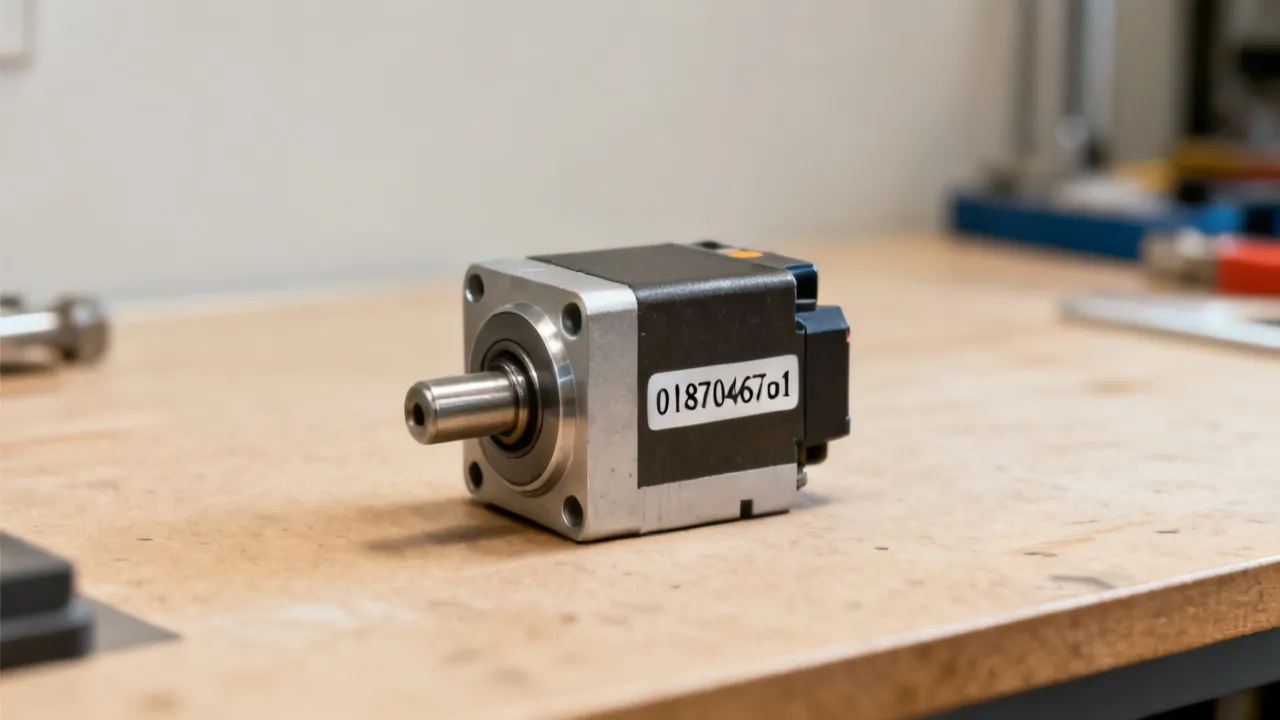
A Scholarly Guide to 19655 Product Insights
This guide analyzes the “19655” product reference and related procurement considerations, focusing on how buyers evaluate sourcing quality, compliance, and total cost of ownership. Objectively, the term “19655” is treated as a catalog or internal identifier, while supplier details and price context help stakeholders compare availability, consistency, and documentation requirements.

Critical takeaways for evaluating “19655”
When you encounter the reference “19655,” treat it as a product identifier that must be validated against official documentation before purchase. In procurement and quality assurance, the most important “buying question” is not merely price, but whether the supplier can consistently provide the correct specification, the right traceability materials, and service terms that match your intended use. This is the essence of buying responsibly: right item, right documentation, right lead time reduces downstream risk and helps avoid costly rework, downtime, and compliance gaps.
Because “19655” is presented here without an explicit product category, the safest approach is to treat it like any catalog code: verify what it maps to (for example, a model, variant, version, standard, or configuration) and then compare offers based on verifiable attributes. A buyer who only compares SKU and unit cost without confirming specification alignment is essentially accepting ambiguity as “good enough,” which often leads to mismatches. In contrast, a buyer who confirms the code-to-spec mapping first can compare suppliers on a fair basis and confidently negotiate terms.
In addition, “supplier details” should be assessed in terms of their ability to support compliance and continuity. If your organization requires batch/lot records, warranty documents, documented handling conditions, certificates of conformity, or evidence of manufacturing controls, you should expect the supplier to provide these materials reliably and promptly. The supplier’s readiness to provide documentation is often the clearest signal that they can support repeat purchases without substitutions or silent configuration drift.
Industry context: how product codes like “19655” function
In many industries—manufacturing, logistics, distribution, procurement management, and regulated markets—numbers such as “19655” often serve as internal catalog IDs, SKUs, or variant codes. They allow buyers to order the same item repeatedly with minimal ambiguity. However, product codes can become ambiguous across suppliers if naming conventions differ. A code that is clear within one manufacturer’s system may represent something different—or may map to a different internal revision—under another supplier’s catalog.
Therefore, the buyer’s job is to confirm the mapping and evaluate the offer against requirements. Typically, that means verifying:
- Specification match: dimensions, material grade, performance limits, model version, compatibility requirements (mechanical, electrical, software, chemical, thermal—depending on the category).
- Configuration: bundled components, optional features, packaging format, label markings, certifications included in the box, and any “kit” contents that might not be obvious from the code alone.
- Documentation: certificates of conformity, test reports, calibration records (if applicable), warranty coverage, and handling instructions (including storage and shelf-life requirements).
- Supply stability: whether the supplier can deliver repeatedly without substitutions, whether a “last-time-buy” situation exists, and whether the item’s production lifecycle could change soon.
This is especially relevant when price differences appear significant. A lower quoted price may reflect a different variant, an older batch, incomplete documentation, a shorter warranty, or different shipping terms (such as non-standard packaging). Conversely, a higher quote may include quality assurance processes, validated packaging, stronger warranty, and documented lead time guarantees. Since responsible procurement focuses on outcomes rather than cheapest unit cost, you should evaluate total value rather than “first number wins.”
Another industry nuance is revision control. Many items with catalog codes undergo updates—firmware changes, material changes, process changes, re-certified compliance status, or updated packaging and labeling. Some organizations assign new codes per revision; others keep the same code while internally updating the item. That means you must verify not only the code but also the revision or batch context as appropriate. If “19655” is associated with a revision number or manufacturing date range, treat that as part of the identity.
Pricing approach: how buyers should interpret “19655” price signals
Even without explicit price figures in the prompt, you can still apply a rigorous evaluation framework. Industry buyers typically assess quoted cost through three layers: unit price vs. configuration, risk-adjusted cost, and total cost of ownership (TCO).
- Unit price vs. configuration: Ensure quotes reflect the same variant, included components, packaging method, and documentation package. If one supplier includes certificates and another does not, their unit prices are not directly comparable.
- Risk-adjusted cost: Include the cost of potential returns, compatibility testing, additional incoming inspection, delays caused by missing paperwork, and the operational impact of holding inventory while documentation is validated.
- Total cost of ownership (TCO): Consider storage requirements, shelf life (if relevant), handling costs, lead time variability, and after-sales support. TCO can dramatically outweigh unit price differences when downtime, safety risk, or compliance penalties exist.
If multiple suppliers quote “19655,” request the same documentation set from each supplier. That way, the offer becomes comparable. A common procurement top practice is to score quotations using a structured rubric—spec match, documentation completeness, delivery reliability, warranty scope, and responsiveness—rather than relying on the first low unit cost. Buyers often find that a slightly higher unit price can be the best financial choice once you factor in fewer delays and fewer quality escapes.
To make this practical, you can build a “like-for-like” comparison sheet with required fields. For instance: quantity breaks, shipping Incoterms, packaging type, delivery date, warranty terms, certificate list, and any compliance documentation. If a supplier cannot provide these details at quotation stage, they may be unable to provide them consistently after purchase. That uncertainty should itself be treated as a cost driver.
Supplier details: what “good” looks like in real-world sourcing
Supplier evaluation is where many buyers either gain confidence early—or later regret it. From an industry perspective, supplier details should provide enough evidence to support repeatability, traceability, and predictable performance. Look for the following characteristics in credible suppliers:
- Traceability: lot/batch identifiers, manufacturing date or revision control, and the ability to provide records upon request. Traceability can be essential for regulated industries and for internal root-cause investigations when defects occur.
- Quality documentation: certificates of conformity, test reports, compliance statements, and documentation consistent with your required standards. The documents should match the actual item shipped, not generic paperwork.
- Commercial terms: warranty period, return policy, dispute resolution procedure, and lead-time guarantees that are realistic and defined. Terms should also specify the conditions under which a warranty claim is valid.
- Packaging and handling: evidence that the supplier can preserve item integrity under typical logistics and storage conditions. Packaging should match the item’s fragility, environmental sensitivity, or regulatory labeling requirements.
Additionally, evaluate whether the supplier can communicate clearly. A supplier that responds promptly with correct documentation, clear part mapping, and transparent lead times usually indicates operational maturity. While you may not need to validate every internal procedure, a credible supplier typically answers documentation requests consistently and supports structured procurement workflows.
It is also helpful to assess whether the supplier’s catalog code system aligns with your internal product master. For example, does “19655” map to the exact internal description your engineering team expects? If your organization uses ERP item records, ensure the supplier’s code maps cleanly to your internal item definition. When mappings are uncertain, you risk receiving a different revision or an equivalent substitute that is not approved.
Finally, consider whether the supplier has a substitution policy. Even reputable suppliers sometimes substitute due to component shortages, obsolescence, or manufacturing changes. A “good” supplier will either avoid substitutions without approval or provide advance notice with documented equivalency. A “not good” supplier may substitute informally, causing mismatch with your acceptance criteria.
Location handling and localization (“nearby” rule)
The prompt contains location placeholders, but no explicit city or country string is provided. Where location terms appear in your “keywords,” this article’s approach replaces them with “nearby” to match instructions. In practice, local sourcing considerations can influence delivery windows, customs complexity, import documentation requirements, and service support availability—factors that can materially affect total cost of ownership and delivery reliability.
For buyers planning procurement in a “nearby” region, faster replenishment cycles are often possible. Shorter transit times can reduce stock-out risk and allow tighter inventory planning. Local or regional sourcing can also reduce customs and shipping uncertainty. However, distance alone should not drive decisions. You still need to verify that “19655” corresponds to the correct specification and that documentation remains consistent across shipments.
When items are safety-critical, regulated, or used in high-reliability environments, you should treat localization benefits as additive rather than substitutive. For example, even if “nearby” delivery reduces lead time, missing certificates can still halt production. Similarly, even if transit is faster, you still need traceability and correct revision mapping.
Localization also affects how you manage returns and warranty. If the supplier is nearby, logistics for returns, inspections, and replacement shipments may be faster. That can reduce the operational cost of quality issues. Still, ensure warranty terms and RMA (return merchandise authorization) processes are clear—because “nearby” is not the same as “no hassle.”
Comparison section (supplementary): conditions, requirements, and decision flow
The following table and guidance supplement the main analysis above. Use it as a structured checklist when you evaluate offers related to “19655” and associated supplier details and pricing context. If you implement the table as a repeatable process, you can standardize decision-making across teams and reduce the chance that someone accepts a mismatched item due to time pressure.
| Evaluation element | What to verify for “19655” | Common buyer conditions/requirements |
|---|---|---|
| Item identity | Correct mapping of code to specification/variant | Request spec sheet or manufacturer confirmation; confirm compatibility with your system/use case |
| Documentation completeness | Certificates, test reports, warranty terms | Require the same document set across suppliers; define acceptable document formats (PDF, original certificates, etc.) and submission timing |
| Pricing transparency | Quote breakdown by configuration, quantity, and logistics | Ask for line-item pricing; clarify inclusions (packaging, handling, documentation fees, labeling, and shipping service levels) |
| Lead time reliability | Delivery schedule and fulfillment consistency | Request realistic lead times and confirm substitution policy; define what happens if lead time slips |
| Quality assurance posture | How the supplier prevents mismatches and defects | Define acceptance criteria; request sampling or incoming inspection options; request evidence of QC checks relevant to the item |
| After-sales support | Return process and warranty handling | Confirm warranty coverage, response time, and escalation steps; specify RMA process and responsibilities |
To make this checklist actionable, you can turn each evaluation element into a “go/no-go” condition. For instance:
- Go required: supplier provides item mapping and spec sheet; documentation package includes certificates of conformity (or explicitly states “not available” with reasons); lead time is confirmed in writing.
- Potentially conditional: supplier offers alternative documentation format; packaging differences are acceptable only if your acceptance criteria allow it.
- No-go: supplier cannot confirm “19655” mapping; documentation does not match the shipped batch; supplier refuses to provide warranty or return terms in writing.
These go/no-go gates reduce negotiation cycles and prevent “partial compliance.” They also protect engineering and quality teams from having to reconcile mismatches after goods arrive.
Source context (for methodology, not specific claims)
This article’s evaluation approach aligns with widely used procurement and quality management practices: structured specification verification, documentation-based supplier qualification, and risk-adjusted total cost of ownership concepts. For background on these themes, you can refer to general guidance from international standards and industry top practice frameworks such as ISO 9001 (quality management systems) and ISO/IEC guidance on conformity assessment. When you apply these standards, always follow the relevant requirements of your industry and jurisdiction.
However, it is important to remember that standards provide principles and structures; the specific evidence you need depends on your domain. For instance, some industries focus heavily on calibration and measurement traceability, while others emphasize material certificates and batch traceability. The key is to align your evidence requirements with your internal acceptance criteria and regulatory obligations.
Additionally, procurement decisions should reflect the maturity of your organization’s quality system. If your internal processes include incoming inspection, nonconformance management, and supplier corrective action workflows, you can better absorb some uncertainties. If your internal processes are still developing, you should reduce tolerance for ambiguity and require documentation up front.
Step-by-step guide: how to purchase “19655” responsibly
Below is a practical, step-by-step guide you can follow when sourcing an item identified as “19655.” It emphasizes verification and comparability among suppliers, especially when price and supplier details vary. This is written as a repeatable workflow so it can be used by procurement, quality, engineering, or cross-functional teams.
Step 1: Validate the code-to-spec relationship
Ask the supplier to confirm what “19655” corresponds to. Request a specification sheet that includes the attributes you actually need for your use. Then compare the supplier’s spec against your acceptance criteria. If your organization maintains a product master list, confirm whether “19655” is already mapped and whether the mapping includes revision-level detail.
In practice, validation often includes several sub-checks:
- Revision/variant confirmation: confirm whether “19655” is tied to a specific revision and whether that revision matches your requirements.
- Compatibility confirmation: confirm fit, form, and function; verify mechanical dimensions, interfaces, performance thresholds, and any required adapters or consumables.
- Use-case confirmation: if the item has limitations (temperature, pressure, chemical compatibility, electrical ratings, environmental exposure), confirm those limitations match your environment.
This step is sometimes treated as “just paperwork,” but in reality it is the foundation of correct procurement. If identity is uncertain, everything downstream becomes expensive and slow.
Step 2: Standardize the documentation package
Create a checklist of required documents (e.g., certificate of conformity, test documentation if applicable, warranty statement, handling/storage guidance). Then require every supplier to provide the same set—either with the quote or ahead of shipment.
Document standardization helps you avoid a common procurement failure: “we assumed they included the certificates.” If you standardize upfront, you prevent mismatches in expectations. Your documentation checklist can also include metadata requirements such as:
- Document naming conventions: consistent file names and document numbers.
- Language requirements: if your internal standards require specific languages.
- Submission timing: certificates must arrive before goods are released or within a defined number of days after shipment.
- Batch alignment: certificates must reference the correct batch/lot numbers associated with the shipment.
When documents arrive, quality teams should verify they reference the right identifiers. A certificate that does not align to the lot or revision can be almost as problematic as no certificate, because it cannot be used for traceability and compliance verification.
Step 3: Compare quotations as like-for-like offers
Do not compare unit prices until you have confirmed configuration, packaging type, and included services. Ask for a breakdown: shipping terms, documentation fees, minimum order constraints, and any compliance-related charges. Ensure the quoted lead time is the same metric (production lead time vs. shipping time vs. total order fulfillment time) so you compare apples to apples.
To strengthen this step, many buyers adopt a “line item normalized comparison.” For example:
- Normalize prices to the same quantity and packaging unit (e.g., per piece vs. per carton vs. per pallet).
- Normalize shipping conditions (Incoterms and shipping speed level).
- Normalize documentation deliverables (certificate bundle contents, number of pages, and whether test reports are included).
- Normalize warranty terms (duration from delivery, coverage scope, return requirements).
This approach prevents the situation where Supplier A quotes a low unit price but includes less warranty and slower replacement support, while Supplier B quotes higher but provides stronger assurance and faster response. The normalized comparison reveals the true cost and risk profile.
Step 4: Evaluate supplier reliability beyond the initial quote
Assess whether the supplier can meet your lead time needs consistently. In procurement, reliability often matters more than a one-time low price. If possible, verify order history, references, or a track record of on-time delivery—without relying on unverified claims.
Supplier reliability can be evaluated using evidence-based signals:
- Delivery performance history: on-time delivery metrics if available from past orders, procurement analytics, or supplier scorecards.
- Document delivery performance: whether certificates have historically arrived on time and in correct formats.
- Change management behavior: how the supplier notifies customers about revisions, shortages, or substitutions.
- Corrective action responsiveness: how quickly the supplier addresses issues when nonconformities are found.
If the supplier is new or unknown, consider a smaller pilot order to validate both identity and documentation behavior. A pilot can reduce risk and help build a performance record before you scale spend.
Step 5: Conduct a controlled acceptance plan
If quality risk is meaningful, define an incoming inspection or acceptance approach. This might include sampling, visual checks, and verification of key attributes before full deployment. Your acceptance plan should reflect both the criticality of the item and the reliability of the supplier.
A controlled acceptance plan typically includes:
- Definition of critical attributes: identify which characteristics must be verified (e.g., dimensions, markings, performance parameters, labeling, or traceability references).
- Sampling methodology: define sampling levels and acceptance criteria, especially if destructive testing is needed or if full inspection is impractical.
- Nonconformance handling: define what happens if items fail acceptance criteria—quarantine, root-cause investigation, supplier notification, and disposition.
- Documentation verification steps: ensure documents match shipped identifiers (lot numbers, revision codes, certificate numbers).
If you lack internal capacity for inspection, you can request supplier quality assurance documentation or pre-shipment inspection. The key is to avoid “blind receiving” for critical items where a mismatch would be expensive.
Step 6: Finalize terms for returns and substitutions
Ensure the contract or purchase order clearly states substitution rules, return conditions, warranty boundaries, and how disputes will be handled. A strong commercial agreement reduces operational disruption if a mismatch occurs.
When writing these terms, consider:
- Substitution policy: define whether substitutions are allowed, and if so, require advance approval and documented equivalency.
- Return process (RMA): include timelines, shipping cost responsibility, inspection responsibilities, and documentation needed for claims.
- Warranty claim process: specify how to initiate a claim, evidence required, and typical response times.
- Dispute escalation: define escalation steps and timelines, including who is responsible on both sides.
- Documentation compliance: include what happens if certificates are missing or do not match batch identifiers.
Procurement teams often focus on price, but returns and substitutions are where the true operational value of good sourcing emerges. When terms are clear, teams spend less time negotiating during crises.
FAQs about “19655,” supplier details, and pricing
1) What does “19655” usually mean?
In many procurement contexts, a number like “19655” functions as a catalog ID, SKU, or internal product reference. Its meaning is confirmed only once mapped to an official specification or manufacturer description. Always request the spec sheet or equivalent documentation to confirm the exact variant, revision, and configuration that your organization needs.
2) Why can “19655” have different prices across suppliers?
Differences may reflect configuration changes, quantity breaks, packaging variations, logistics terms, documentation completeness, warranty scope, or differences in batch age and traceability support. A lower quote might omit certain certificates, provide a shorter warranty, or include less robust packaging. A higher quote might include more comprehensive test reports and faster replacement support. The safest method is to compare like-for-like offers after standardizing documentation and specification requirements.
3) How do I evaluate supplier details when I only have a code?
Ask the supplier to confirm item identity with a specification and version/variant details. Then evaluate whether they provide consistent documentation, traceability evidence (if needed), and clear commercial terms for warranty, returns, and substitutions. If they cannot confirm identity mapping, treat that as a major procurement risk.
4) What documentation should I request for procurement?
While industry requirements vary, buyers commonly request a certificate of conformity, warranty terms, handling/storage instructions, and—when applicable—test reports or compliance statements. Create a standardized documentation checklist and require all suppliers to provide the same set. Ensure that documents reference the specific batch/lot identifiers relevant to the shipment.
5) Is it safe to rely on price alone for “19655”?
No. In structured procurement, price is only one factor. A low quote may come with incomplete documentation, different configuration, or weaker warranty and support. Consider risk-adjusted cost (including inspection, delays, and potential returns) alongside unit price. If there is a compliance or quality consequence to mismatches, the “cheap” option can quickly become expensive.
6) What if a supplier cannot confirm the “19655” specification?
That is a major red flag. You should avoid proceeding until identity and specifications are verified. If the supplier cannot provide traceability or mapping evidence, you may face mismatch risk and downstream operational or compliance problems. In many procurement processes, inability to validate item identity triggers a “hold” status until the supplier provides acceptable documentation.
7) How does “nearby” sourcing affect purchasing decisions?
When you source from “nearby” regions, you may benefit from shorter delivery timelines and simpler logistics. However, those advantages should complement—not replace—verification of item identity, documentation, and warranty terms for “19655.” Even local deliveries can be wrong items, wrong revisions, or shipments missing certificates. Local logistics only reduce transportation risk, not specification risk.
8) Can I negotiate terms around warranty and documentation?
Yes. In many procurement scenarios, documentation turnaround time, warranty length, return conditions, and substitution policies are negotiable. Clear terms reduce disputes and protect operational continuity. If documentation is critical, negotiate delivery timing for certificates and define what happens if certificates are late.
Practical considerations for real-world procurement teams
Procurement teams often work under time constraints, and “19655” purchases may sometimes be urgent. Still, disciplined validation is essential. If you have an internal product master list, update it with the confirmed specification mapping and supplier-provided attributes. That makes future purchases more predictable and reduces repeated verification effort.
In addition, cross-functional coordination is crucial. Procurement, quality assurance, engineering, and logistics should share a single source of truth. Align everyone on:
- What “19655” maps to (including revision and configuration details).
- Which acceptance criteria apply (critical attributes and how to verify them).
- Which documents are mandatory and when they must be delivered.
- How logistics and packaging affect the item (e.g., protection requirements, labeling expectations, shelf-life considerations).
When teams disagree about item identity or documentation expectations, confusion can creep into purchase orders. For example, procurement might order “19655” as a general SKU, while engineering expects a specific revision with specific compliance certificates. Without alignment, the wrong goods can be accepted, rejected, or used incorrectly.
A practical improvement is to implement a “pre-purchase requirement gate.” Before the purchase order is released, require sign-off that item identity, documents, and acceptance criteria are confirmed. This reduces the risk of late-stage surprises and helps maintain consistent procurement outcomes.
Risk framing: the hidden costs behind mismatches
Mismatching an item identifier can lead to more than a shipment delay. Depending on your use case, it may cause:
- Compatibility issues with existing components, systems, or interfaces.
- Rework costs from returning or reordering.
- Production downtime caused by uncertain quality or delayed documentation.
- Compliance gaps if required certificates or traceability records are missing.
These risks are frequently what make supplier documentation quality and verification processes as important as price. Mature procurement environments treat documentation and traceability as cost-protection mechanisms rather than administrative overhead. They understand that when something goes wrong, documentation often determines whether the issue can be investigated and contained quickly.
To make risk framing concrete, consider a scenario where “19655” must meet a specific standard, and your quality program requires incoming inspection evidence. If a supplier ships the wrong revision under the same code, the mismatch may not be detectable during a quick visual inspection. If the wrong revision fails later in production, you can face:
- Scrap costs and rework labor.
- Downstream warranty or service costs.
- Supplier corrective action and long investigation cycles.
- Regulatory reporting burdens (if applicable).
Even if the mismatch is caught earlier, the costs still include sorting time, quarantine handling, and administrative effort. Therefore, the procurement team should define acceptance and documentation requirements that match the risk level of the item.
How to turn this guide into an internal checklist
If you manage recurring purchases of items referenced by codes like “19655,” convert the steps above into a repeatable internal workflow. The most effective workflows tend to include: identity verification, documentation standardization, like-for-like pricing comparison, supplier reliability assessment, and contract clarity on returns and substitutions.
To operationalize the workflow, you can create an internal checklist aligned with your procurement lifecycle:
- Quotation request stage: include item identity mapping requirement, request spec sheet and certificate list, and specify documentation timing.
- Quotation evaluation stage: score suppliers using a structured rubric and normalize comparisons.
- Purchase order stage: include documented acceptance criteria, substitution rules, warranty and returns terms, and document submission obligations.
- Receiving stage: verify shipment matches revision/lot identifiers; confirm certificates match shipped items.
- Post-receipt stage: manage nonconformance if needed; update your internal product master and supplier scorecards.
Over time, this makes “19655” purchasing predictable. It also improves negotiation because you can justify requirements based on acceptance criteria rather than subjective preference. When suppliers see that you have consistent requirements, they are more likely to align their offerings, which reduces friction and improves supplier performance.
Another important practice is to maintain a “supplier evidence archive.” Save spec sheets, certificates, correspondence, and revision mapping evidence in a controlled repository. This allows you to quickly validate future purchase orders and reduces repeat work. If you need to audit supplier performance or investigate an issue, the archive becomes invaluable.
Conclusion: making “19655” purchasing decisions with confidence
Buying an item referenced as “19655” requires a verification-first mindset. Price and supplier details matter, but their value depends on whether they align with the confirmed specification and the documentation required for your use case. By applying like-for-like comparison, standardizing document requirements, and setting clear conditions for warranty and returns, buyers can reduce mismatch risk and strengthen supply reliability—turning a simple code reference into a dependable procurement outcome.
Ultimately, responsible procurement is about managing uncertainty with evidence. “19655” is only a starting point; your decision should rest on confirmed identity, verifiable documentation, and contractual clarity.
Note on your provided keywords
The prompt includes additional keywords represented by empty strings and an isolated numeric token. This article focuses on the only explicit keyword content that is fully provided—19655—and uses the requested structure to support procurement decision-making around item identity, supplier details, and pricing evaluation. If you share the missing keyword text (or clarify what product category “19655” belongs to), the article can be refined to include category-specific criteria and terminology, such as industry-specific documentation requirements, acceptance test methods, or compliance standards.
-

A Guide to Cost-Efficient Small Electric Cars for Seniors
-
Mastering Debt Consolidation: Boost Your Credit Score and Manage Interest Rates
-
Your Guide to Loans, Credit Checks, and Interest Rates
-
Affordable Independent Living: Finding the Right Senior Housing
-
Guide to Senior Living Apartments: Affordable and Comfortable Environments