Understanding Supplier IDs, Pricing, and Compliance in Sourcing
This guide explains how supplier identifiers, unit pricing, and sourcing compliance work together to reduce procurement risk. Objectively, supplier IDs help trace responsibility across invoices and shipments, while pricing transparency supports budgeting and contract controls. You’ll also learn practical verification steps and conditions that procurement teams use before issuing purchase orders, including how to document “who supplied what, at what price, and under which requirements.”

Key Takeaways for Safer, More Traceable Procurement
When you see a supplier identifier like 95999028383 alongside a quotation or price request, treat it as a starting point for traceability—not a guarantee of suitability. This article offers an objective, industry-practical way to validate supplier identity, confirm pricing inputs, and align with compliance requirements before placing an order. The goal is straightforward: reduce downstream risk from mismatched invoices, inconsistent shipment records, or undocumented contract terms.
In other words, procurement should not stop at “the ID matches.” Instead, teams should verify that the supplier entity behind that identifier is the same entity shown on the purchase order, the invoice, the delivery paperwork, and—where needed—the compliance documentation tied to the delivered batch or lot. Similarly, “price information” must be treated as a structured set of assumptions (unit basis, currency, taxes, delivery terms, and included documentation), not simply a number that looks comparable to a previous quote.
Even if your sourcing file is quick and the supplier ID appears to be pre-vetted, the risks of shallow validation are real: audit findings when batch-level traceability can’t be reconstructed, billing disputes when tax treatment or delivery terms differ, warranty rejections when the delivered configuration can’t be proven, and operational delays when goods arrive without the documentation pack required for receiving or inspection.
Why Supplier Identifiers Matter in the Real Supply Chain
In procurement operations, identifiers such as 95999028383 are commonly used to differentiate entities across systems—ERP supplier masters, logistics carrier records, invoice workflows, and quality documentation packs. Even when the identifier appears simple, it often anchors traceability for audits, warranty claims, returns, and regulatory or internal compliance checks.
From an industry-expert perspective, the key is to understand what the identifier does and does not confirm. An ID can help you match records across paperwork, but it cannot replace due diligence. A robust procurement process verifies:
- Entity alignment: Does the identifier correspond to the legal entity responsible for supplying the goods or services?
- Document consistency: Do purchase orders, invoices, packing lists, and delivery notes reference the same supplier identity?
- Operational readiness: Can the supplier meet lead times, packaging expectations, and quality documentation requirements?
To make this practical, procurement teams often think in terms of a “record chain.” If the chain breaks at any point—say the supplier ID is correct on the purchase order but the invoice uses a different supplier record—the audit trail and payment workflow become fragile. That fragility tends to surface later, when it’s expensive to fix (e.g., after goods are already received, or after production has consumed the items).
Consider a typical scenario: you place a purchase order for a part configuration with a supplier identifier like 95999028383. The supplier ships in a single consolidated delivery. The packing list references the supplier identifier, but the certificate of conformity might be issued under a different legal entity or company name. If your receiving and quality systems expect batch documents to align with the purchase order’s supplier record, you may face an acceptance hold or a retroactive documentation request.
That’s why supplier identifiers matter: they reduce “human interpretation.” They help systems and people quickly determine whether documents belong together. Yet the identifier must be supported by verifying the content and scope behind it.
Pricing: The Practical Meaning Behind “Price Information”
“Price information” in sourcing generally refers to how costs are structured—unit price, currency, taxes, delivery terms, payment terms, and any recurring charges (testing fees, inspection costs, or tooling charges). For decision-makers, the crucial question is not only how much the supplier charges, but what exactly is included in that number.
Industry practice emphasizes that procurement teams should validate pricing assumptions before approving spend. For example:
- Delivery terms: Is the quote aligned with the agreed Incoterms or equivalent delivery framework?
- Tax treatment: Does the quote state whether taxes are included or excluded?
- Measurement basis: Is the price per unit, per batch, per weight, or per service hour?
- Versioning: Are you buying a specific model, revision, material grade, or specification?
Localization matters because pricing language and document formats vary by region. Teams should translate internal contract requirements into language that the supplier can consistently meet. A procurement office may think it has agreed on “delivery including documentation,” but if the supplier interprets “documentation” as only packaging labels (not test reports), the delivered documentation pack may not meet receiving or audit needs.
When quotes mention “nearby” geography (e.g., “nearby” supply coverage), clarify whether it means local stocking, regional distribution, or a logistics route that affects lead time reliability. “Nearby” can be a marketing phrase, not an enforceable delivery commitment. If you want the benefits, convert the statement into measurable terms: dispatch time, transit time range, maximum delay assumptions, and documentation readiness timing.
To further reduce ambiguity, procurement teams often request a price breakdown that mirrors contract structure. A contract usually has line items (product/service) and cost components (freight, inspection, documentation, special packaging, customs, taxes). If the supplier supplies one lump sum without showing what’s included, you lose leverage later—because you can’t isolate what changed when costs drift.
Also, pricing comparisons become unreliable if units aren’t aligned. A supplier might quote “per case” while another quotes “per piece.” A case might contain different quantities depending on packaging norms. Even small differences can become meaningful when scaled across procurement volumes.
Therefore, the practical approach is to treat pricing as a structured dataset. Procurement should request, validate, and record the structure before approval. Doing so improves apples-to-apples comparisons and reduces disputes during invoicing and receiving.
Supplier Details and Sourcing Scope: What to Confirm Early
Supplier details go beyond the identifier 95999028383. Effective sourcing teams usually verify whether the supplier can deliver the scope your project requires. This typically includes:
- Product or service scope: Are the items within the supplier’s documented capability?
- Quality documentation: Are test reports, certificates, or inspection records available for the specific batch or part number?
- Packaging and labeling: Can the supplier meet your receiving and warehouse-handling expectations?
- Change control: Will the supplier notify you for material substitutions, process changes, or revisions?
Even if price and supplier ID appear in your initial inquiry, the procurement decision often hinges on whether supplier details match the technical specification and contract conditions. A supplier may have competitive pricing, but if they cannot provide the required certificates for the specific configuration, you may be forced into nonconformance handling—which can delay use, trigger additional inspections, or require replacement shipments.
“Scope” is particularly important when procurement is supporting regulated industries or internal quality requirements. For regulated contexts, it isn’t enough to provide generic compliance. You need documentation that corresponds to the exact batch/lot and production cycle. Procurement should ask whether certificates correspond to the delivered batch number or whether the supplier issues certificates as a template.
Change control is another frequent friction point. Suppose your purchase order specifies a particular revision of a part or a specific material grade. A supplier might substitute “equivalent” materials to manage production efficiency or component shortages. If your contract requires pre-approval for substitutions, the supplier must follow it. If they don’t, your traceability chain breaks and you may not be able to justify the substitution to auditors or internal quality.
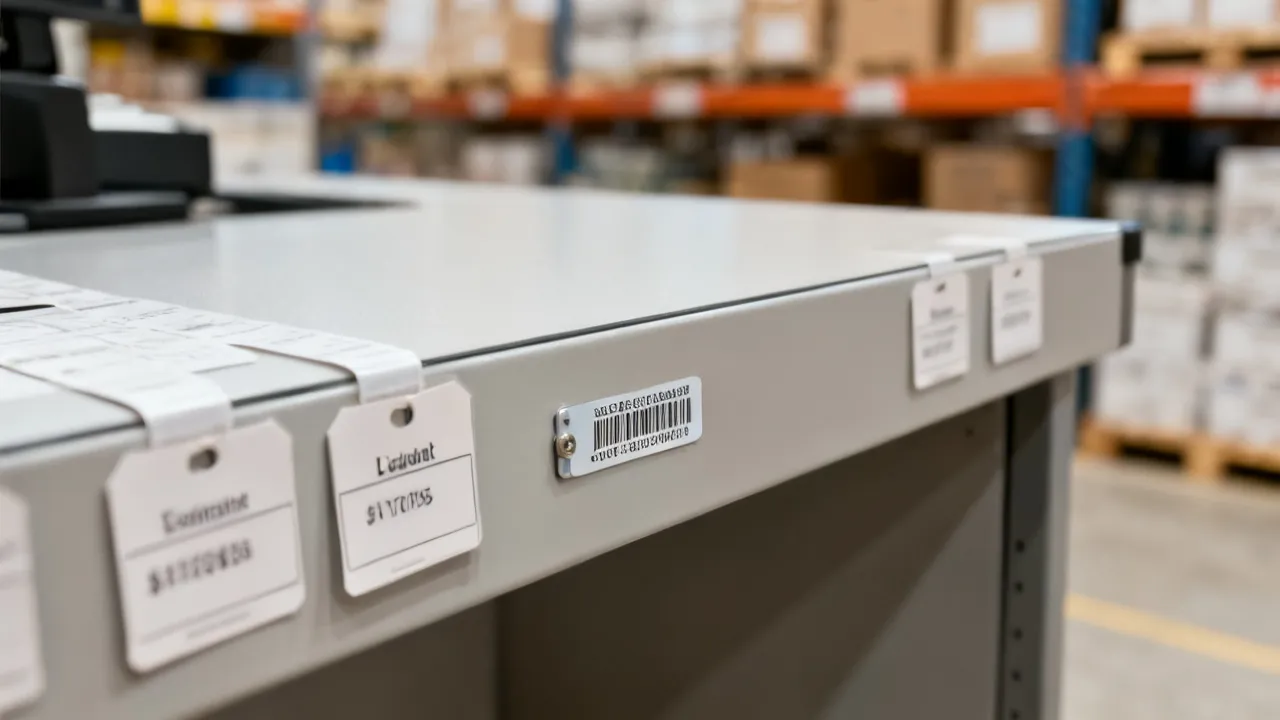
Packaging and labeling details also affect traceability. If barcodes, lot labels, or serial numbers are missing or inconsistent with receiving systems, you can’t efficiently link the physical inventory to the documentation pack. This increases warehouse labor and can lead to mis-sorting or misplacement. In some operations, documentation and label readiness are prerequisites for releasing goods to production.
Compliance Requirements: The Non-Negotiable Layer
Compliance requirements vary by industry and jurisdiction, but they tend to fall into categories: legal entity compliance, product compliance, documentation completeness, and operational requirements. In professional procurement workflows, compliance checks are performed before order placement whenever possible.
Common compliance expectations include:
- Approved supplier status: Is the supplier already qualified in your internal system?
- Traceability documentation: Does the supplier provide records that allow batch-level or unit-level traceability?
- Regulatory alignment: Are materials, certifications, or declarations aligned with the relevant standards?
- Contract terms: Are warranties, indemnities, and return policies clearly stated?
Because the keywords provided did not include explicit location-specific constraints, the safest approach is to treat “nearby” sourcing references as operational convenience rather than a compliance signal. Procurement teams should not assume that proximity automatically implies faster lead times or lower compliance risk.
Compliance is not a single checkbox. It’s a system of expectations that must be satisfied end-to-end: correct entity contracting, correct documentation generation and timing, correct labeling and batch identifiers, and contract terms that define how issues are handled. If any element is missing, compliance can fail even when products look correct on first inspection.
To make compliance actionable, teams often define “acceptance criteria” before shipping. Acceptance criteria can include document types (e.g., certificate of analysis, certificate of conformity, material declarations), document content requirements (e.g., lot number on certificate matches packing list), and timing requirements (e.g., documents must be available at shipment or at least at receiving).
Additionally, procurement must consider what happens when compliance documents are delayed. If the contract allows documents after dispatch, procurement should still implement a process for receiving holds or limited release to ensure production doesn’t consume goods that haven’t been documented. Otherwise, compliance becomes “best effort,” which is not acceptable for many regulated or quality-driven environments.
Where “Nearb y” Mentions Should Be Treated Carefully
If your sourcing narrative references “nearby” coverage (for example, “nearby supplier options”), it’s important to translate that into measurable procurement facts: expected delivery time, frequency of shipments, stocking model, and buffer capacity. Proximity can help logistics, but it does not inherently guarantee inventory availability, inspection readiness, or document accuracy.
From an expert viewpoint, you can reduce uncertainty by asking for:
- Warehouse location and inventory holding practices
- Estimated dispatch time and carrier details
- How the supplier handles urgent orders and stockouts
- Whether documentation is generated before shipment
“Nearby” might mean that the supplier has a regional distribution center. That can improve lead times, but only if the distribution center maintains adequate stock for your specific configuration and if the documentation pack can be produced without delay. Some suppliers maintain a distribution center stocked with generic packaging or partially assembled goods, but documentation for the final configuration may be produced later at a production facility—meaning your lead time advantage can disappear once you consider documentation timing.
Another common nuance: a supplier might claim “nearby coverage” for logistics but rely on third-party carriers with variable schedules. Procurement should require a service level or at least a dispatch and transit timeline range. If you need urgent supply, include escalation paths for delays.
Finally, there can be a compliance nuance hidden behind “nearby.” Suppose the “nearby” distribution center is in a different jurisdiction than your intended contract entity. If the legal entity responsible for compliance paperwork differs, you might see mismatches between supplier ID, invoice issuer, and documentation issuer. This is why procurement should treat “nearby” as a logistics attribute and validate entity and document alignment separately.
Industry-Style Verification Workflow (Step-by-Step)
Below is a pragmatic, industry-style workflow that procurement teams use to validate supplier identity, pricing inputs, and compliance requirements—especially when the supplier ID such as 95999028383 appears in inquiry or quoting materials.
Step 1: Match Supplier Identifier to Legal and Operational Records
Verify that the supplier identifier corresponds to the legal entity you intend to contract with. Cross-check internal ERP supplier master entries, invoice address lines, and bank account beneficiaries where applicable. This step is often the fastest way to avoid mismatched billing later.
In practice, this step involves multiple cross-references:
- ERP supplier master: Confirm that 95999028383 points to the correct supplier name, address, and tax registration references (where used).
- Contracting entity: Confirm that the purchase order is issued to the intended legal entity (not a trading name that happens to be close).
- Invoice address & remittance details: Ensure invoice details align with your contracting record. Where bank beneficiary information is used for payment, verify it matches approved vendor records.
This step also supports fraud prevention and data integrity. Even if “the supplier looks right,” a mismatched ID can indicate a data entry error or a misrouted supplier record. Those errors often become expensive when accounts payable matches invoices to the wrong master record, especially when purchase order references differ.
Procurement teams should also check whether the supplier ID appears consistently across related documents. If supplier ID appears on the quote but not on the purchase order, that is a risk. Ideally, the purchase order and contract should carry the supplier ID (or the supplier master key) so receiving and accounting systems can reconcile later.
Step 2: Confirm Price Structure and the “What’s Included” Scope
Request a price breakdown that clarifies unit pricing basis, currency, quantity tiers, inclusion of taxes, documentation fees, inspection charges, and delivery terms. If the quote does not specify these items clearly, treat that ambiguity as a risk factor.
To make this step robust, consider using a standardized procurement quote template internally and ask suppliers to confirm key fields. Typical fields include:
- Line item: Description, part number/revision, unit of measure.
- Unit price: With currency and basis (per unit/per kg/per hour).
- Quantity or tier rules: Price breaks and how they are applied (e.g., by ordered quantity, delivered quantity, or batch quantity).
- Tax & fees: Whether taxes are included; list of any statutory or regulatory fees.
- Delivery terms: Incoterms, freight responsibility, and point of delivery.
- Documentation: What documents are included (e.g., certificates, reports) and whether they are included in the price or charged separately.
- Inspection and testing: Whether inspections are pre-shipment, at receiving, or not required.
Also, clarify how exceptions are handled. For example, if the supplier’s quote says “subject to change” or references “as per tariff,” procurement should request what that implies for invoice pricing. Without clarity, a low initial quote can become a higher invoice amount under ambiguous “tariff” adjustments.
Where “nearby” is part of the rationale, require explicit delivery timing assumptions and cost implications. If nearby logistics reduces freight cost, ensure the quote includes those assumptions so you can validate invoice charges later.
Step 3: Validate Technical Specification Alignment
Confirm the exact item configuration (part numbers, revisions, tolerances, material grades, or service parameters). Procurement teams commonly require a written statement that the quoted scope matches the technical specification you provided.
This step helps prevent “spec drift.” Spec drift happens when the supplier quotes an item that looks similar but differs in revision level, material composition, dimensional tolerance, or performance standard. Those differences can cause functional failures, rework, or rejection during receiving inspection.
To validate alignment, procurement often requests a “conformance statement” or “technical cross-reference.” That statement might confirm:
- The supplier will provide goods meeting the listed drawings/standards.
- The supplied parts match the requested revision and configuration.
- Any deviations are disclosed in a deviation list, subject to your approval.
If your procurement process includes a technical review board or engineering review, ensure the approval references the specific configuration. Engineering approvals should not be generic; they should tie to revision, bill of materials entry, and required performance criteria.
Even for service contracts, technical alignment matters. Service scope drift can occur when a supplier assumes an hourly rate includes deliverables or excludes key tasks. Procurement should define deliverables and acceptance criteria clearly.
Step 4: Require Compliance Documentation Before Shipment (When Feasible)
Ask for certificates or test reports that apply to the specific batch or lot. If the supplier can only provide documents after dispatch, request the process timeline and ensure it meets your receiving and audit needs.
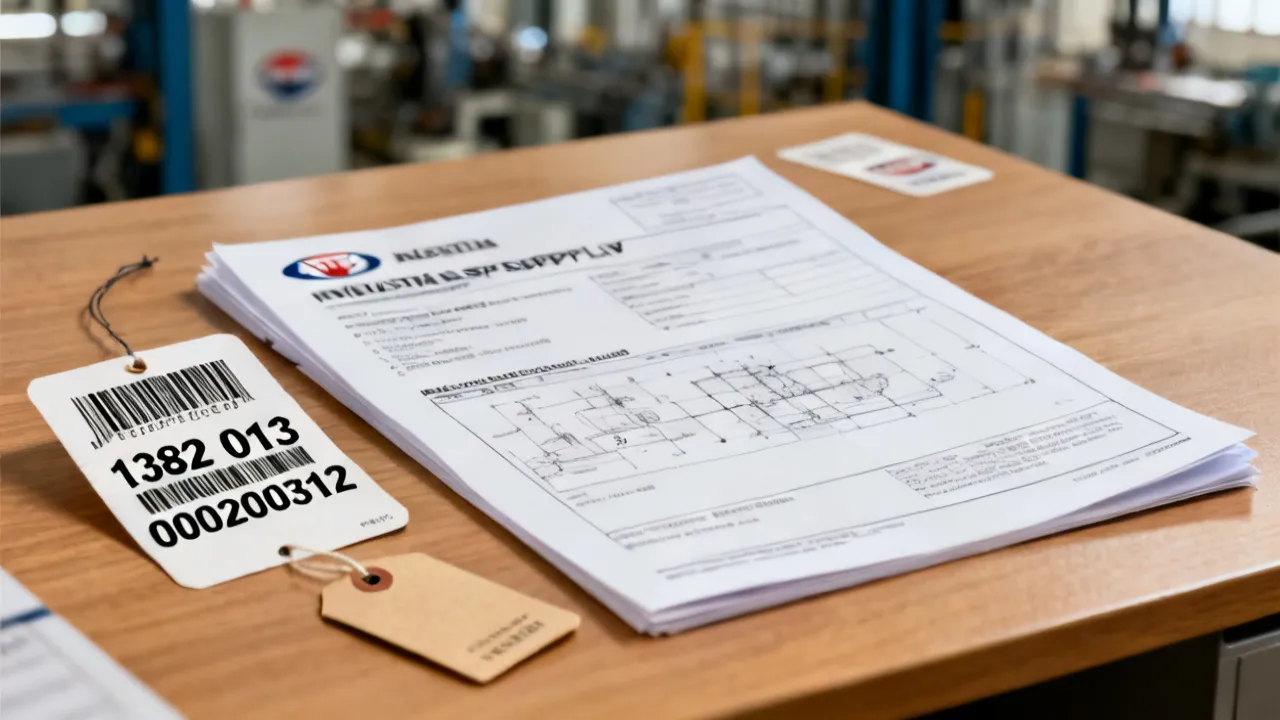
Compliance documentation can be a complex bundle. Procurement should define the minimum document set required to accept the goods or to close the contract. Typical documentation includes:
- Certificates of conformity (or equivalent declarations) referencing the batch/lot number.
- Test reports (e.g., mechanical testing, chemical composition, performance testing) tied to the delivered goods.
- Material declarations (where required) including relevant standards.
- Inspection reports (internal or third-party) if required by contract.
- Traceability records supporting batch-to-unit linkage.
Procurement should also define where documents will be delivered. Options include a document portal, email to a controlled distribution list, or a physical document pack in the shipment. Each has operational implications. If documents are emailed, ensure the receiving and quality teams monitor the correct address and that the email includes the correct purchase order reference and batch/lot numbers.
When documents are provided before shipment, receiving can plan inspection and avoid costly holds. When documents are delayed, procurement should define a contingency process (e.g., conditional acceptance with “document pending” status) and confirm how that status affects production use and inventory release.
Step 5: Perform Receiving and Traceability Checks
At delivery, confirm that packing lists and labeling references match the purchase order terms and the supplier identity. Use a receiving checklist that ensures the documentation pack aligns with the delivered goods or services.
Receiving is where many procurement verification controls are operationalized. A well-designed receiving checklist can catch mismatches quickly:
- Packing list match: Packing list should reference the purchase order number, line item descriptions, and supplier identity where required.
- Label match: Lot/batch identifiers and barcodes should match purchase order and the certificate references.
- Quantity match: Delivered quantities should match the purchase order quantity unless an approved partial delivery or deviation exists.
- Document completeness: Required documents must be present (or confirmed as already submitted through the approved channel).
Traceability checks require disciplined recording. For example, if the supplier provides certificates referencing lot numbers, the warehouse must link those lot numbers to the physical inventory location and the purchase order line item. If the warehouse only records arrival quantity and not lot identifiers, your traceability chain may fail even though paperwork exists.
Therefore, receiving checks should not only confirm presence of documents but also confirm that the identifiers in documents match the identifiers applied to the goods.
Step 6: Capture Exceptions and Improve Future Sourcing Controls
If there are discrepancies—incorrect documentation, mismatched pricing terms, or unclear compliance statements—record the exception and feed it into future supplier evaluations. Over time, this improves both cost control and quality outcomes.
Exception handling is not only a corrective action for the current order. It is a data source. Procurement can use exception history to:
- Adjust future qualification thresholds.
- Update standard contract clauses and documentation requirements.
- Require additional approvals for suppliers with recurring issues.
- Trigger supplier performance reviews and corrective action requests (CAPAs).
Documenting exceptions should capture what failed, where it failed (quote, purchase order, shipping, invoice, receiving), and the root cause if known. Over time, the organization can distinguish between supplier process issues (e.g., they always omit a certain document) and system issues (e.g., warehouse workflows fail to record lot numbers).
This step also improves risk governance. If the supplier identifier is 95999028383 but exceptions show that documents frequently come from a different legal entity name, procurement can revise their supplier records and contract language to reduce mismatches.
Comparison Table: Practical Options for Verifying Supplier and Pricing Inputs
| Verification Method | Top Use Case | Strengths | Limitations / Conditions |
|---|---|---|---|
| Supplier ID matching (e.g., 95999028383) across ERP and invoice records | Initial validation of identity and record consistency | Quick cross-reference; improves traceability | Does not prove product compliance or pricing inclusions by itself |
| Price breakdown review (unit price + inclusions) | Budget control and contract alignment | Clarifies what is included/excluded; reduces billing disputes | Requires clear quote format; may need written clarifications |
| Technical specification cross-check | Preventing mismatched parts or scope gaps | Directly reduces rework and returns | Depends on how precisely the specification was documented |
| Compliance document request tied to batch/lot | Regulatory and audit readiness | Supports traceability and audit evidence | Some documents require production cycles; request timelines early |
| Receiving checklist verification | Operational control at the moment of intake | Detects mismatches early; improves downstream reporting | Needs warehouse staff training and consistent workflows |
Conditions and Requirements Procurement Teams Commonly Set
To make the verification workflow effective, organizations typically define conditions and requirements in advance. While your exact industry and contract language may differ, the following are widely used as baseline conditions:
- Supplier identity must be consistent: Purchase order, invoice, and shipping documents must reference the correct supplier entity and identifier (including records tied to 95999028383).
- Pricing must specify inclusions: Quotes should clearly identify taxes, documentation fees, inspection costs, packaging requirements, and delivery terms.
- Compliance documentation must be specific: Certificates or test reports should correspond to the delivered batch/lot, not generic future statements.
- Change control must be documented: Any deviation from the agreed scope should be communicated and approved via a defined process.
If a supplier claims “nearby” logistics advantages, treat that as a lead-time expectation requiring confirmation (dispatch time, inventory status, and carrier reliability), rather than as a compliance substitute.
It’s also helpful to define explicit “hard stops” and “soft stops.” A hard stop means you do not accept delivery until a condition is met—often document completeness for regulated goods. A soft stop means you can accept delivery with restrictions (e.g., goods stored but not released to production until documents arrive). Defining those categories reduces ad-hoc decisions under time pressure.
Additionally, contract requirements should include a clear hierarchy for conflicts. For example, the contract might state that if there’s a discrepancy between the purchase order and supplier quote, the purchase order prevails. That hierarchy reduces confusion when suppliers use older quote terms or when internal approvals were based on one version of pricing.
Practical Deepening: Common Failure Modes and How to Prevent Them
Even with a good workflow, procurement teams can encounter predictable failure modes. Understanding these patterns helps organizations design controls that match real-world behavior, not only ideal process diagrams.
Failure Mode 1: Supplier ID Matches, but Legal Entity Name Doesn’t
This happens when the supplier identifier maps to one legal record in your system, but the supplier issues certain documents or invoices under a different trade name or operating entity. In some cases, the invoice is issued by a parent company or a different regional entity.
Prevention:
- Require invoice issuer legal name and invoice address to match the purchase order supplier record.
- Include a clause that documents must reflect the same legal contracting entity unless approved otherwise.
- At receiving, check that certificates reference the correct batch and, where relevant, reference the contracting entity.
Impact:
When this failure occurs, accounting may still pay the invoice, but audit traceability becomes difficult. It may also complicate warranty claims or returns if the warranty must be honored by the contracting entity.
Failure Mode 2: Price Looks Comparable, but Delivery Terms Differ
Two quotes might list a similar unit price, but one includes freight and the other excludes freight. Or one uses different delivery points. Even “nearby” logistics can hide differences in delivery terms and service level.
Prevention:
- Standardize delivery terms and require explicit Incoterms (or internal delivery framework equivalents) in quotes.
- Require freight and delivery cost components to be broken out or captured clearly as included/excluded.
- Validate the quote’s delivery point matches what your receiving facility expects.
Impact:
When delivery terms mismatch, the invoice amount may be correct per the supplier’s quote, but incorrect relative to your budget model. This often leads to “surprise” costs, late-stage approvals, and contract amendments.
Failure Mode 3: Documentation Is Provided, but Not Tied to the Delivered Lot
This is one of the most common root causes of traceability failure. Suppliers may provide certificates, but those certificates are generic (e.g., “conforms to standard”) or tied to a different batch than what arrived.
Prevention:
- Require lot/batch number to appear on certificates and packing lists.
- Ask suppliers to specify the batch/lot reference in the advance shipping notice (ASN) or pre-shipment document.
- Implement receiving checklist steps that compare lot numbers in physical labels and certificates.
Impact:
Without batch-level linkage, you lose the ability to prove compliance for specific units. In regulated industries, this can be a nonconformance that blocks release to production or triggers recall risk.
Failure Mode 4: Technical Revision Mismatch Discovered Late
Engineering may approve “the right part” based on description alone, but the delivered item is a different revision or configuration. The mismatch could be caused by unclear supplier naming conventions or translation errors.
Prevention:
- Require part number and revision in every procurement document (RFQ, quote, purchase order, receiving documents).
- Require supplier confirmation that quoted configuration matches technical requirements.
- Use a receiving inspection step that includes revision verification, not only visual inspection.
Impact:
Late discovery leads to returns, schedule delays, and potentially costly engineering rework if parts are installed before the mismatch is found.
Failure Mode 5: “Nearby” Becomes a Schedule Assumption Without Evidence
“Nearby” is often used as narrative justification for speed. However, procurement decisions require evidence. Without evidence, the supplier may still face production constraints, carrier delays, or documentation generation bottlenecks.
Prevention:
- Convert “nearby” claims into measurable commitments: dispatch date range, transit time range, and maximum lead-time variability.
- Define what happens if dispatch is delayed (e.g., escalation, alternative shipment options, penalty/credit provisions where appropriate).
- Require documentation readiness timing, not only shipment timing.
Impact:
When “nearby” is treated as an assumption, procurement can fail to plan buffers, resulting in stockouts, schedule slips, and expedite costs.
Designing Procurement Controls: How to Turn Workflow Into Repeatable Practice
Teams often start with a workflow, but the real challenge is turning it into repeatable practice across categories, suppliers, and regions. The following elements are commonly used to make verification sustainable.
1) Standardize Data Fields Across Systems
Traceability depends on consistent data. Procurement should ensure key identifiers are captured in standardized fields:
- Supplier ID and supplier master key (including 95999028383 where relevant)
- Purchase order number and line item references
- Part numbers and revisions
- Lot/batch identifiers on receiving and certificates
- Quote version and approval record
If data varies across systems—e.g., ERP captures one identifier but invoices use another—reconciliation requires manual work and increases error rates. Standardizing data fields reduces that overhead.
2) Create Quote and Contract Templates That Force Clarity
Procurement documents can be designed to force clarity rather than rely on suppliers to provide it voluntarily. Templates can include mandatory sections:
- “What’s included” checklist (taxes, documentation, inspection, packaging)
- Delivery terms and delivery point definition
- Documentation schedule (when documents will be provided)
- Change control and deviation disclosure process
When templates are used consistently, procurement approval is faster and disputes are easier to resolve because expectations are explicit.
3) Implement Stage-Gate Approval for Higher-Risk Purchases
Not all purchases require the same level of validation effort. A stage-gate approach helps allocate effort where risk is highest:
- Low risk: Simple catalog items with prior supplier performance and low compliance burden.
- Medium risk: Items requiring certificates but not regulated in complex ways; validate documentation pack timing and lot linkage.
- High risk: Regulated goods, critical components, or high-value orders; require documented compliance evidence before acceptance and enforce strict technical revision alignment.
This approach also supports scalability. Procurement teams can maintain controls without overwhelming the process for all categories.
4) Use Supplier Performance Metrics Focused on Evidence Quality
Instead of only measuring “on-time delivery,” also measure “evidence quality.” Evidence quality means whether the delivered documentation pack contains the correct identifiers, matches the purchase order, and provides batch-level traceability.
Possible metrics include:
- Percentage of orders with documentation missing required fields (e.g., lot number)
- Percentage of orders with invoice pricing mismatches relative to the approved breakdown
- Percentage of orders with supplier ID mismatch between ERP and invoice
- Average time to correct documentation errors
Supplier improvement plans become more targeted when metrics focus on the failure points that break traceability and compliance.
Practical Contract Language Concepts (Without Replacing Legal Advice)
Procurement often needs clauses that define what happens when something doesn’t match. While you should consult legal counsel for actual contract language, teams frequently rely on concepts such as:
- Document precedence: If the certificate references conflict with purchase order identifiers, purchase order requirements prevail.
- Documentation timing: Documents must be available by shipment or by receiving, defined per category.
- Deviations: Substitutions or deviations must be disclosed and approved before delivery unless emergency approval exists.
- Invoice alignment: Invoice prices must match approved quote breakdown; taxes and delivery terms must align with Incoterms and contract structure.
These concepts reduce disputes and strengthen procurement’s ability to reject incorrect invoices or request corrections.
Deepening the “Nearb y” Concept: Logistics, Inventory, and Documentation Readiness
Because your original narrative includes the idea of “nearby” coverage, it’s worth examining how “nearby” impacts procurement beyond simple geography.
Consider three operational dimensions:
Logistics Dimension: Dispatch vs Transit vs Delivery Window
Even if the supplier is geographically nearby, dispatch time may be the true driver of delays. A nearby warehouse might still require internal processing time, pick/pack cycles, or consolidation waits. Procurement should request:
- Dispatch time commitment (e.g., “dispatch within 24 hours of PO confirmation”)
- Carrier selection and transit time range
- Delivery window expectations (e.g., “deliver between 9am–3pm” for receiving)
Inventory Dimension: Stocking Model and Replenishment Rules
Nearby often implies stocking. But stocking can mean different things:
- Full stocking: The exact configuration is held in inventory.
- Partial stocking: Some components are stocked; final configuration occurs later.
- Drop-ship / cross-dock: The goods are not truly stocked locally but routed through regional partners.
Each model affects lead time reliability and documentation timing. Procurement should ask which model applies to your requested items. If the supplier only “sources nearby” but produces elsewhere, “nearby” doesn’t necessarily reduce production cycle time.
Documentation Dimension: When Certificates Are Generated
Many suppliers generate certificates at specific points: after production, after batch testing, or after assembly. If the supplier claims “nearby” advantages but the documentation is generated at the production site in a different region, then certificate timing may lag behind dispatch timing.
Procurement should ask for:
- When test records are finalized
- When certificates are issued relative to shipment
- Whether documents are available digitally (before shipment) or only physically included
This is especially important for receiving acceptance. If the warehouse must inspect and verify compliance before releasing goods to production, delayed certificates can create bottlenecks.
FAQs
1) What does a supplier identifier like 95999028383 typically represent?
It usually functions as a unique reference for a supplier record within procurement and accounting systems—helping match purchase orders, invoices, and shipping documents. However, it does not alone prove product quality, pricing scope, or compliance readiness.
2) How should I interpret “price information” from a supplier?
Interpret it as a structured quote: unit basis, currency, quantity tiers, taxes, delivery terms, and included documentation or inspection costs. If any of these are missing or unclear, request a breakdown before approval.
3) What verification steps reduce procurement risk the very?
Professionals commonly prioritize (1) supplier identity matching, (2) price breakdown review, (3) technical specification alignment, and (4) compliance document availability tied to the delivered batch/lot.
4) Is “nearby” sourcing automatically faster and more reliable?
No. “Nearby” can improve logistics, but reliability depends on stocking practices, dispatch timelines, carrier performance, and the supplier’s ability to provide documents before or at delivery.
5) Can compliance requirements be handled after the delivery?
Some documentation may arrive after dispatch depending on production cycles. Still, procurement teams aim to define document timing clearly and ensure receiving processes can confirm compliance before goods are used or accepted.
6) What should I do if invoice pricing does not match the quote?
Stop acceptance of the discrepancy in the accounting workflow, compare the invoice against the purchase order and quote breakdown (including taxes and delivery terms), and request a corrected invoice or credit note per contract terms.
Conclusion: Turn Supplier IDs and Pricing Into Decision-Ready Evidence
In professional sourcing, elements like 95999028383, price information, and supplier details are very valuable when they are converted into verifiable evidence—supported by compliance documentation and clear contract conditions. By using the verification workflow and requirements outlined above, procurement teams can reduce ambiguity, prevent mismatches, and improve audit readiness without relying on assumptions tied to “nearby” claims.
Ultimately, procurement is about building an evidence trail that stands up to operational scrutiny and audit review. A supplier ID is the anchor point; the proof comes from the alignment of documents, pricing structure, technical configuration, and compliance records tied to what was actually delivered. When these elements align, procurement decisions become safer, traceable, and easier to defend—both during receiving and long after the invoice has been paid.
Reference Sources (for Methodology and Risk-Control Context)
- International Organization for Standardization (ISO). ISO 9001—Quality management systems fundamentals and requirements (general guidance on document control, traceability concepts, and process discipline).
- OECD. Due Diligence Guidance for Responsible Business Conduct (frameworks for risk-based due diligence and documentation expectations).
- U.S. GAO (Government Accountability Office). Reports and guidance on acquisition/procurement practices and contract management controls (general top-practice principles, where applicable).
-

A Guide to Cost-Efficient Small Electric Cars for Seniors
-
Mastering Debt Consolidation: Boost Your Credit Score and Manage Interest Rates
-
Your Guide to Loans, Credit Checks, and Interest Rates
-
Affordable Independent Living: Finding the Right Senior Housing
-
Guide to Senior Living Apartments: Affordable and Comfortable Environments