
Guide to Understanding 31653652888 Procurement Details
This guide explains how to interpret and use the procurement-oriented identifier “31653652888” for vendor evaluation, pricing alignment, and traceable purchasing workflows. Background context covers what such numeric codes typically represent, why supplier documentation matters, and how to validate product and service claims using auditable records and consistent steps—supporting objective decision-making.
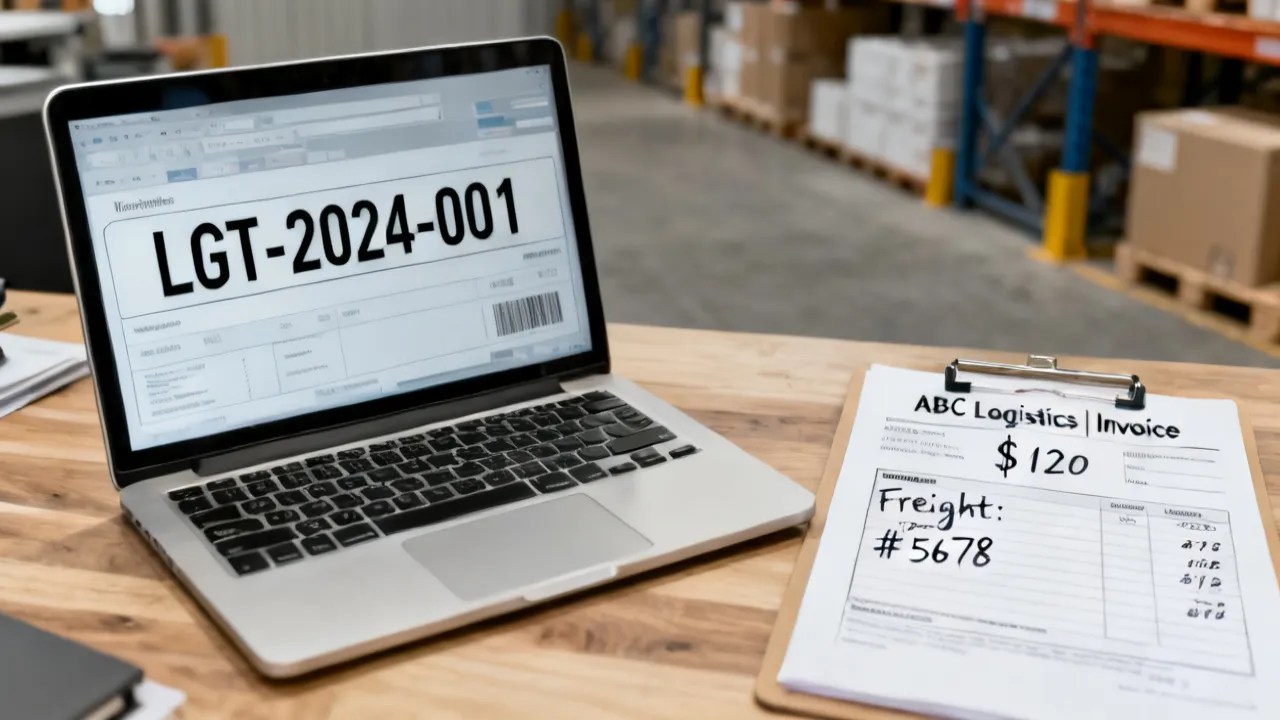
Critical overview: what “31653652888” signals in procurement workflows
When you encounter 31653652888 in procurement or vendor documentation, treat it as a traceable identifier—the kind of code that often anchors an order, a quote reference, a part record, or a tracking element inside an organization’s purchasing system. In practical terms, the identifier becomes useful only when it is paired with reliable paperwork: a quote breakdown, supplier details, service terms, delivery conditions, and an auditable pricing record. This guide focuses on how to handle that process objectively—so your next procurement decision is based on evidence, not assumptions.
Alongside the identifier, many buyers also encounter pricing fields and supplier-related references (captured here through the keywords provided). To avoid mismatches and delays, the core principle is consistent verification: confirm that the numeric code maps to the right product or service scope; confirm that the price you see corresponds to the same scope; and confirm that the supplier details are accurate and current in the purchasing record.
Because 31653652888 looks like a long, numeric sequence, it may be generated by a system that prefers “reference keys” rather than human-readable text. That means the code’s meaning is typically discovered through the document set itself: the quote line items, the bill of materials/part list, the purchase order reference, the receiving record, and the invoice. When buyers treat the number as “just a number,” procurement errors multiply. When buyers treat it as a “link between documents,” procurement teams can reconstruct the full story of a transaction—even months or years later.
Why buyers should care about “31653652888” (and similar codes)
In very procurement environments, identifiers like 31653652888 reduce ambiguity. They help procurement teams connect documents across the purchasing lifecycle—request, quotation, purchase order, shipping/receiving, and invoicing. Industry practitioners commonly use such references to:
- Prevent scope drift: ensure the quote matches what was requested.
- Support audit trails: let internal control teams reconstruct the decision and terms.
- Improve dispute resolution: link invoices, delivery notes, and acceptance records to the same reference.
- Enable accurate reconciliation: reduce the chance of paying for items not delivered or services not rendered.
From an expert standpoint, the numeric nature of 31653652888 doesn’t itself guarantee quality. The real value comes from how transparently it is used in documents and systems. An identifier can be used correctly—or inconsistently—and procurement outcomes depend heavily on that discipline. For example, some suppliers use the code as a quote number, while others use it as a product catalog reference. If a buyer assumes it is one but it is the other, they can misinterpret pricing and scope.
In high-volume procurement settings, codes like this also support automation. Many organizations use enterprise resource planning (ERP) or procurement platforms where line items are matched across systems through reference keys. In that context, 31653652888 may enable a “three-way match” (purchase order vs. receiving vs. invoice), or it may feed reconciliation rules for payment approval. If the code is wrong or the mapping is incomplete, automated workflows can block payment—or worse, approve something that should not be approved.
Finally, buyers should care because identifiers are where governance becomes real. Governance is often written as policies (e.g., “require proper authorization before purchasing,” “ensure invoice accuracy,” “maintain traceability”). But governance only works when there is a practical mechanism to verify those policies, and traceability identifiers provide that mechanism.
Interpreting the associated pricing context without relying on assumptions
The keywords you provided include empty placeholders and numeric content; however, the procurement lesson is consistent regardless of the specific vendor or product category: pricing must be tied to the same identifier and the same scope. If you are reviewing documentation that includes supplier details and a price, verify:
- Unit vs. total pricing: confirm whether the figure relates to per-unit cost, package cost, or labor/service fees.
- Included vs. excluded items: shipping, handling, installation, taxes, documentation fees, and quality testing are often listed separately.
- Pricing validity window: many quotes specify a duration; beyond that, costs may change.
- Currency and payment terms: payment schedule can materially change the total cost of ownership.
If the documentation does not clearly connect the price to 31653652888, you should request clarification before committing. In professional procurement practice, that request is not a delay—it is risk control. Mispricing errors are expensive because they often appear late: after receiving, during invoice processing, or during internal reconciliation. By then, corrections may require credit notes, re-invoicing, revised approvals, and in some cases vendor dispute resolution.
To interpret pricing correctly, it helps to treat procurement pricing as a structured object rather than a single number. For example, a “total price” might incorporate:
- Base item cost
- Freight or shipping charges
- Insurance or handling
- Taxes (which can vary by jurisdiction)
- Installation or commissioning labor
- Warranty terms that might affect pricing
- Training, manuals, or documentation
- Any compliance-related testing or certifications
When that structure is missing or hidden, procurement teams lose the ability to evaluate whether the price is reasonable relative to the scope. The identifier 31653652888 should ideally serve as the bridge between “what was requested” and “how the price was built.” If the structure is unclear, the buyer can still proceed, but only after requesting a breakdown or ensuring internal controls allow a “best-effort” approval with explicit risk acceptance.
Another practical issue is price escalation and volume assumptions. Some suppliers quote with conditions such as “price valid for quantities up to X” or “subject to material cost indexes.” If 31653652888 is used as a quote reference, ensure those conditions are present and correctly tied to the same reference. If not, your procurement team may approve a price that cannot be honored at delivery time.
Supplier details: the evidence you should look for
Supplier evaluation is very reliable when it is anchored in verifiable records rather than marketing claims. When the procurement file includes “supplier details” alongside the identifier 31653652888, confirm that the details include at least:
- Legal entity name and address that match invoicing documents.
- Business registration or tax identification (where applicable) for compliance checks.
- Contact information for procurement and after-sales/service coordination.
- Documented terms for warranty, returns, lead times, and acceptance criteria.
Where you see multiple entities (e.g., distributor vs. manufacturer), confirm who is contractually responsible for delivery and warranty. This point matters in many real-world disputes: documentation can name one entity in a quote and another in an invoice, creating avoidable friction. Buyers often assume that “the invoice is what matters,” but disputes can arise when warranty or service obligations are traced back to the supplier entity that issued the quote or the one that signed the purchase agreement.
Therefore, the supplier details you verify should be consistent across the lifecycle. At minimum, compare these fields:
- Supplier legal name on the quote and purchase order
- Invoicing entity and address on the invoice
- Delivery entity (carrier/shipper or supplier) if different
- Warranty/service provider entity if different
- Any references to master agreements, framework contracts, or authorized distributors
In addition, look for “who to contact” details that match your internal operational needs. For example, procurement may contact a vendor for scheduling or delivery changes; operations may contact the vendor for installation guidance; and quality teams may contact the vendor for test reports. If 31653652888 ties to a specific quote, ensure the supplier contact listed is indeed relevant to that quote.
Another advanced but common procurement practice is to confirm supplier details against a master supplier record. Many organizations maintain a vendor master database. If the supplier details in the document do not match the master record, procurement may need to update the master data or reconcile the mismatch before approving payment. That step prevents “shadow vendors” (unregistered or inconsistent supplier entities) from slipping into spending.
Operational fit: matching scope, lead time, and acceptance criteria
Even when an identifier like 31653652888 is correct, procurement can still fail if operational fit is ignored. As an industry expert would advise, you should align the purchasing record with how the item/service will actually be used:
- Scope match: verify specifications, quantities, variants, and any configuration requirements.
- Lead time realism: compare stated lead time with what similar suppliers typically deliver under normal conditions.
- Acceptance criteria: confirm how delivery will be inspected and how nonconformance is handled.
- Change management: determine what happens if a supplier proposes substitutions or design changes.
This is where many organizations benefit from standardized internal checklists. The checklist doesn’t replace judgment; it ensures no critical dimension is overlooked. The identifier 31653652888 anchors the record, but the operational check prevents “paper correctness” from becoming “operational failure.”
Operational fit also includes logistics and integration considerations. For manufactured goods, you should confirm:
- Packaging type and labeling requirements
- Delivery location and dock rules (if relevant)
- Installation dependencies (power, space, compatibility)
- Compatibility with existing systems or tooling
- Documentation deliverables (drawings, manuals, certificates)
For services, operational fit includes deliverable definitions and performance criteria. Procurement should ensure:
- Scope of work is described unambiguously
- Milestones and deliverables are defined
- Service-level expectations are specified (response time, uptime, remediation timelines)
- Reporting requirements are clear
- Any assumptions are documented (site access, data availability, stakeholder availability)
Acceptance criteria deserve special attention because they determine when the organization “knows” the procurement is complete. A buyer may receive goods but still not be able to accept them if quality metrics are not satisfied. Therefore, acceptance criteria must be clear, testable, and attached to the same reference. If the acceptance criteria are missing in the documentation set tied to 31653652888, the buyer should request them.
Also consider that acceptance criteria sometimes differ by region or by internal process. For cross-branch procurement, the same supplier code may be used across locations, but acceptance practices may vary. This is one reason why a consistent identifier and consistent scope documentation matter: they enable internal teams to align their acceptance procedures and reduce local improvisation.
Practical decision framework: from document review to procurement approval
To make objective progress, evaluate the procurement file as a chain of evidence. Think in layers, from identity to scope to commercial terms:
- Identity verification: confirm that 31653652888 is referenced consistently across quote, purchase order, shipping/receiving, and invoice.
- Scope confirmation: confirm product/service description matches the request.
- Commercial alignment: validate that the stated price matches the scope, includes/excludes are clear, and payment terms are documented.
- Operational feasibility: check lead time, delivery method, and acceptance criteria are implementable in your workflow.
- Risk checks: ensure supplier details are consistent and compliance-related fields are complete.
If any layer is missing—for example, the price is shown but not tied to 31653652888 or supplier details do not match the invoice—procurement should request correction before approval.
In mature organizations, that “request correction” step is operationalized. Procurement teams use a workflow with defined statuses (e.g., “Pending Supplier Clarification,” “Pending Document Revision,” “Pending Approval from Finance,” “Pending Quality Review”). This prevents informal emailing and ensures the record indicates why a purchase was delayed or escalated.
It can also be useful to define a decision threshold. For instance, some minor differences (e.g., a non-material formatting issue) may be tolerable, while other differences (e.g., supplier entity mismatch or unit pricing ambiguity) may require formal contract revision. When 31653652888 appears, you can treat that code as the “decision anchor” and apply your threshold rules based on discrepancies discovered in that record set.
Industry standards and reliable references for procurement documentation
Procurement governance and documentation practices are widely discussed in recognized standards and public guidance. For example, organizations frequently align internal controls with frameworks for purchasing governance and risk management. For background, you can consult:
- ISO 9001 concepts relevant to documentation control and traceability in quality management systems.
- ISO 14001 (where relevant) for document control around environmental aspects.
- Public-sector and corporate procurement guidance emphasizing transparent recordkeeping, competitive sourcing where applicable, and audit-ready documentation.
- Payment and invoicing guidance from recognized standards bodies relevant to reconciliation and matching.
These sources support the general principle that traceability and documentation quality matter. They also reinforce why tying a price and supplier details to an identifier like 31653652888 is a top practice, not a bureaucratic preference.
To make this practical, procurement teams can treat 31653652888 as a document-control element. In many quality and compliance systems, you need to demonstrate that documents were controlled, the correct version was used, and changes were managed. An identifier can help show that: quote versioning, amendment documents, and purchase order revisions can all reference the same identifier or a consistent chain of identifiers.
Another relevant principle is “matching.” In procurement and accounts payable, matching ensures that what you paid aligns with what you ordered and received. When your systems rely on reference keys, an identifier like 31653652888 can be central to that matching logic. If your process relies on matching, you want the identifier to be stable and consistently used across documents.
Finally, if you operate in regulated industries (healthcare, aviation, defense, or heavily compliance-driven manufacturing), documentation requirements may include retention rules and traceability expectations. In those contexts, identifier-based traceability is not optional. It becomes part of demonstrating compliance over time.
Comparison table: document validation approaches for “31653652888”
Below is a supplement that contrasts common validation approaches used by procurement teams when they need to confirm that an identifier and its associated details are coherent.
| Validation focus | What you check | Typical evidence you request | When it’s very useful |
|---|---|---|---|
| Identifier consistency | Whether 31653652888 appears across all documents | Quote reference, purchase order reference, receiving record reference | Before approval and before invoice payment |
| Price alignment | Whether pricing matches scope and acceptance terms | Line-item breakdown, inclusions/exclusions statement, quote validity | When scope or quantities may be ambiguous |
| Supplier details verification | Whether supplier identity and responsibilities are consistent | Legal entity details, invoicing address, warranty/service terms | When warranties, returns, or disputes are plausible |
| Operational feasibility | Whether lead time and delivery terms fit your process | Delivery schedule, packaging requirements, acceptance procedure | When time-to-install or integration timelines are tight |
| Audit readiness | Whether records can be reconstructed later | Change logs, approvals, and controlled document versions | For internal controls and external audits |
Step-by-step guide: how to validate procurement records using the identifier
Use the following sequence to reduce errors and ensure the identifier 31653652888 is operationally meaningful. This process is designed for objective validation, not negotiation theatrics.
- Collect documents into one set: quote, purchase order, specifications, delivery terms, and invoice (if available).
- Locate 31653652888 across documents: confirm it appears as the same reference, not merely a similar code.
- Map each line item to the scope: ensure quantities and variants correspond to the request.
- Validate the price structure: identify unit pricing basis, totals, taxes, shipping, and any service fees.
- Check supplier details for contractual responsibility: confirm who warrants, who ships, and who services.
- Review lead time and delivery conditions: confirm acceptance criteria, installation dependencies, and any inspection steps.
- Confirm consistency of terms: payment terms, quote validity, and return/warranty conditions should align across documents.
- Record an approval decision: document what was verified and what was corrected (if corrections are needed).
That sequence can be improved by adding practical “quality gates.” For example:
- Quality gate for scope: If the item description differs materially, stop approval and request clarification or revised quote.
- Quality gate for unit pricing: If unit basis is unclear (e.g., per meter vs. per roll), require a breakdown tied to the same identifier.
- Quality gate for supplier identity: If legal entity differs between quote and invoice, require confirmation of contracting entity or supplier authorization documentation.
- Quality gate for acceptance criteria: If acceptance criteria are missing or untestable, require a measurable acceptance checklist.
These gates help procurement teams maintain consistency and reduce discretionary “best guess” approvals.
Common failure modes when using identifiers in procurement
Even with best intentions, identifier-based procurement can fail. Understanding failure modes is one of the fastest ways to improve your process. Consider these common issues:
- Reference confusion: 31653652888 is a quote ID in one document but a part ID in another, and teams treat them as equivalent.
- Copy/paste errors: the identifier is inserted incorrectly into a purchase order or invoice line description.
- Version mismatch: a revised quote is issued but procurement references the earlier quote identifier, causing price or scope differences.
- Partial inclusion: only some line items are correctly mapped to the identifier; others lack traceability.
- Supplier master data mismatch: the supplier’s legal entity name differs slightly across documents, causing automated matching failures.
- Missing acceptance criteria: procurement approves based on price but without testability for acceptance.
- Inconsistent currency: the quote is in one currency, but the purchase order is in another, and the identifier does not clarify the conversion.
When any of these occurs, the problem is not the identifier itself. The problem is the absence of disciplined validation across the document set. Your goal is to ensure 31653652888 is not only present, but meaningfully linked to scope, price, and supplier responsibilities.
Conditions and requirements for proceeding
To proceed confidently, teams should meet the following conditions:
- Condition 1: The identifier 31653652888 must be traceable to the same scope across quote and purchase documentation.
- Condition 2: Pricing must be unambiguous—line items, inclusions/exclusions, and total amounts should be clear.
- Condition 3: Supplier details must match invoicing information and specify responsibilities for delivery and warranty/service.
- Condition 4: Delivery and acceptance terms must be feasible and written in a way that prevents subjective “it looked fine” outcomes.
- Condition 5: Any document amendments must be recorded and versioned so the audit trail remains intact.
Additionally, procurement should decide what to do when conditions are partially met. For example:
- If the identifier is consistent but pricing is unclear, request a line-item breakdown before issuing the purchase order.
- If pricing is clear but acceptance criteria are missing, require an acceptance checklist or quality plan tied to 31653652888.
- If supplier details mismatch, verify contracting authority before approving delivery and payment.
This approach keeps procurement moving while preventing predictable downstream failures.
Localization note: documenting clearly for consistent internal communication
No specific city or country was provided in your keywords. If you operate in a local procurement culture where paperwork conventions differ (for example, differing expectations around bilingual documentation, signatures, or acceptance protocols), the same principle still applies: ensure 31653652888, pricing, and supplier details are documented in a consistent format that your internal reviewers can verify quickly.
For teams working in nearby regional networks—such as cross-branch procurement—clarity prevents delays more effectively than speed alone. A small mismatch in supplier identity or pricing structure can create a chain reaction during receiving and invoice matching.
Localization affects not only language but also legal and operational expectations. For example, the terms “warranty,” “returns,” and “acceptance” might be interpreted differently depending on local procurement norms. When your document set is anchored by 31653652888, you should ensure the key clauses are expressed in a way your internal teams can apply consistently.
Also consider local compliance requirements: documentation might need tax identifiers, specific numbering formats, or compliance statements that vary by jurisdiction. If those requirements are not met, your finance and compliance teams may reject the invoice later—even if the purchase order was approved correctly.
FAQs
FAQ: What does “31653652888” mean in procurement documents?
In many systems, a numeric identifier like 31653652888 functions as a reference key that links multiple documents (quote, purchase order, receiving, and invoice). Its exact meaning depends on the organization’s internal system, so you should confirm how your supplier or your procurement platform defines it.
To interpret it accurately in your specific environment, look for the fields around it. Many documents label codes as “Quote No.,” “RFQ Ref.,” “SO No.,” “PO Ref.,” “Item Ref.,” or “Tracking Ref.” If the label is present, the identifier becomes easy to interpret. If the label is absent, you can still determine meaning by correlating which document types contain the code and whether the code persists through revisions.
FAQ: How do I verify that the price matches the correct item or service?
Confirm that the price line items correspond to the same scope referenced by 31653652888. Look for inclusions/exclusions, unit basis, taxes, shipping/handling, and the quote validity window. If those details are missing or do not align with the identifier, request clarification before approval.
A practical technique is to reconcile the arithmetic. If the quote lists unit prices, multiply them by quantities to see whether the total matches. Then check whether any additional charges are listed separately (freight, installation, taxes). If your totals don’t reconcile, do not assume the discrepancy is harmless—ask for clarification tied to 31653652888.
Also confirm that the purchase order uses the same price basis as the quote. Sometimes procurement reworks the purchase order to match internal pricing models (e.g., discounts applied internally). If that occurs, the link to 31653652888 should still represent the same scope and the adjusted price should be clearly documented.
FAQ: What supplier details matter very for quality control and disputes?
Prioritize supplier legal identity, invoicing address, contractual responsibility for delivery and warranty/service, and clear return/acceptance conditions. Ensure these supplier details are consistent across quote, purchase order, and invoice records that reference 31653652888.
In dispute scenarios, teams often discover that the entity who provided the quote is not the same entity who invoiced, or that the entity who shipped is not the entity who provides warranty service. That mismatch can complicate claims and delay resolution. For that reason, it’s better to validate supplier details early and document who is responsible for what.
Another detail that matters in disputes is how the supplier describes nonconformance handling. For example, does the supplier offer replacement, repair, credit, or a return process? Does it specify who covers shipping costs during returns? When acceptance criteria are tied to 31653652888 and supplier responsibilities are documented, disputes are handled more quickly and with less ambiguity.
FAQ: Can I rely on an identifier alone to approve a purchase?
No. While 31653652888 helps with traceability, it does not automatically validate scope, pricing accuracy, or contractual terms. Approval should be based on consistent evidence across documents—especially line-item pricing and acceptance criteria.
Identifier presence is a necessary condition for good traceability, but not a sufficient condition for procurement approval. Approving “because the code is there” creates a false sense of confidence. Even if the identifier is perfectly consistent, errors can still exist in:
- Quantities
- Unit price basis
- Exclusions (e.g., shipping not included)
- Warranty limitations
- Acceptance standards
- Delivery location or schedule
Therefore, you should always validate the identifier against the surrounding details.
FAQ: What should I do if the identifier appears differently in documents?
If 31653652888 appears inconsistently (e.g., typos, different formats, or partial references), request corrected documentation from the supplier or your internal sourcing team. Proceeding without consistency increases risk during receiving and invoice matching.
Different formats can happen, for example:
- Leading/trailing spaces
- Dash-separated formatting (e.g., grouping digits)
- Prefix/suffix additions (e.g., “Q-31653652888” vs. “31653652888”)
- Revised codes after amendments
If your systems treat those formats as distinct values, you should standardize the code across documents or ensure your ERP mapping rules recognize equivalent formats. The safest approach is to require the supplier to issue a corrected quote/invoice that uses the exact reference value expected by your purchasing and accounts payable systems.
FAQ: Are there industry benchmarks for procurement documentation practices?
There are widely used standards and governance approaches that emphasize documentation control, traceability, and audit readiness. For objective grounding, teams often align practices with ISO management system concepts (such as documentation control) and established procurement governance guidance from credible institutional sources.
Beyond ISO concepts, many organizations benchmark procurement documentation practices through internal controls and audit frameworks. Common benchmark practices include:
- Controlled document storage (with versioning)
- Defined approval workflows
- Evidence requirements for supplier selection and due diligence
- Three-way match policies for invoices
- Retention rules for audit periods
An identifier like 31653652888 fits naturally into those benchmarks because it supports evidence linking across documents.
Closing guidance: make the identifier actionable
The very valuable outcome of using 31653652888 is not simply “having a number,” but turning it into a verified link between scope, supplier details, and price—backed by audit-ready documents. When you treat traceability as a structured process (identifier consistency, price alignment, supplier responsibility, operational feasibility), procurement decisions become more objective, faster to review, and far less prone to costly mismatches.
To make the identifier fully actionable, ensure your team can answer, quickly and consistently, the following questions for any purchase tied to 31653652888:
- What exactly was requested and what exactly was quoted?
- What is the line-item pricing structure and what is included vs. excluded?
- Which supplier entity is responsible for delivery and warranty/service?
- What are the delivery schedule expectations?
- What are the acceptance criteria and who performs acceptance?
- How do we prove the goods/services match what was ordered?
- How will we handle changes, delays, or nonconformance?
If you share the specific document context where 31653652888 appears (quote reference, invoice reference, or part record), I can help you map the exact validation checks to that workflow.
For now, the practical rule remains: do not let 31653652888 become a superficial label. Use it as the backbone of an evidence-based procurement workflow—so every subsequent step in purchasing, receiving, and invoicing remains consistent with the scope, the commercial terms, and the responsibilities of the supplier.
-

A Guide to Cost-Efficient Small Electric Cars for Seniors
-
Mastering Debt Consolidation: Boost Your Credit Score and Manage Interest Rates
-
Your Guide to Loans, Credit Checks, and Interest Rates
-
Affordable Independent Living: Finding the Right Senior Housing
-
Guide to Senior Living Apartments: Affordable and Comfortable Environments




