Professional Sourcing Guide for Industrial Products
This guide explains how to evaluate industrial suppliers and product quality when choosing the right option for your needs. It provides objective background on procurement terms, supplier due diligence, and specification checks. It also outlines a practical decision framework and conditions to compare sourcing outcomes responsibly—focused on clarity, documentation, and risk control rather than marketing claims.
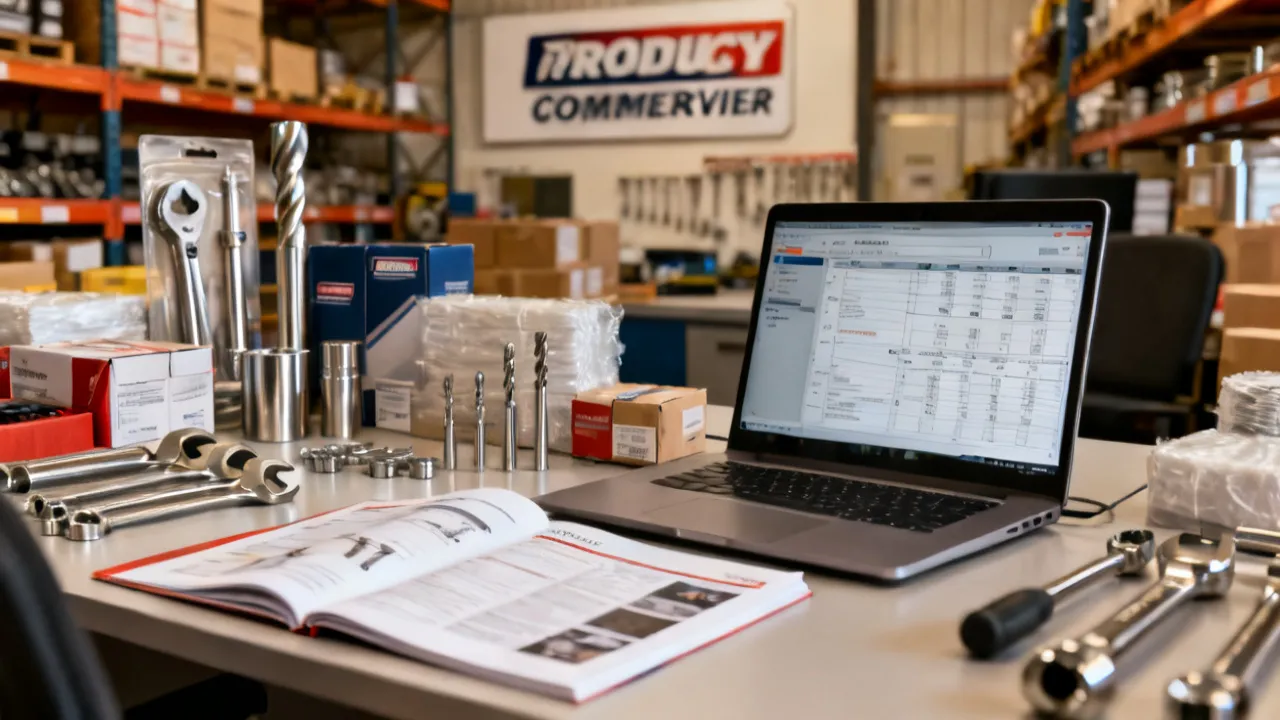
Start Here: How to Choose Industrial Suppliers Responsibly
When you’re sourcing industrial products, the fastest path to costly delays is choosing based on unclear specifications, weak documentation, or supplier practices you can’t verify. A sound procurement approach focuses on traceability, quality controls, and contract clarity. This guide is designed to help you assess supplier capability, compare procurement options using the right criteria, and reduce operational risk—especially when you encounter ambiguous product listings and pricing references such as Ɓ or other placeholder codes.
In practical terms, “industrial sourcing” is not only about price—it's about ensuring the item you buy matches the intended function, compliance needs, and performance expectations. Whether your selection process begins with internal engineering requirements or a request from operations, the key is to validate details systematically: specifications, materials, inspection methods, lead time, packaging, and post-delivery support.
Responsible sourcing also means you’re accountable for the downstream consequences of your purchasing decisions. If the supplier’s controls are weak, the defect may appear days or weeks later, after production schedules are already locked. If traceability is missing, you may not be able to investigate failures, isolate affected batches, or demonstrate compliance to customers, regulators, or internal quality audits. If contract terms are vague, disputes become slower and more expensive.
Because the consequences are operational and sometimes compliance-related, the procurement process should be treated like a structured risk-management activity. That means you define what “acceptable” looks like before you buy, you verify that the supplier can consistently deliver against that definition, and you record what you learned so future purchasing decisions improve.
Below, you’ll find a comprehensive, reusable framework—covering what to watch for, how to interpret ambiguous listing metadata, what documentation to request, how to compare suppliers fairly, and how to structure contract terms and acceptance criteria. The goal is to help you move from uncertainty to verification with minimal friction.
What the Keywords Typically Signal in Sourcing Contexts
The provided keywords include a series of placeholders and symbols (including Ɓ and several empty-string segments). In real sourcing workflows, such tokens often appear when product metadata is incomplete—e.g., model numbers not filled in, internal SKU fields left blank, or a supplier’s catalog exporting non-standard identifiers. While this can happen for legitimate reasons (template mismatches, data mapping issues), it should trigger extra diligence.
Objective takeaway: If the product identifier fields are missing or ambiguous, you must treat the listing as incomplete until you can confirm the exact specifications through supplier documentation (drawings, datasheets, material certificates, inspection reports, or verified part numbers).
Responsible procurement doesn’t assume bad intent, but it also doesn’t assume correctness. Placeholder identifiers can be benign—especially when a supplier uses a custom system that your procurement portal doesn’t fully parse. However, even benign issues still create risk, because the risk isn’t limited to “fraud.” The risk is also mismatch: you could receive a similar-looking but not compliant item; you could get materials that aren’t equivalent; you could receive the wrong tolerance range; or you could get a batch that can’t be traced if there’s a failure.
In high-mix industrial environments, mislabeling and data mapping errors occur more often than people expect. A field may be empty because the supplier’s ERP system doesn’t require it for internal use, but your purchasing workflow requires it for compliance and receiving. The right response is not to panic, but to validate the exact part identity early—before goods are shipped and receiving teams are forced to make fast, expensive decisions.
Why Pricing References Need Context
Sourcing decisions often hinge on cost. However, without context, “price information” can mislead. Industry professionals evaluate price alongside total delivered cost and risk factors such as:
- Incoterms and shipping terms (who pays freight, insurance, handling)
- Lead times (and whether they match your production schedule)
- Minimum order quantities (MOQs)
- Warranty or defect policies
- Inspection and acceptance criteria
- Rework or replacement costs if the delivered product does not meet spec
In procurement reviews, seasoned teams often use a “cost of quality” mindset: the correct item delivered reliably at the right time can be cheaper overall than a lower bid that causes stoppages, returns, or engineering requalification.
To apply this mindset effectively, you also need to interpret pricing structures correctly. A quote that looks cheap may hide costs in service scopes (e.g., special packaging, testing, certification, or expedited shipping). Conversely, a quote that looks expensive may include acceptance tests or traceability documentation you would otherwise pay for internally.
Responsible supplier selection therefore considers:
- Whether the quote includes the documentation you need for compliance (certificates, test reports, traceability records).
- Whether the quoted lead time is calendar-dates or business-days, and whether it accounts for manufacturing and test cycles.
- Whether the supplier can meet change control requirements (e.g., material substitutions require written approval).
- How defects are treated (repair vs replacement, responsibility for shipping, timeline guarantees).
Supplier Due Diligence: What Experts Check First
Supplier selection should be treated as risk management. An industry expert typically prioritizes the following verification steps:
1) Confirm the correct product identity
If you see incomplete identifiers (such as placeholder symbols like Ɓ or missing fields), request formal confirmation from the supplier: part number, technical datasheet, and any engineering drawings that show dimensions, tolerances, materials, and performance characteristics.
In practice, “confirm the correct identity” means you create a single source of truth. That could be a supplier-issued datasheet that includes the part number, a drawing revision number, and an approved material specification. It should also match what’s listed on the purchase order and what appears on the packing slip and label.
Ask the supplier to answer questions that receiving and quality teams can use without guessing:
- What is the exact manufacturer part number (or supplier’s validated substitute)?
- What revision applies? (Drawing revisions matter for tolerances and material substitutions.)
- What material specification applies? (e.g., grade, standard, and condition.)
- What test methods apply? (e.g., dimensional inspection method, strength testing, calibration details.)
- What documentation will ship with the product? (certificates, reports, inspection sheets)
2) Validate quality management practices
Ask for evidence of quality control systems and inspection capability. Depending on the product category, this can include:
- Documented inspection procedures
- Incoming material checks
- In-process controls
- Final inspection and test records
- Nonconformance handling
- Corrective and preventive action (CAPA) processes
For many industrial markets, buyers reference recognized quality management systems. If ISO 9001 or equivalent quality certification is claimed, request certificate details and scope alignment—not just a screenshot.
Responsible sourcing doesn’t stop at “certified” vs “not certified.” You should consider whether the certification scope actually covers the specific manufacturing process, product line, or product category you are buying. For example, a supplier might have an ISO 9001 certificate for general machining but not for specialized coatings or calibration testing, and your product might require those excluded processes.
Also, ask whether the supplier performs product-specific validations. A supplier could have a quality system and still fail at your particular requirement due to specialized material properties, tolerances, or customer-specific acceptance tests.
In higher-risk categories—such as safety-related components, regulated industries, or products used in mission-critical environments—buyers often require additional evidence such as:
- Quality planning documents (control plans, inspection plans, process flows)
- Sampling methodologies (AQL plans or equivalent)
- Calibration program evidence for test equipment
- Traceability procedures and sample retention policies
3) Require traceability and documentation
For critical or regulated applications, documentation matters as much as the physical item. Request, where applicable: material test certificates, batch/lot traceability, calibration certificates for test equipment, and inspection reports showing the criteria used at acceptance.
Traceability means you can answer key questions after delivery, such as:
- Which batch produced this lot of items?
- Which raw materials were used for that batch?
- Which inspection results apply to the delivered batch?
- What was the test outcome for critical parameters?
Without traceability, even a correct-looking product can become a compliance and investigational risk. For instance, if you need to respond to a customer audit or a failure analysis request, lack of records can increase downtime, lead to scrapped inventory, and complicate corrective actions.
Traceability requirements vary widely. For some items, a lot number on the packing slip may be enough. For others, you may need certificates tied to subcomponents, coatings, or specific material heats. Responsible procurement defines what level of traceability is required based on your risk profile and downstream usage.
4) Review delivery reliability and communication practices
Even strong specifications fail if the supply chain cannot execute. Evaluate supplier responsiveness, escalation pathways, order status transparency, and their ability to handle changes (e.g., substitution requests) without undermining your compliance needs.
Consider asking about:
- Order confirmation process and timeline
- Manufacturing and testing lead time breakdown (how long each stage takes)
- How they communicate schedule risks (proactive vs reactive)
- What happens if supply shortages occur (substitution policy and approval workflow)
- Whether they support your receiving process (advance shipping notifications, barcoding/labels)
Communication isn’t just “good service.” It’s part of quality assurance and compliance execution. A supplier that waits until the last minute to inform delays can cause expensive scheduling disruptions. A supplier that uses informal promises instead of documented commitments creates a risk of unfulfilled expectations.
Industry Standards and Responsible Sourcing
Procurement teams increasingly align with widely adopted management approaches, such as quality and supply chain risk practices. For evidence-based procurement guidance, industry professionals commonly refer to:
- Quality management system standards used across manufacturing sectors
- Auditing and supplier evaluation frameworks
- Supply chain due diligence expectations from relevant regulatory bodies where applicable
Because the keywords provided don’t specify a particular industry (e.g., chemicals, bearings, metal fabrications, electronics components), you should adopt a category-specific checklist. For instance, an electrical component sourcing review differs from a mechanical fastener review in acceptance tests and documentation requirements.
Responsible sourcing also includes supplier conduct expectations and sustainability considerations where applicable. Even if your immediate focus is technical conformity, you should consider broader responsible sourcing principles such as:
- Compliance with applicable laws and regulations
- Human rights and labor standards in the supplier’s operations and supply chain (where required by your organization or customers)
- Environmental controls related to production, hazardous materials handling, and waste management (especially for regulated chemical or coating processes)
- Restriction of hazardous substances (depending on your market) and material declarations when relevant
Not every procurement contract includes all of these topics, but responsible suppliers typically can answer questions about their compliance posture and documentation availability. When you ask, do it with clear intent and a structured request. Vague questions tend to yield vague answers, and vague answers are difficult to use in audit contexts.
Comparison Framework: Conditions and Requirements for Evaluating Options
Below is a supplemental comparison tool you can use when comparing supplier options or product listings that contain ambiguous identifiers and incomplete fields.
| Evaluation Area | What to Require | Acceptable Evidence | Red Flags |
|---|---|---|---|
| Product identity | Verified part number, datasheet, and drawing (as applicable) | Supplier-issued technical documents; matching documentation across order and packing | Placeholder codes, missing model fields, mismatched naming between documents |
| Specifications | Materials, dimensions, tolerances, performance limits | Engineering drawings; test criteria and results | “Equivalent” claims without measurable equivalency |
| Quality controls | Inspection plan and acceptance criteria | Incoming/in-process/final inspection records | No documented inspection process; vague quality statements |
| Traceability | Lot/batch traceability and certificates where relevant | Material certificates and batch tracking records | Certificates that don’t reference the delivered lot numbers |
| Lead time | Confirmed delivery schedule aligned to your operations | Documented lead time commitments; order confirmation timelines | Unclear shipping dates; last-minute delays without explanation |
| Commercial terms | Clear pricing terms, shipping terms, and responsibility boundaries | Signed quotation and purchase order terms | Price without shipping scope; unclear returns/defect handling |
| Nonconformance handling | Defined replacement/repair procedure and response time | Documented policy; past case examples (where available) | Refusal to document defects; delays in resolution |
To make the comparison framework more actionable, consider adding internal scoring categories. For example, you might score each supplier 1–5 on document completeness, inspection capability, traceability readiness, delivery reliability indicators, and dispute resolution clarity. That prevents decisions from becoming emotional or purely price-driven.
However, scoring should not replace due diligence. Use scoring to prioritize follow-up questions and to decide which supplier can proceed to quotation finalization. If a supplier receives low scores due to missing documentation, it’s usually not a “negotiation tactic.” It’s a readiness issue. You should address it before ordering, not after receiving goods.
Step-by-Step Guide to Execute Supplier Comparisons
Use the following step-by-step guide to compare supplier options in a structured, audit-friendly manner. This approach is especially useful when you encounter placeholder symbols (like Ɓ) or incomplete product metadata in early-stage sourcing.
Step 1: Capture your requirements in engineering-neutral language
Write down what matters functionally: dimensional constraints, material requirements, environmental performance (e.g., temperature or corrosion exposure), and any regulatory/compliance boundaries. If you do not have finalized technical requirements, treat the supplier conversation as a requirements clarification phase, not a quotation phase.
Responsible procurement requires clarity on “what you will use this for.” Suppliers can deliver “technically similar” products that fail in actual application because of overlooked constraints. For example, a coating that looks equivalent on paper may have different corrosion resistance in your environment. A bearing grade that meets standard specs may be unsuitable for specific rotational speeds or contamination levels.
If your internal engineering team provides a drawing, translate the drawing requirements into a checklist your procurement team and supplier can both use. If you have no drawing yet, at least define performance targets, key tolerances, and acceptance test expectations at a high level.
Make sure the requirement list includes:
- Critical-to-quality (CTQ) parameters that drive performance (e.g., diameter tolerance, material grade, calibration range).
- Non-critical parameters where some flexibility is acceptable (and document what flexibility is allowed).
- Regulatory constraints and documentation expectations for audits or customer requirements.
- Delivery constraints (when you need it, not just how long it takes).
Step 2: Request a complete documentation package
Ask suppliers to provide: datasheets, drawings, material certificates, and any testing/inspection reports relevant to acceptance. For items with ambiguous catalog identifiers, insist on a confirmed part number and a description that matches your requirements.
For ambiguous listings, you can ask for a “documentation bundle” that includes all of the following, as applicable:
- Supplier part number and manufacturer part number
- Revision level for drawings and datasheets
- Material specification or grade standard
- Test methods and test limits
- Inspection plan or control plan summary
- Certificates of conformity (CoC) and/or material test certificates (MTRs)
- Traceability method description (how they assign lot numbers and retain records)
- Packaging specification and labeling method
If the supplier cannot provide these documents upfront, ask what they can provide and when. A responsible supplier either has documentation ready or can explain why it is delayed (e.g., documents are generated per production lot, not per quote). In that case, you should still require the documentation at delivery and define it in the purchase order.
Step 3: Normalize comparisons across quotes
Ensure you compare like-for-like. If one supplier’s price excludes testing or shipping or includes a different acceptance method, your comparison is not apples-to-apples. Normalize quotes into a consistent “delivered and accepted” view.
Normalization means you should transform each quote into the same set of assumptions. For example:
- Include the same shipping method and Incoterms assumptions
- Include the same level of testing and documentation
- Use the same packaging and labeling requirements
- Apply the same delivery window and lead time commitments
- Use the same nonconformance handling responsibilities
When suppliers respond differently to “acceptance,” ask them to define acceptance. Acceptance can refer to several things: dimensional compliance, functional tests, documentation review, or a combination. Clarify which acceptance criteria apply to your order and whether they can share test results or inspection records with the shipment.
Also watch for language like “equivalent to” or “meets or exceeds.” Those phrases are not acceptance criteria by themselves. The acceptance criteria must be measurable and verifiable—ideally referenced to your drawings or standards and supported by test records.
Step 4: Validate lead time and logistics assumptions
Confirm shipping terms, packaging requirements, and whether special handling is needed (e.g., moisture control for certain materials, protective packaging for precision components). If your supply chain depends on a stable schedule, require a commitment tied to your delivery windows.
Lead time validation should include more than a single date. It should address:
- Order confirmation time (how quickly the supplier confirms after purchase order receipt)
- Production start conditions (does the supplier need full documentation approval first?)
- Manufacturing timeline including any test cycles
- Shipping timeline including carrier handoff
- Buffer time for documentation generation and QC release
Packaging and logistics often become a hidden cost. For example, precision components might require anti-corrosion materials, vacuum sealing, humidity indicators, or impact-protective packaging. If you don’t specify packaging requirements, receiving teams may have no basis for rejecting damaged items on arrival—especially if the supplier claims standard packaging is adequate.
Therefore, define packaging and labeling requirements in your purchase order and ensure the supplier can execute them. Also ensure your receiving team knows what to check—so acceptance happens efficiently.
Step 5: Define acceptance criteria before ordering
Establish what “pass” means upon arrival. This may include dimensional checks, functional tests, or documentation verification. Where possible, define sampling plans and inspection methods.
Acceptance criteria are essential not just for quality, but also for dispute resolution. If you only say “meets spec” without defining what “meets spec” means and how you will verify it, conflicts can last weeks.
A strong acceptance criteria definition includes:
- Inspection type: incoming inspection, sampling plan, 100% inspection for CTQ parameters, or functional tests.
- Measurement method: what tool or standard will be used, and whether calibration requirements apply.
- Acceptance limits: tolerances, performance thresholds, or compliance statements.
- Documentation review: certificates and reports to be checked for correctness and consistency with the shipment lot numbers.
- Nonconformance triggers: criteria for rejecting or quarantining goods.
Where you cannot test functionally on arrival (common for integrated components), rely more heavily on documentation and supplier-provided inspection reports. But if documentation isn’t consistent with your needs, you may need a supplier corrective action plan or additional verification steps such as pre-shipment inspection.
Step 6: Put nonconformance resolution in writing
Before procurement is finalized, ensure your purchase agreement includes a clear process for defects: response time, replacement timelines, responsibility for shipping, and how costs are handled. Avoid decisions that rely on informal promises.
Nonconformance handling should cover at least:
- Notification method and timeline (how quickly you must notify the supplier)
- Return, repair, or replacement options
- Responsibility for shipping costs during returns and replacements
- Response time for investigation start
- Corrective action timeline (CAPA implementation expectations)
- Whether replacement items require their own documentation set
- How you handle partial shipments and scheduling impacts
Also specify whether the supplier will support containment actions such as quarantining inventory or supporting root cause analysis if failures occur. Responsible suppliers treat nonconformance as a partnership problem, not as a purely contractual blame exercise.
Step 7: Keep a traceable audit trail
Maintain a procurement file containing: supplier communications, technical documents, inspection records, shipping documentation, and any deviation/approval records. This protects you operationally and supports continuous improvement.
An audit trail means you can reconstruct the “why” behind procurement decisions. That matters if there is a quality incident, a customer complaint, a recall, or an internal audit.
At minimum, keep:
- RFQ and quote documents (including revisions)
- Supplier technical documents and their revision levels
- Purchase order and contract terms
- Incoming inspection records and results
- Nonconformance reports and CAPA documentation
- Deviation approvals for any changes from the original specification
- Shipment and receiving records, including lot numbers and labels
This record-keeping practice also improves future procurement decisions. You learn which suppliers provide complete documentation, which frequently require clarifications, and which consistently deliver on time.
FAQs
Q1: What should I do if a supplier listing uses placeholders or incomplete identifiers?
Treat it as incomplete until verified. Request a confirmed part number, a technical datasheet, and drawings that match your requirements. Ensure documentation references the same identifiers used in the quotation and packing materials.
Q2: How can I compare suppliers when price information is presented differently?
Normalize quotes into a consistent scope: include shipping terms, inspection/testing responsibilities, packaging expectations, lead time assumptions, and defect/returns conditions. Then compare total delivered and accepted cost rather than unit price alone.
Q3: Which documents matter most for industrial quality assurance?
Commonly requested items include datasheets, engineering drawings, material certificates where relevant, inspection or test reports showing acceptance criteria, and traceability documentation tied to the delivered lot or batch.
Q4: Are quality certifications enough to select a supplier?
Certifications can indicate a baseline quality system, but they don’t automatically guarantee product conformity for your specific order. Pair certification review with documentation checks, inspection records, and clearly defined acceptance criteria.
Q5: What are the most common procurement mistakes?
Common errors include failing to clarify specifications when metadata is incomplete, comparing quotes without normalizing scope, accepting unclear “equivalency” claims, and not documenting nonconformance resolution before ordering.
Q6: How should I handle “equivalent” substitutions?
Require measurable equivalence (dimensions, materials, performance metrics, and test data) and written approval based on your acceptance criteria. Avoid approvals based solely on brand names or informal assurances.
Q7: Should we require pre-shipment inspection (PSI) for new suppliers?
Often yes, especially for first-time orders, high-risk products, or when documentation is incomplete. PSI can be used to verify identity, confirm critical dimensions, and review documentation before shipment. If you use PSI, define the scope clearly in the purchase order and ensure it aligns with your acceptance criteria.
Q8: What if a supplier cannot provide lot traceability for every unit?
It depends on the product category and your risk tolerance. For low-risk items, you may accept partial traceability with clear limits. For critical or regulated products, you should require traceability to at least the lot level and insist that certificates reference the delivered lot numbers. If full traceability isn’t available, document the risk acceptance in your internal process and consider additional verification steps.
Q9: How do we validate “equivalent” materials when specs are vague?
When specs are vague, you must require the supplier to provide their material specification and evidence of equivalence. That typically means requesting MTRs, composition details (where relevant), test results for critical parameters, and confirmation that the material meets your performance requirements. If equivalence cannot be demonstrated with measurable evidence, do not accept it.
Q10: What should we do if the supplier ships the wrong item?
Quarantine the shipment, document the discrepancy (photos, labels, packing slip details), and notify the supplier using the documented nonconformance resolution process. Request a corrective action plan and replacement shipment with correct documentation tied to the lot. Ensure your internal purchasing record reflects the issue for supplier performance tracking.
Responsible Sourcing Conditions and Requirements
To keep procurement decisions objective and defensible, apply these conditions consistently:
- Documentation first: do not finalize orders when key specs or identifiers are missing.
- Defined acceptance criteria: ensure you know what you will check upon arrival.
- Normalized quote comparison: include the same scope for shipping, inspection, and packaging.
- Clear commercial terms: define responsibilities for defects, replacements, and lead-time impacts.
- Audit-ready recordkeeping: store communications and documents to support traceability.
In addition to these core conditions, responsible sourcing benefits from a few practical operating habits:
- Use structured supplier communication: send requirement lists and documentation requests in writing so there’s no ambiguity.
- Control document revisions: ensure drawings and datasheets are revision-matched across your system and the supplier’s documents.
- Confirm changes before shipment: if a supplier proposes a substitution, require approval before they produce or ship the material.
- Align procurement and receiving: make sure receiving teams understand acceptance criteria and rejection triggers.
- Track supplier performance: record on-time delivery, documentation completeness, defect rates, and resolution times.
These habits reduce friction and build supplier accountability. When expectations are documented and consistently enforced, supplier misunderstandings decrease over time.
Reference Approach (Sources for General Procurement Concepts)
For foundational guidance on supplier quality systems and risk-based evaluation, buyers commonly reference internationally recognized quality management and auditing principles. For broader due diligence practices, many organizations also align procurement policies with reputable frameworks published by standards bodies and recognized industry bodies. In practice, always cross-check your internal requirements and any applicable regulations for your product category.
Because the procurement environment varies by region and product category, the most responsible approach is to integrate external standards into your own internal checklist and contract templates. The aim is not to “copy a standard word-for-word,” but to ensure your procurement practices reflect recognized best practices and are defensible during audits or investigations.
Note on Localization
No specific city or country was provided within the keywords in a way that requires localization substitutions. If you share your target market location (e.g., a country or nearby region), we can tailor the procurement checklist and documentation expectations to typical local contracting practices and regulatory considerations.
However, even without localization details, some procurement realities are universal: unclear specifications create risk; weak documentation slows resolution; and ambiguous pricing without shipping, inspection, and defect-handling scope invites disputes.
Next step: If you tell me the industrial category (e.g., bearings, valves, industrial electronics, metal fabrication, or packaging materials) and whether you need any standards (quality, safety, or compliance), I can convert this framework into a category-specific checklist and an evaluation template for supplier comparisons.
Expanded Practical Playbook: Turning Supplier Requests into Verifiable Outcomes
To make the above framework fully usable in day-to-day procurement, it helps to translate each verification step into concrete procurement activities. This section expands on how to operationalize supplier due diligence so your team can act quickly while still maintaining audit readiness and technical integrity.
Think of responsible supplier selection as a loop:
- Define what you need (requirements, CTQs, documentation expectations).
- Ask for proof (datasheets, drawings, certifications, inspection plans).
- Confirm alignment (part numbers, revisions, materials, traceability method).
- Execute acceptance (receiving checks and documentation review).
- Record outcomes (inspection results, deviations, nonconformance resolution).
- Improve continuously (supplier performance tracking and updated requirements).
When this loop is executed consistently, placeholder identifiers and ambiguous pricing become manageable signals rather than dangerous surprises. You create a system that expects incomplete data early and verifies correctness before it impacts operations.
How to Treat Ambiguous Product Listings Without Blocking Procurement
Procurement teams often face pressure to move quickly. At the same time, they can’t ignore ambiguity. The key is to “contain uncertainty” rather than to reject everything immediately.
Here’s a practical approach you can adopt when you encounter placeholder codes like Ɓ, blank model fields, or incomplete SKU segments:
- Step A: Put the listing in a “needs verification” status in your system. Do not treat it as final.
- Step B: Request identity confirmation by asking the supplier to provide a confirmed part number and associated documentation set (datasheet/drawing revision).
- Step C: Require that the supplier confirm mapping across systems (quotation, purchase order, packing slip, and label must match the verified part number).
- Step D: Define a receiving hold rule: if the delivered label or packing slip doesn’t match the verified identifiers, goods are quarantined until resolved.
- Step E: Keep procurement moving in parallel by proceeding with vendor qualification for likely suppliers while waiting for identity confirmation.
This approach prevents paralysis. It also prevents the common failure mode where receiving teams “make it work” and approve goods that later prove nonconforming. By setting hold rules and documentation requirements early, you protect operations.
Category-Specific Thinking: Why “Industrial” Isn’t One Thing
Industrial sourcing covers everything from low-risk items like common fasteners to high-risk items like safety-critical components. The verification details differ accordingly. If you don’t adapt the checklist to category risk, you can waste time requesting documents you don’t need—or, worse, fail to request documents you do.
Below are examples of how acceptance criteria and documentation needs often differ across categories. Use these examples to tune your requirements when you tailor the framework to your industrial supplier context.
Bearings and Rotating Components
Bearings frequently require tight dimensional control, surface finish requirements, and documented material or grade. Traceability might matter to the lot level because failures can be sensitive to contamination, lubrication compatibility, and manufacturing process quality. Documentation requests often include:
- Material grade or steel specification evidence
- Dimensional inspection results for CTQ dimensions
- Inspection/test standards and acceptance limits
- Packaging requirements to prevent corrosion and contamination
Valves and Flow Components
Valves might require pressure testing records, material certificates, and compliance documentation depending on service environment. Acceptance may include:
- Pressure/seat/leak tests and test outcomes
- Material certificates for wetted parts
- Certification for compliance (e.g., if used in regulated systems)
- Identification labeling tied to test records
Industrial Electronics and Control Components
Electronics can involve more sensitivity to documentation quality and revision control. Often, what matters most is not only functional parameters but also revision, firmware or configuration details, and compliance restrictions. Acceptance may focus on:
- Exact part number and revision level
- Test reports for electrical characteristics
- Traceability for component batches
- Packaging and handling to avoid damage (ESD precautions)
Metal Fabrication and Machined Parts
Fabricated parts require strong control of material grade, tolerances, heat treatment (if applicable), and inspection records. Documentation often includes:
- Material heat numbers and MTRs
- Machining and dimensional inspection results
- Coating/corrosion protection documentation (if applied)
- Weld or process documentation (for certain fabrication methods)
Packaging Materials and Consumables
Packaging materials can be underestimated in procurement risk. Even “simple” packaging can affect product protection and shelf life. For responsible sourcing, ensure:
- Correct specifications for materials (e.g., moisture barrier, thickness, compatibility)
- Evidence of manufacturing consistency (batch traceability if required)
- Performance expectations aligned to your storage and shipping conditions
This category-based approach ensures that your supplier evaluation questions match the actual risk. It also helps you create purchase orders that your suppliers can execute without misunderstandings.
How to Request Documentation Efficiently (Without Back-and-Forth)
One reason procurement conversations drag out is poorly structured documentation requests. Suppliers respond to vague questions with generic documents, and procurement teams then have to follow up to correct omissions. That cycle wastes time and can delay deliveries.
To avoid this, structure your initial documentation request into a “package checklist.” You can include it as a table in your RFQ email or attach it as a formal requirement list. Below is a template you can adapt.
| Required Item | What It Proves | When to Provide |
|---|---|---|
| Confirmed part number and revision | Product identity alignment | Pre-order or at order acceptance |
| Datasheet and/or engineering drawing | Specifications and CTQ parameters | Pre-order |
| Material test certificates (MTR/MTC) where applicable | Material compliance and batch traceability | With shipment (per lot) |
| Inspection plan / control plan summary | Quality control approach and acceptance logic | Pre-order or at PO acceptance |
| Inspection/test results tied to delivered lot | Evidence of conformity | With shipment |
| Calibration certificates for critical test equipment | Measurement integrity | On request or per supplier policy |
| Packaging and labeling specification | Protection and receiving readiness | Pre-shipment |
| Nonconformance handling policy | Defect resolution responsibilities | At PO acceptance |
By requesting documentation in a consistent format, you reduce the likelihood that suppliers send incomplete sets. You also build a standardized evaluation method across suppliers and product categories.
Normalizing Quotes: The “Delivered and Accepted” Method
Normalization is where many procurement processes fail. Teams compare unit price even though the suppliers’ quotes may include different scopes. Responsible procurement shifts the comparison from unit cost to total cost of delivered and accepted performance.
Here’s an expanded method for quote normalization that you can adapt:
- Define the “delivered” scope:
- Incoterms (freight, insurance, duties if applicable)
- Shipping method and carrier assumptions
- Packaging type (standard vs protective)
- Delivery point and receiving hours
- Define the “accepted” scope:
- Inspection method and sampling plan
- Which CTQs are checked at receiving
- Whether supplier provides inspection/test results
- Whether third-party testing is included
- Define defect responsibility:
- Who pays return shipping
- How quickly replacement ships
- Whether costs include rework, expedite fees, or only parts
After defining these scopes, you can compute a normalized “all-in” cost. Even if you cannot calculate an exact number, you can still compare scopes objectively. This reduces bias and improves supplier selection defensibility.
Defining Acceptance Criteria: A Practical Checklist
Acceptance criteria should be written so both you and the supplier know what will happen at receiving. Poor acceptance criteria is one of the most common sources of disputes.
Use this checklist to craft acceptance criteria that are specific and enforceable:
- What parameters are CTQ? List them explicitly.
- What tolerances apply? Use drawings, standards, or internal specs.
- How will you measure? Identify measurement methods or accepted standards.
- What inspection level is required? Sampling plan vs 100% inspection for CTQs.
- What documents must match the shipment? Lot number alignment and revision matching.
- What happens if documentation is incomplete? Reject or quarantine? Allow limited acceptance?
- What happens if a CTQ fails? Reject, repair, return, or replace? Timeline responsibilities?
- What is the acceptance timeline? When does acceptance decision occur after delivery?
When acceptance criteria are clear, receiving is faster and disputes are less frequent. You also create a stronger basis for root cause analysis if failures occur.
Nonconformance and CAPA: Turning Incidents into Improvements
Nonconformance handling shouldn’t end with a replacement. Responsible sourcing uses incidents to drive supplier improvement through corrective action and preventive action (CAPA). CAPA is not just a buzzword—it’s a structured way to prevent repeated failures.
For procurement, that means the contract terms and purchase order should set expectations for:
- Containment actions (stopping shipment of affected lots, quarantining inventory)
- Root cause analysis approach (e.g., 5-Why, fishbone, structured methods)
- Corrective action (what changes to eliminate the cause)
- Preventive actions (what changes prevent recurrence)
- Effectiveness verification (how you confirm CAPA worked)
- Documentation and timelines (what evidence the supplier will provide and by when)
It also helps to define what you consider “closed” in CAPA terms. For example, CAPA might be considered closed only after you receive replacement products that meet acceptance criteria and after the supplier provides evidence of process changes.
Supplier Performance Tracking: Making Responsible Sourcing Sustainable
Responsible sourcing becomes easier over time when you track supplier performance and feedback. Instead of treating each procurement cycle as a one-off, you maintain supplier scorecards based on measurable outcomes.
A simple supplier performance tracking framework can include:
- On-time delivery: delivered by agreed date vs late shipments
- Documentation completeness: correct and complete documentation at delivery
- Conformance rate: percentage of shipments meeting acceptance criteria without major issues
- Nonconformance resolution time: how quickly defects are investigated and replaced
- Quality of communication: responsiveness and clarity
When you encounter placeholders or ambiguous identifiers, track how often supplier identity confirmation is delayed. If it happens repeatedly, that supplier’s data readiness is a systemic risk. You can respond by requiring tighter controls for future orders, such as pre-shipment document review or additional receiving holds.
Contract Clarity: What “Clear Terms” Typically Include
Contract clarity is not only a legal concern; it is also an operational mechanism for preventing disputes. A procurement team can reduce risk by ensuring terms are explicit about:
- Specifications: which drawings and revisions apply
- Documentation: what must be provided with shipments
- Inspection and acceptance: who inspects and what acceptance means
- Lead time commitments: what date is promised and what constitutes delay
- Change control: how substitutions and changes are requested and approved
- Nonconformance: return/repair/replacement responsibilities and timelines
- Warranty period: coverage and exclusions (if applicable)
- Costs: who pays expedite shipping for replacements, if needed
Where possible, add references to measurable or document-based triggers. For instance, instead of saying “product must meet spec,” reference the drawing and tolerance requirements explicitly. Instead of “we’ll fix it quickly,” define a response and replacement timeline.
Practical Receiving Controls: Avoiding “We’ll Check Later” Risks
Even with strong procurement documents, the receiving process must be capable of enforcing acceptance criteria. Responsible procurement therefore aligns with receiving controls.
Common receiving control failures include:
- Approving shipment based solely on quantity delivered
- Not verifying part numbers or revision levels on labels and packing slips
- Allowing goods to be used before documentation review is completed
- Skipping quarantine steps when a CTQ fails
To reduce these risks, implement receiving checks that align with your acceptance criteria. At a minimum:
- Verify identification: part number, revision, lot numbers, and packaging labels
- Verify documentation: certificates and inspection reports match the delivered identifiers
- Perform dimensional/functional checks for CTQ parameters as defined
- Quarantine immediately upon mismatch or failure of CTQs
- Document discrepancies with clear evidence for supplier communication
These receiving controls are often what prevent minor issues from becoming major production problems.
How to Handle Supplier “Equivalent” Claims Responsibly
“Equivalent” claims are common because suppliers want to adapt to material availability and internal processes. Responsible procurement does not automatically reject substitutions, but it requires a structured equivalence evaluation that demonstrates measurable compatibility.
A responsible equivalence process often includes:
- Defining equivalence requirements: which parameters must match exactly vs which can vary within defined limits
- Requiring evidence: test data, material certifications, dimensional inspection results
- Ensuring documentation alignment: revision and part number mapping must be traceable
- Obtaining written approval based on acceptance criteria
If equivalence cannot be demonstrated with measurable evidence, treat it as nonconformance or require a different product to be supplied. Avoid the trap of accepting equivalents based on brand familiarity or verbal assurances.
Building a Supplier Questionnaire for Faster Qualification
To make supplier onboarding more consistent, you can maintain a supplier questionnaire. This reduces follow-up questions and standardizes evaluation criteria.
A questionnaire for supplier quality and documentation readiness might include:
- Do you have a documented quality management system? Provide certificate details and scope.
- Can you provide inspection/test reports tied to delivered lots?
- Can you provide material test certificates and traceability method?
- What is your standard process for identity verification and revision control?
- How do you handle substitutions or changes to materials/processes?
- What nonconformance resolution timelines do you commit to?
- Do you offer pre-shipment inspection support if required?
Suppliers who respond with complete and consistent answers tend to be more reliable. Suppliers who provide vague or incomplete answers increase the burden on your team and may increase delivery and quality risk.
Operational Risk Management: Aligning Procurement with Production Schedules
Responsible sourcing also means coordinating purchasing decisions with your production plan. A supplier might deliver a lower-cost item on paper, but if lead time variability creates schedule disruptions, the total cost may be higher.
To manage this risk, consider:
- Defining delivery windows rather than a single date, but with firm commitments
- Requesting order status updates at agreed milestones (e.g., production start, in-process QC, final inspection, shipping)
- Including escalation pathways in the contract or purchase order
- Maintaining buffers for CTQ-critical items where schedule risks are high
If you maintain a buffer inventory strategy, ensure it aligns with traceability and documentation readiness so you can use the inventory confidently when needed.
FAQs (Expanded)
Q11: How do we decide whether an item is “high risk” enough to require extra verification?
Use a risk-based approach. Items are often high risk if they affect safety, regulatory compliance, high-value assemblies, critical performance parameters, or if failure would cause significant downtime. Also consider the history of defects in similar items and how difficult it is to validate conformity at receiving.
Q12: What is the best way to ensure documentation matches the delivered lot?
Require documentation to reference the delivered lot/batch numbers and ensure your purchase order includes lot traceability requirements. At receiving, verify the identifiers on labels, packing slips, and certificates match. If they don’t match, quarantine and resolve before use.
Q13: Can we accept “documentation on request later”?
Usually not for critical items. Documentation should be delivered with the shipment for accountability and acceptance. If documentation arrives later, you may be forced to accept without full evidence or delay production. The contract should define delivery timing and consequences for missing documents.
Q14: Should we require the supplier to use our purchase order part number?
It’s helpful, especially for receiving and traceability. However, the best practice is alignment across systems: the supplier can include their own internal part number, but the purchase order part number must be clearly mapped to it, and the labels/packing slip must match what you ordered.
Q15: What if the supplier insists the listing is correct despite placeholder codes?
Request official documentation that confirms the verified part number and revision. Also require that the packing slip and labels show the verified identifiers. If the supplier cannot confirm identity in writing and through shipment labels, treat the listing as unverified and do not accept goods until resolved.
Responsible Sourcing Conditions and Requirements (Expanded)
To keep procurement decisions objective and defensible, apply these conditions consistently—then reinforce them operationally at receiving and in contract terms:
- Documentation first: do not finalize orders when key specs or identifiers are missing; resolve identity verification before production shipment if possible.
- Defined acceptance criteria: ensure you know what you will check upon arrival, including CTQ parameters and documentation review triggers.
- Normalized quote comparison: include the same scope for shipping, inspection/testing responsibilities, packaging expectations, lead time assumptions, and defect handling.
- Clear commercial terms: define responsibilities for defects, replacements, lead-time impacts, and costs for returns and rework.
- Audit-ready recordkeeping: store communications, technical documents, inspection records, and deviation approvals to support traceability.
Responsible sourcing also benefits from consistent internal governance. Make sure procurement decisions are reviewed for completeness when ambiguous metadata appears. Many organizations implement a “two-step gate” for new suppliers or ambiguous listings:
- Gate 1: Supplier readiness (documentation and quality system baseline).
- Gate 2: Order readiness (part identity confirmation, acceptance criteria definition, contract terms completeness).
This gate approach reduces the chance that ambiguous listings cause downstream failures.
Reference Approach (Expanded)
For foundational guidance on supplier quality systems and risk-based evaluation, buyers commonly reference internationally recognized quality management and auditing principles. Many organizations also integrate due diligence and supplier evaluation expectations from recognized frameworks and auditing principles. In practice, you should combine these external references with category-specific requirements and any applicable regulations for your product type.
Because industrial procurement is dynamic and product risk varies, the best results come from tailoring: align your procurement checklist, documentation request forms, contract language, and acceptance criteria to your specific risk profile, product category, and customer obligations.
Note on Localization (Expanded)
No specific city or country was provided within the keywords in a way that requires localization substitutions. If you share your target market location (e.g., a country or nearby region), we can tailor the procurement checklist and documentation expectations to typical local contracting practices, inspection norms, and regulatory considerations.
Even without localization, you can improve outcomes by aligning your contract templates and acceptance procedures with widely used commercial practices. If you tell me your region and the industrial category, I can provide a more tailored template that reflects typical documentation expectations and contractual terms used in that market.
Next step: If you tell me the industrial category (e.g., bearings, valves, industrial electronics, metal fabrication, or packaging materials) and whether you need any standards (quality, safety, or compliance), I can convert this framework into a category-specific checklist and an evaluation template for supplier comparisons—also including example acceptance criteria wording and a supplier questionnaire tailored to that category.
-

A Guide to Cost-Efficient Small Electric Cars for Seniors
-
Mastering Debt Consolidation: Boost Your Credit Score and Manage Interest Rates
-
Your Guide to Loans, Credit Checks, and Interest Rates
-
Affordable Independent Living: Finding the Right Senior Housing
-
Guide to Senior Living Apartments: Affordable and Comfortable Environments