Viamar Osasco: How to Buy a Car Nearby
Viamar Osasco is a practical starting point for shoppers who want to evaluate car listings, compare specifications, and negotiate with confidence. This guide explains how reputable U.S. car marketplaces and official dealership portals work, why inventory and pricing fluctuate, and how to verify history, financing terms, and warranty coverage objectively.
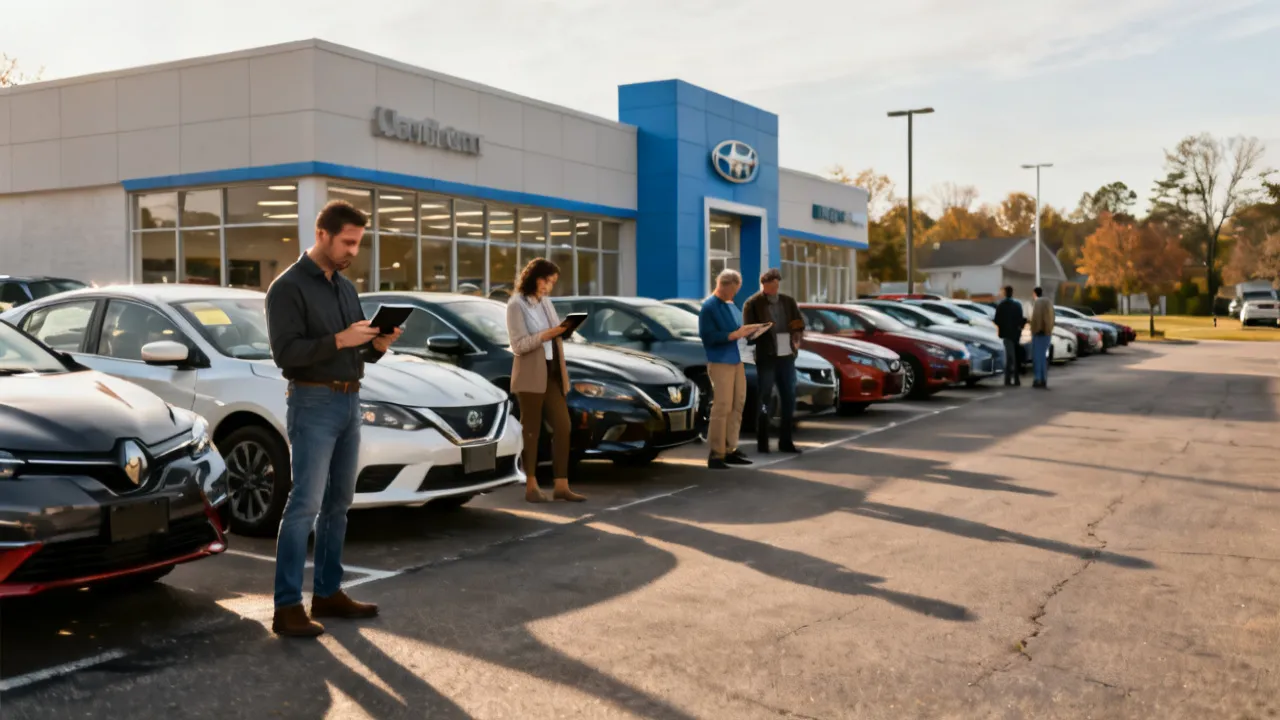
1) Start Here: Using “Viamar Osasco” as a Buyer’s Benchmark for Nearby Options
If you’re searching for Viamar Osasco and want to make sure you’re comparing the right things—price, condition, mileage, title status, and documentation—you’ll get the very value by treating your search like a structured evaluation process rather than a quick scroll. In practice, “Viamar Osasco” can function as a reference name for where you’re likely to encounter certain vehicle categories, dealership practices, and inventory turnover patterns in the Osasco region (and its nearby market ecosystem). Your goal is to reduce uncertainty: confirm what you’re buying, validate the vehicle’s history, and ensure that the total purchase terms match what you expect.
Because vehicle listings often change daily and because the “top deal” depends on vehicle history and ownership conditions, the very reliable approach is to combine dealership-side listings with third-party marketplace tools that publish consistent filters (price range, trim, drivetrain, model year, and mileage bands). This guide focuses on that objective method: compare listings, verify records, and then negotiate on documented evidence.
Think of “Viamar Osasco” as the starting point of your map—not the destination. It helps you orient where to look, which models tend to appear, how inventory is described, and what kind of paperwork you may encounter. But your job as a buyer is to test every claim with verifiable information, including asking for documents, cross-checking market pricing, and confirming condition with an inspection.
In many regions, buyers fall into a common trap: they see a name they recognize and assume it’s synonymous with “safe,” “fair,” or “always a good deal.” That’s not automatically true. What matters is whether the specific vehicle you’re considering is accurately represented and whether the final transaction terms are transparent. The best deals are not merely “cheap”; they are cheap and predictable—meaning you can anticipate repair costs, understand title status, and verify service history.
To do that effectively, you need an evidence-based workflow. The reason a dealership name like Viamar Osasco is useful is that it can reduce friction: you may be able to visit the lot, request documents quickly, or confirm details with the sales team. But the pricing logic should still be built from multiple comparable listings and confirmed records.
2) What “Viamar Osasco” Usually Signals in a Local Car-Sourcing Journey
When shoppers mention a specific dealership name like Viamar Osasco, they are typically looking for one (or more) of the following:
- Local availability—cars that can be inspected with less travel friction.
- Familiar sales workflow—a dealer process for paperwork, financing, and trade-ins.
- Inventory breadth—the possibility of matching budget constraints with multiple vehicle options.
- Practical buyer support—documents, service history, and transparent next steps.
For an objective evaluation, you should treat the dealer name as a starting point—not as proof of vehicle quality. Quality is established through documentation (title status, service records, accident disclosures where applicable), inspection results, and the clarity of the final purchase agreement.
It’s helpful to understand what buyers usually “want” emotionally when they mention a known dealer. Often it’s confidence. They want to feel like the transaction will be smooth and that the paperwork will be handled properly. That desire is reasonable, but it still doesn’t replace the need to verify the specific car you want. A dealership can be reputable while still offering a particular vehicle that needs near-term reconditioning. Likewise, a dealership that’s less familiar can still sell a great car at a great price—if the documentation and inspection match the story.
So the correct approach is to treat Viamar Osasco (and any other dealership name you encounter) as a signal about “where to start your search” and “how you may access the car.” Then verify everything for that specific unit.
In practice, this means you should collect details such as:
- VIN (so you can cross-check vehicle history where available)
- Actual mileage at the time of purchase
- How the seller describes previous owners (and whether that aligns with documents)
- Any disclosed damage, repairs, or accident history
- Whether the listed vehicle is “ready to drive” or has deferred repairs
When you do this, the local reference becomes a useful part of your system—rather than a substitute for due diligence.
3) The Very Important Car Listings Sources (Official Portals)
To compare vehicles reliably, start with established official marketplaces and dealer listing platforms. These portals typically provide structured data, filters, and a clear pathway to contact the seller. Below is a supplement table that helps you understand the role of each site in the buying process.
| Marketplace / Portal | Typical Buyer Value |
|---|---|
| cars.com | Structured vehicle search with consistent listing filters; useful for narrowing choices before contacting sellers. |
| Carmax | Large inventory listings and standardized purchasing workflows; often centered on condition review and documentation. |
| Caronsale | Vehicle listings across categories; can help expand the number of comparable options you evaluate. |
| Autotrader | Comprehensive listings across trims and price tiers; useful for cross-checking market pricing and availability. |
source: www.cars.com; www.carmax.com/cars; www.caronsale.com/en; www.autotrader.com (source of information used for the marketplace/portal references)
Using multiple portals matters because listing quality varies. Some sites present more comprehensive descriptions and pictures; others emphasize pricing and basic specs. A strong buyer process treats each portal as a data collection layer:
- Confirm the vehicle’s basic specs (engine, transmission, trim, options)
- Compare pricing across a similar geography and mileage band
- Identify patterns (for example, if one listing is unusually low compared to all others)
- Save screenshots or archived details in case listings change while you negotiate
When “Viamar Osasco” appears as a seller name in listings, you can use these portals to quickly build a list of comparable vehicles from other dealers. This helps you avoid over-relying on a single market perspective. It also helps you negotiate: you can point to multiple real listings in the same window of time.
There’s also a practical advantage: official portals often provide standardized filters that reduce “apples-to-oranges” comparisons. Without filters, buyers can mistakenly compare a heavily optioned car to a base trim car or compare a vehicle with new tires to one with worn tires. When you filter properly, you reduce that risk.
4) How to Find and Buy a Cheap Car (Car on Sale)—A Step-by-Step, Evidence-Based Method
In the used-car and “on sale” market, the low price listed price is not always the lowest total cost. An industry-experienced approach focuses on what you can verify: vehicle history, mechanical baseline, documentation quality, and the full purchase terms (taxes/fees, title handling, warranty terms, and financing structure).
The phrase “cheap car” is often interpreted as “lowest sticker price.” But smart buyers treat “cheap” as “lowest risk-adjusted cost.” A cheap listing that is missing service records may be expensive later if you need immediate repairs. A car that looks cheap because it needs reconditioning can still be a good deal if you quantify the cost and negotiate accordingly.
When you’re using a reference like Viamar Osasco, you can still apply the same discipline. The process below helps you treat every listing as a hypothesis and convert it into a decision only after you confirm evidence.
Step 1: Define a “Total Budget,” Not Just a Price Tag
Set your budget for:
- Vehicle price (list price)
- Estimated taxes and registration (varies by locality and vehicle type)
- Inspection or verification costs (often money well spent)
- Financing costs (APR, term length, and any add-ons)
When comparing offers from listings associated with Viamar Osasco style local inventory or from nearby dealer stock, always normalize the “out-the-door” number. A slightly higher list price can become cheaper if fees are lower or if the vehicle is better documented.
To make this concrete, you can build a simple budget spreadsheet (even on your phone). For each candidate vehicle, write:
- List price
- Estimated taxes/registration
- Any dealer documentation fees
- Delivery or transportation charges (if applicable)
- Optional add-ons (extended warranty, protection packages)
- Financing assumptions (APR, down payment, term)
- Estimated monthly payment range
This turns negotiation into arithmetic. Instead of “I want a lower price,” you become “Given these comparable listings and the likely reconditioning needs, the out-the-door price should be X.”
Also, don’t forget you may need funds for immediate ownership needs: replacement fluids, new filters, tire replacement if the tread is near the limit, and basic consumables if the car has been sitting. A buyer who budgets only for the car purchase sometimes gets surprised by the first “ownership bill.”
When you treat the total cost carefully, you can interpret “on sale” properly. Sometimes a “deal” is a high list price but low add-on pricing; other times it’s a low list price plus high fees. Your budget should reflect what you actually pay.
Step 2: Use “Car on Sale” Filters, Then Validate the Details
Many portals label vehicles as discounted or “on sale.” The key is to confirm what the label means:
- Is it a short-term promotion?
- Is the discount linked to seasonality, trade-in volume, or new inventory replacement?
- Does the listing include enough details for you to evaluate condition (tires, brakes, service notes, accident history disclosure where required)?
As a top practice, open multiple listings that match your target model and mileage band. This is where Viamar Osasco can be helpful as a “known local reference point”: you can compare what similar vehicles are priced at in the nearby market and adjust expectations.
To validate a listing, you should not only read the words but also examine the evidence embedded in the listing itself:
- Photographs: Are there clear interior and exterior photos? Are there close-ups of tires and wheels?
- Service claims: Does it mention oil changes, brake work, battery replacement, or transmission service?
- Accident disclosure: Does the description mention “minor damage,” “repaired,” or “reported accidents” (where applicable)?
- Condition language: Is it specific or vague? “Good condition” is less informative than “new tires installed 2 months ago.”
- Consistency: Does the mileage and model year match every part of the listing?
If the seller provides limited details, that doesn’t automatically make it a bad car—but it does increase the uncertainty. Your negotiation stance should account for the unknowns.
Another practical validation step is to ask the dealer for a specific set of answers quickly, especially for “on sale” units. For example: “How many previous owners?” “Is there any accident history?” “What tires are installed (brand/model)?” “When were the brakes last serviced?” “Is there an inspection report?” Clear answers indicate good process.
Step 3: Compare Three Similar Vehicles Before Negotiating
Rather than negotiate off one listing, build a mini “benchmark set” of three vehicles with similar:
- Model and trim
- Approximate mileage
- Transmission and drivetrain
- Region/usage context (if disclosed)
Objectively, negotiation improves when you can show that another vehicle’s documented condition supports a different price expectation.
When you compare three vehicles, you need to compare more than the sticker price. Use a “difference map” to identify what is actually changing between cars. Here are typical variables that matter:
- Tires: New tires vs worn tires can easily affect near-term cost.
- Brakes: How much pad and rotor life remains.
- Battery and belts: Especially in older vehicles.
- Transmission behavior: Smooth shifting vs delayed engagement symptoms.
- Body condition: Scratches, dents, paint consistency.
- Interior wear: Seat tears, steering wheel wear, electronics functionality.
- Documentation: Service history completeness and title clarity.
Once you identify the real differences, you can negotiate intelligently. If Vehicle A has fewer documented service records and Vehicle B has full records, Vehicle A should not be priced the same—unless the inspection shows it’s effectively equal in condition.
It can also help to compare pricing across time. If a car has been listed for weeks with little activity, pricing may reflect negotiation margin. If multiple similar cars appear and disappear quickly, that may reflect higher demand. Your benchmark set should be current enough that market movements don’t mislead you.
Step 4: Verify Title/History and Request Service Documentation
For cheap deals, history matters very. Ask for:
- Vehicle history documentation (where legally and practically available)
- Service records (oil changes, major repairs, brake work)
- Ownership and accident disclosures where required by local sales regulations
An experienced buyer’s stance is simple: if documentation is incomplete or unclear, the “cheap price” becomes a risk-premium rather than a savings.
To make this step more actionable, you can define what “good enough” documentation looks like:
- Oil change intervals appear consistent (or at least plausible given the mileage)
- Major service items appear at reasonable mileage points (for example, cooling system service, spark plugs, transmission fluid service if applicable)
- Repairs are documented with receipts, not only verbal claims
- Any reported accident history is explained with repair details
- Title status is clarified (for example, whether the vehicle is clean title vs salvage/rebuilt where applicable)
When buying from any dealership, including those linked with Viamar Osasco, don’t be afraid to request the information in a structured way. For example:
- “Please provide the VIN and any vehicle history report you have on file.”
- “Please provide service records or invoices for the last major maintenance items.”
- “If any repairs were made after an accident report, please provide repair documentation or a description of the work completed.”
- “What is the warranty status at the time of sale?”
If the seller cannot provide records, ask why. Sometimes records were lost; sometimes they never existed. Either way, it affects risk, and you should reflect that in your negotiation.
Also pay attention to consistency between what the listing claims and what the seller says. If the listing implies “well maintained,” but service records stop at a certain point, your negotiation should account for missing time. “Cheap” becomes uncertain when the documentation is incomplete.
Step 5: Inspect Mechanically (or Pay for an Independent Pre-Purchase Inspection)
Even when a listing appears clean, mechanical inspection reveals hidden issues. Focus on:
- Underbody condition (rust, leaks)
- Tire wear patterns
- Brake condition
- Fluid condition and signs of neglect
- Computer scan results for error codes
If you find yourself comparing vehicles advertised as “on sale” near Viamar Osasco, remember: promotional pricing can be legitimate, but it can also reflect aging components that need near-term replacement. Inspection converts assumptions into facts.
An effective inspection is not just “does it start?” It examines the vehicle as a system. Consider requesting an inspection that includes:
- OBD-II scan: Check for stored and pending diagnostic trouble codes.
- Live data review: Monitor sensor values under normal conditions.
- Test drive: Evaluate shifting quality, acceleration behavior, braking feel, and steering alignment.
- Leak check: Look for oil, coolant, transmission fluid leaks.
- Cooling system check: Confirm temperature stability and fan operation.
- Suspension and alignment: Look for clunks, uneven tire wear, and alignment issues.
- Electrical check: Verify lights, infotainment, sensors, and charging system basics.
If you plan to buy a cheap car, spend money intelligently. Independent inspections can prevent you from buying a vehicle that appears cheap only because it hides costly issues. This is especially important when documentation is incomplete.
It also helps to prepare questions for the mechanic or inspection service. For example: “Are there signs of prior damage repairs?” “Any evidence of rust in critical areas?” “Are there warning lights not visible during a short test drive?” “Does the vehicle feel aligned or pulling?”
When inspection reveals issues, your next move is not immediate panic. It’s a pricing adjustment. Identify what repairs are urgent vs what can wait. Then negotiate accordingly.
Step 6: Negotiate Using Evidence, Not Emotion
When negotiating a car on sale, you should anchor your offer to verified factors:
- Market comparison (from comparable listings)
- Inspection findings
- Missing or incomplete service records
- Reconditioning costs (tires, brakes, battery, minor body work)
This is how you turn a “listing discount” into a fair purchase price.
A good negotiation approach follows two principles:
- Be respectful and professional—the goal is to collaborate toward a fair deal.
- Be specific about why—avoid vague complaints (“It’s too expensive”). Use concrete items (“The brakes are at 20% and need replacement within months; two comparable vehicles have documented recent brake service; therefore the price should be adjusted.”).
To negotiate effectively, you can bring a “deal dossier” to the discussion. This might include:
- Printout or screenshots of 2–3 comparable listings
- Your out-the-door budget calculations
- Inspection report highlights
- Estimated repair costs (even rough estimates from a mechanic or tire/brake quotes)
- A list of questions you asked and what was answered (or not answered)
When “Viamar Osasco” is part of your search, you may have an advantage: you may have local access to the car, allowing quicker inspection scheduling. That speed can strengthen your negotiation position because you can act decisively—either accept with confidence or move on.
Also note: the “on sale” label may create a perception that the dealer is willing to move quickly. But the dealer might still be pricing to cover reconditioning needs. If you can verify that reconditioning has been done, you can negotiate less aggressively. If you verify it hasn’t been done and the car needs work, you negotiate more assertively.
Step 7: Review the Final Paperwork Carefully
Before committing, confirm:
- Total sale price including all fees
- Warranty terms and exclusions (if any)
- Return policy or reinspection policy where offered
- Financing terms: APR, term length, and any add-on products
Transparent documentation is a sign of good governance in sales. Less transparent paperwork is a signal to slow down.
This is a step where many buyers rush because the car feels like “almost yours.” But paperwork can quietly change the effective price. Review each item line by line:
- Dealer fees: Are they consistent with what was discussed?
- Taxes and registration: Are they calculated correctly?
- Warranty: What exactly is covered? How long? What exclusions apply?
- Add-ons: Are you being charged for items you didn’t request?
- Financing agreement: Confirm APR, term length, and whether there are prepayment penalties.
If anything is unclear, ask for clarification before signing. Good sellers should be comfortable explaining paperwork. If explanations are evasive, it’s often better to pause.
Also, confirm how title transfer is handled. In many markets, buyers need to understand whether there are pending steps, how long it takes, and what documents they will receive. This affects your ability to register and drive legally.
5) Practical “Buyer Requirements and Conditions” Checklist
Below is a conditions/requirements supplement you can use to structure your decision. Think of it as a quality gate that your purchasing process must pass.
| Requirement / Condition | What You Should Confirm |
|---|---|
| Comparable pricing | Your selected vehicle’s price should align with at least one comparable benchmark listing after adjusting for mileage, trim, and documentation quality. |
| Vehicle history clarity | Accident/service/title disclosures should be present and consistent with what you observe and what the seller states. |
| Inspection readiness | The seller should allow inspection conditions consistent with local practice, including independent inspection where appropriate. |
| Transaction transparency | The final agreement must clearly list fees, warranty terms (if offered), and any financing add-ons. |
| After-purchase support | Know how issues are handled after purchase: warranty claims, service schedules, or reinspection mechanisms. |
To further strengthen the checklist, consider adding a “decision threshold” for yourself. For example:
- If service records are missing for a critical time period, require a price reduction or only proceed if inspection confirms healthy condition.
- If accident history is disclosed, ask for repair documentation and consider reducing offer price unless repairs are fully documented.
- If inspection flags urgent mechanical issues, avoid rushing—either renegotiate substantially or walk away.
This kind of threshold prevents emotional decision-making. It also helps you compare different deal offers without confusion.
6) Industry Perspective: Why “On Sale” Cars Need a Different Evaluation Lens
From an industry expert standpoint, the phrase “on sale” often reflects one or more supply-and-demand dynamics:
- Inventory turnover pressure: dealers may discount vehicles to move stock before replenishment.
- Seasonality: certain model types sell better at different times, influencing promotion strategies.
- Reconditioning status: vehicles that are ready now may be priced differently than those pending repairs.
- Market mismatch: a car may be listed at a discount because it didn’t meet expectations for demand at the original price.
None of these reasons are automatically negative. However, they do change your risk model. In other words, a “cheap” listing can be an excellent deal—or it can signal upcoming maintenance. Your job is to separate those two outcomes using evidence.
Another industry reality is that marketing language can be selective. Some listings emphasize discount but omit the reasons behind it. That’s why your evaluation lens needs to go deeper:
- Is the discount tied to a mechanical issue that is not fully disclosed?
- Is the discount tied to cosmetic issues that can be fixed cheaply?
- Is the discount tied to demand (for example, slow-selling trims)?
- Is the discount tied to market competition (similar cars available elsewhere)?
A useful way to interpret “on sale” is to treat it as a clue about potential negotiation room and potential risk areas. But you should not assume the worst. Instead, you verify. If the car turns out to be well maintained with full records, the discount is simply a deal—something you want. If the discount correlates with missing records and mechanical wear, you negotiate based on that information.
In many cases, good bargains come from cars that are priced aggressively because the seller wants to close inventory quickly. That can happen at reputable dealers, including those you encounter while searching near Viamar Osasco. The key is not to reject the bargain; it’s to validate it.
7) Localization Note: Searching “Nearby” and Comparing Like-with-Like
You may be expanding search beyond a single dealer name such as Viamar Osasco. When you broaden the radius to what’s considered nearby, keep comparisons disciplined:
- Compare similar mileage intervals and similar model years (avoid mixing too broad a range).
- Account for different listing quality: one marketplace might publish richer service notes than another.
- Confirm whether the car is already reconditioned (tires/brakes) or whether those items are deferred.
In suburban driving contexts—common in the greater Osasco ecosystem—maintenance history and tire/brake wear patterns often matter as much as “headline” specifications. A car that was maintained consistently typically offers better predictability than one priced low but under-documented.
Localization also affects ownership patterns. Two cars with the same model and mileage can have different wear profiles depending on:
- Road conditions (potholes, gravel, rough pavement)
- Weather and climate (affects rust risk and battery aging)
- Traffic density (affects brake wear and transmission behavior)
- Typical driving distance per trip (short trips increase engine and battery stress)
Therefore, if you compare vehicles across a wider radius, you should be careful not to over-generalize. Your benchmark set should ideally include vehicles from similar usage contexts or at least similar mileage patterns.
Also, consider travel time as part of the overall cost. A “cheap” car that requires long travel may cost more in fuel, time, and risk. Sometimes the best deal is the one you can inspect quickly, especially if you suspect the car might have hidden issues.
If you have the option to visit the dealer near Viamar Osasco and inspect multiple units in one trip, that can be an advantage. It reduces the overall friction and helps you compare like-with-like efficiently.
8) Recommended Buying Workflow (Inverted Pyramid Action Plan)
To keep the process efficient, use this order of operations:
- First: Identify 3–5 candidate listings that match your budget and preferences.
- Second: Verify documentation quality (history, service records, title status).
- Third: Perform or arrange an inspection for the top 1–2 choices.
- Fourth: Negotiate with evidence based on inspection findings and market benchmarks.
- Finally: Review total out-the-door terms and warranty/return details before signing.
When you follow this workflow, you turn “Viamar Osasco” (and any other dealer reference) into a practical tool for narrowing choices—while ensuring the final decision is based on verifiable facts.
To expand this into a more detailed “action plan,” here’s how you might run it in real time:
- Day 1: Build candidates
Use multiple portals and filters. Save links and screenshots. Create a “candidate list” spreadsheet. - Day 2: Contact sellers
Ask standardized questions: VIN, title status, previous owners, accident disclosure, service record availability. - Day 3: Validate documentation
Compare the seller’s claims with any available vehicle history report and ensure internal consistency (mileage, model year, reported incidents). - Day 4–5: Inspection scheduling
Book an inspection for the best one or two candidates. If the seller refuses independent inspection, treat that as a red flag unless the dealership provides an inspection report you can trust and verify. - Day 6: Negotiate
Use inspection findings and comparable pricing. Make an offer based on out-the-door calculations. - Final day: Review paperwork
Confirm every fee, warranty clause, and financing term in writing.
This workflow helps you avoid the most common mistakes: falling in love with a listing too early, ignoring missing records, and negotiating based on list price instead of out-the-door cost.
It also creates momentum. Instead of spending weeks browsing and waiting, you are moving through a clear checklist. That’s particularly useful when listings are time-sensitive and when “on sale” cars can be sold quickly once inspected by other buyers.
9) FAQs
FAQ 1: Is Viamar Osasco the only place to look for a car on sale?
No. While Viamar Osasco can be a useful reference point for local inventory, the very effective strategy is to compare across multiple reputable listing portals. This helps you understand market pricing and choose the top documented option available nearby.
In fact, relying solely on one dealer name can make you vulnerable to limited options. When you have multiple listings in view, you can identify when a price is genuinely competitive and when it is not.
FAQ 2: How can I tell whether an “on sale” price is a real opportunity?
Treat any discounted listing as a hypothesis. Validate it by checking vehicle history clarity, requesting service records, and—if it’s a top candidate—performing an independent pre-purchase inspection. A discount backed by documented readiness and consistent maintenance is typically safer than a discount tied to unknown history.
A simple mental rule: the more important the car is to you, the more evidence you need. If you cannot verify major aspects of the vehicle (title status, accident disclosures, maintenance consistency), you should be cautious about assuming the “on sale” price is automatically a bargain.
FAQ 3: What documents should I request before buying a used car?
At minimum, request the listing’s vehicle condition details, any available service records, and disclosures regarding title and accident history where applicable. If independent inspection is feasible, you should also plan time for a mechanical verification.
Beyond the basics, if the seller can provide invoices, warranty transfer documents (if the warranty is transferable), and any inspection report they already performed, that can strengthen your confidence and reduce time spent verifying later.
FAQ 4: Should I negotiate based on the list price or the out-the-door price?
Negotiate with the out-the-door price in mind. List price comparisons are useful, but total cost clarity (fees, taxes, and financing add-ons) is what determines your true savings.
For many buyers, the list price is the first number they discuss. But the final number that matters is what hits your payment plan and what you actually pay at signing. When negotiating, always request an itemized breakdown.
FAQ 5: Are third-party marketplaces reliable for finding cars near my search area?
Reputable listing platforms generally help you narrow candidates efficiently because they provide structured filters and public listing details. Reliability improves further when you use the platform data to contact sellers, validate documentation, and complete an inspection before committing.
Still, treat the listing as informational rather than authoritative. A correct listing is good; a verified listing is great. Your goal is to confirm everything through documents and inspection.
FAQ 6: What’s the safest way to buy a cheap car without taking unnecessary risk?
Use a staged approach: compare multiple similar listings, verify documentation, inspect the top choice, and negotiate based on evidence. Avoid making decisions solely from the headline “cheap” or “on sale” label.
Buying “safe cheap” often means you are paying a bit more for predictability—full records, recent maintenance, and clean inspection results. The “best deal” is usually the one you don’t regret because it aligns with your risk tolerance.
10) Conclusion: Make “Viamar Osasco” a Starting Point for a Documented Purchase
For buyers using Viamar Osasco as a reference, the top outcome comes from combining local awareness with market comparison and verification discipline. Cheap and on-sale vehicles can be excellent value when—rather than guessing—you confirm history, evaluate mechanical condition, and review final purchase terms carefully. Use established marketplaces to benchmark pricing, then treat your negotiation as a documentation-driven process. That is the very objective path to a confident car purchase nearby.
In the end, the dealer name is only part of the story. The full story is built from evidence: how the vehicle was maintained, what its records show, what an inspection confirms, and whether the final paperwork matches your understanding of the deal. When you follow that approach, your search becomes less stressful and more controlled, and the likelihood of buying a genuinely good “on sale” car improves significantly.
Disclaimer: The above information comes from online resources, and the data is as of October 2023. For more information, please refer to the official website.
Reference links (and all links used in this article):
-

A Guide to Cost-Efficient Small Electric Cars for Seniors
-
Mastering Debt Consolidation: Boost Your Credit Score and Manage Interest Rates
-
Your Guide to Loans, Credit Checks, and Interest Rates
-
Affordable Independent Living: Finding the Right Senior Housing
-
Guide to Senior Living Apartments: Affordable and Comfortable Environments