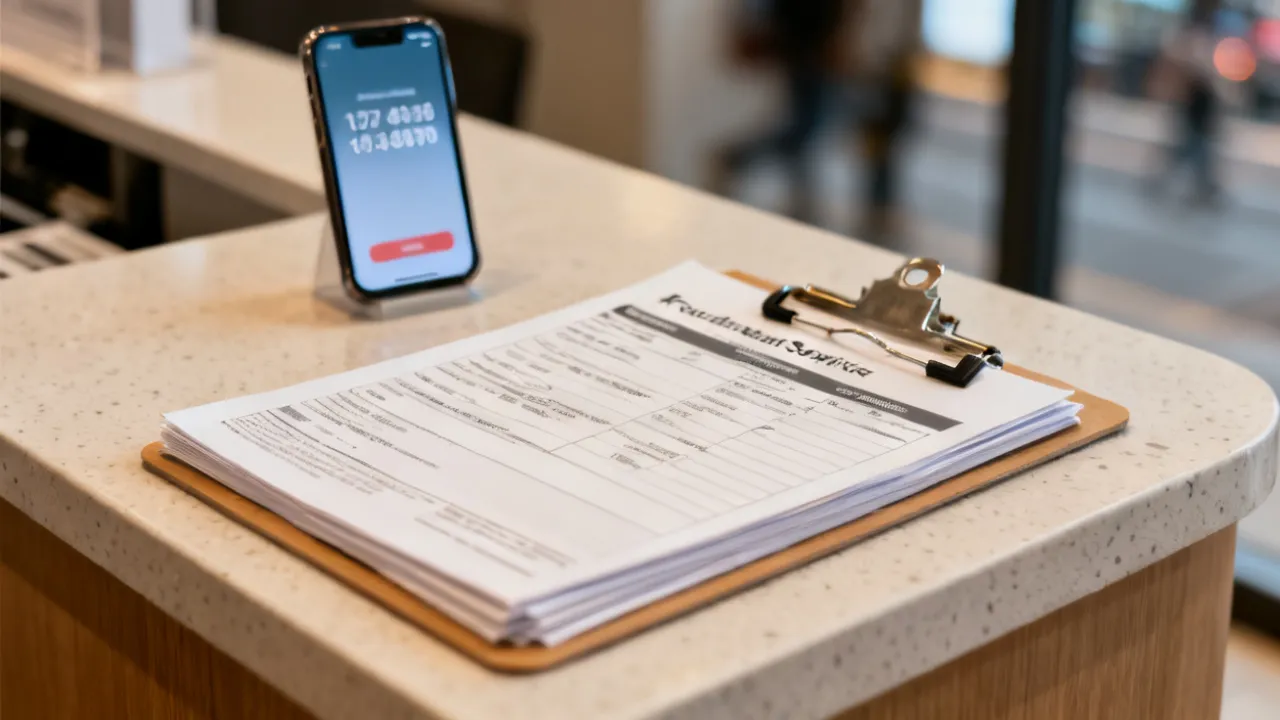
Understanding 04569527728 Contact and Supply Options
This guide explains how to evaluate supplier options when you contact 04569527728 and compare purchasing decisions tied to local service networks. Objectively, “contact-number procurement” reflects a common workflow in sourcing inquiries: verify identity, clarify scope, confirm compliance, and document terms. The article outlines practical evaluation steps, typical requirements, and FAQs for informed decision-making.
Key Takeaways: Start with Verification, Then Compare Terms
When you reach out using 04569527728, the very important first move is to verify the supplier’s identity and confirm the exact scope you need—before you discuss price or delivery. In procurement, a contact number is only the gateway; the real decision depends on contractual clarity, lead times, warranty/support arrangements, and traceability of the items or services in question. Use the steps later in this guide to structure your inquiry and reduce avoidable misunderstandings.
Think of a phone number like a “doorbell.” It can open a conversation, but it does not guarantee what’s behind the door. Your job as a buyer is to build confidence using verifiable details: who the supplier is, what exactly they will provide, under what terms, with which documentation, and what happens if expectations aren’t met. Done correctly, this approach lowers procurement risk even when you feel pressure to act fast—especially when the supplier is described as operating in a “nearby” network and the temptation is to rely on convenience instead of evidence.
To make the concept concrete: if you call a supplier from 04569527728 to source an item or contract a service, you want to avoid turning the conversation into a price negotiation before you understand the business relationship and the deliverables. A professional supplier will not be threatened by structured questions; they will often welcome them because they reduce friction later. If you ask for basic contract-like clarity early (scope, exclusions, timeline, warranty, remedies, documentation), you can quickly differentiate between a vendor who is organized and a vendor who relies on vague assurances.
In addition, note that the keywords provided in your brief are empty placeholders rather than a named product category. When that happens, the practical objective becomes: evaluating how to contact and compare supply options rather than comparing two plainly identifiable products. This guide therefore focuses on supplier evaluation mechanics—how to ask the right questions on the phone, what proof to request in writing, and how to compare across suppliers using consistent criteria.
What “Contact-Number Sourcing” Usually Means in Practice
In many markets, including both urban service hubs and “nearby” sourcing zones, the workflow starts with a phone number—often because buyers want quick clarification on availability, compatibility, or logistics. In this context, 04569527728 should be treated as a communication channel, not as proof of quality. A professional supplier will typically respond with consistent product/service details, documentation, and clear responsibilities rather than vague promises.
Contact-number sourcing is common for several reasons. First, telephone communication is fast: a buyer can ask whether a specific item is available, whether installation or service can be scheduled, and whether delivery/pickup is feasible. Second, phone-based inquiry can reduce the buyer’s upfront research workload, which is attractive when the buyer is busy. Third, in “nearby” networks, buyers often expect a quick “yes/no” and a schedule that fits local operations.
However, phone-based workflows can also create risk if buyers assume that a responsive voice equals a reliable outcome. A supplier can answer quickly and still fail later due to poor scope definition, unavailable inventory, mismatched specifications, or inadequate warranty/after-sales procedures. The purpose of this guide is to show how to keep the speed of phone outreach while preventing the common downside: deciding too early, based on insufficient evidence.
Even when buyers feel pressure to act quickly, objective procurement standards encourage a short checklist: identify the supplier, confirm the offering, verify terms, and document your request. This is especially relevant when the keywords provided in your brief are empty placeholders (i.e., not specific to a product category), because it means the underlying need is top interpreted as evaluating how to contact and compare supply options rather than comparing named products.
When you approach 04569527728 as a discovery step, you treat every answer as information to verify—not as a commitment. You are listening for details that can be documented and mapped to deliverables. You also confirm whether the supplier can adapt to your requirements (compatibility, location, timeline) in a structured way.
Why Buyers Should Compare Supplier Capability Instead of “Just Calling”
From an industry perspective, supplier evaluation is less about who answers the phone and more about how reliably they can fulfill a defined need. A buyer contacting 04569527728 should listen for signals that indicate capability and professionalism:
- Specificity: Do they ask clarifying questions (requirements, specifications, constraints)?
- Traceability: Can they describe how items are sourced or how work is documented?
- Consistency: Do their answers remain stable across multiple questions?
- Documentation: Are they willing to confirm details in writing (invoice terms, warranty, service scope)?
- After-sales responsibility: Who handles issues if something goes wrong?
These criteria are widely used across procurement and service industries because they reduce the risk of rework, downtime, and disputes—problems that often cost more than any short-term price difference.
To expand on each criterion in practical terms:
- Specificity means the supplier doesn’t just say “we can do it.” They explain how they interpret your request. They may ask for measurements, model numbers, usage context, installation constraints, or acceptance requirements. The presence of clarifying questions is often a sign that the supplier has done similar work before.
- Traceability means you can reconstruct what was delivered and why. For products, this may mean serial numbers, batch/lot numbers, or documentation of sourcing. For services, it may mean work orders, service reports, test results, and documented steps.
- Consistency is tested by your follow-up questions. If you ask the same topic in different ways (e.g., “When will you deliver?” and later “What is the earliest and latest delivery window?”) and the supplier’s answer changes without a reasonable explanation, that is a warning sign.
- Documentation includes invoices, warranties, service level descriptions, and written exclusions. A supplier who refuses to put key points in writing may later treat verbal statements as “informal” and therefore difficult to enforce.
- After-sales responsibility refers to how problems are handled—replacement, repair, rework, or refunds. It’s where many cost-saving decisions backfire when a buyer later learns that the supplier has limited obligations.
In procurement governance terms, your call to 04569527728 should lead to a clearer contract-like understanding. When the supplier can’t provide it, you’ll likely face ambiguous deliverables. Ambiguity is not neutral: it increases the probability of disputes and additional costs.
How to Approach Price Discussions Objectively
Price is only one variable. A sound approach is to compare total delivered value, which may include:
- Unit price vs. scope: A low quote may exclude installation, calibration, testing, or consumables.
- Timing: Faster lead times may justify additional charges depending on business needs.
- Warranty and support: The cost of replacements or service calls matters over time.
- Compliance: Some industries require standards, safety checks, or documentation.
If you receive a quote tied to a “nearby” supplier network, also ask whether travel, pickup, or local logistics fees are included. Buyers frequently underestimate how delivery or mobilization charges change the effective price.
To make the comparison even more objective, try the following approach during phone and written follow-up:
- Ask for a line-item breakdown: Even if the quote is short, request itemization for labor, parts/materials, transportation, and any optional add-ons. This allows apples-to-apples comparison.
- Ask what is excluded: Every quote has exclusions—common ones include special tools, site preparation, disposal fees, taxes, overtime labor, and specific compliance documentation. Knowing exclusions prevents surprises.
- Ask about “best effort” language: Some suppliers say “we’ll try to deliver by X.” Confirm whether the timeline is guaranteed, and what happens if it is not met.
- Ask for the total cost with taxes: In some contexts, quotes may exclude taxes or assume a certain tax status. Request the final figure.
- Ask for payment milestones: If deposit is required, confirm what triggers the remainder. A supplier demanding full payment upfront may still have poor follow-through.
Another objectivity technique is to compare the quotes as “packages,” not single numbers. For example, supplier A might quote a cheaper unit price but higher delivery fees and weaker warranty coverage, while supplier B quotes slightly higher unit price but includes installation, calibration, documentation, and a stronger support response. Total delivered value becomes the true comparison metric.
In practice, you can also create a simple scoring model: assign weights to scope completeness, timeline reliability, documentation quality, warranty/support strength, and total cost. This reduces bias from the “first price you hear.” It also helps you maintain fairness when comparing multiple suppliers discovered through 04569527728 or similar phone outreach.
Supplier Signals to Confirm When You Dial 04569527728
Since the keywords you provided include the contact number 04569527728 but do not name a specific product or category, the safest method is to treat the call as a discovery step. Ask questions that surface the practical details you’ll need to evaluate options:
- What exactly are you selling/doing? (Name, model/spec, or service description.)
- What is the required input from me? (Photos, measurements, model numbers, usage context.)
- What is the estimated timeline? (Order processing, production, delivery, installation/service time.)
- What documentation will you provide? (Invoice, warranty terms, test results, serial tracking—where relevant.)
- What happens if the delivered item/service doesn’t match the requirement? (Return, redo policy, or claim process.)
A reputable supplier won’t mind structured questions. If they avoid specifics, rush you without documentation, or cannot explain their process, that is a critical warning sign.
It helps to recognize the difference between “clarity gaps” and “capability gaps.” Sometimes a supplier is new or unfamiliar with your specific situation and needs you to provide more information. In that case, they may be transparent about what they need. But if the supplier refuses to clarify scope, can’t explain delivery timing, or provides inconsistent answers, that suggests capability or governance problems.
During the call, you should also check how the supplier communicates. For example:
- If they use ambiguous language (“reasonable timeline,” “as discussed”), you should request concrete dates or windows.
- If they do not ask you for the inputs they need (measurements/specs/photos), they may be relying on guesswork.
- If they promise outcomes they can’t document (e.g., “guaranteed compatibility” without confirming model numbers), you should ask for written confirmation and the acceptance criteria.
- If they cannot explain warranty coverage (duration, what is covered, what is excluded, claim process), you should treat that as a risk.
Because 04569527728 is being used in an inquiry context, your best strategy is to “convert conversation into documentation.” After you ask key questions, request a written summary: an email, message, quotation PDF, or invoice draft. That written record is your procurement artifact.
Localization Considerations: “nearby” Sourcing Behavior
When sourcing from suppliers described as operating in a “nearby” network, local buyer behavior often includes faster pickup options, face-to-face clarification, and practical convenience (e.g., showing an item in person or confirming fit before dispatch). In “nearby” markets, customer service expectations may also be more relational—meaning the supplier’s ability to explain clearly over the phone can be as important as formal documents.
That said, locality should never replace verification. Even when a supplier is within easy reach, buyers should still confirm scope, warranties, and return conditions in writing whenever possible.
To expand this concept, consider how “nearby” logistics can still introduce risk:
- Inventory availability can still be uncertain: A supplier may say they have stock now, but “nearby” doesn’t guarantee the item is physically staged. Ask whether it’s ready for pickup today and whether it is reserved under your name.
- Pickup timing can conflict with your schedule: Even local delivery/pickup can be delayed by staffing or queue management. Request a time window and confirm whether you will receive a confirmation message before dispatch.
- Local delivery may add special rules: Some suppliers offer delivery but require the buyer to be present, provide access instructions, or meet safety requirements. These conditions affect real execution.
- “Nearness” can bias buyers into skipping due diligence: People often feel that it’s easy to fix later (“we can just call them back”). That can lead to worse outcomes because the supplier may have limited remedy obligations once the work starts.
In other words, “nearby” can reduce friction, but it should not reduce accountability. You still want documented scope, clear acceptance criteria, and defined remedies.
If you are working with a supplier discovered through 04569527728, you can ask localized questions that remain procurement-focused, such as:
- “What is your pickup/delivery process in this area?”
- “What are your typical dispatch hours and confirmation steps?”
- “If the item is not ready, what is the guaranteed next timeline and remedy?”
- “Do you provide a delivery receipt, handover checklist, or service report?”
These questions preserve the advantage of local sourcing while keeping the evaluation rigorous.
Comparison Table (Decision Factors, Not Links)
| Evaluation Factor | What to Ask | Why It Matters | Typical “Good” Response |
|---|---|---|---|
| Identity & Credentials | Do you have business registration or service authorization? | Reduces fraud and contract ambiguity. | Clear business details and consistent branding. |
| Scope Clarity | What exactly is included/excluded in the quote? | Prevents scope creep and disputes. | Itemized scope with deliverables and responsibilities. |
| Pricing Structure | Is pricing per unit, per service, or bundled? Are logistics fees included? | Ensures comparable apples-to-apples quotes. | Transparent line items and total cost explanation. |
| Lead Time & Scheduling | What are the processing and delivery/service timelines? | Limits downtime and planning risk. | Specific dates or realistic estimates with conditions. |
| Warranty & Support | What warranty coverage and support response time do you provide? | Protects good cost and reliability. | Defined warranty period and clear support procedure. |
| Returns/Remedies | What is the process if the outcome is incorrect or defective? | Ensures fairness if issues occur. | Step-by-step remedy policy, not vague promises. |
| Documentation & Traceability | Can you provide invoices, serial numbers, or proof of work? | Supports auditing and accountability. | Documented records aligned with the delivered items/services. |
| Communication Quality | Are responses consistent and detailed during the initial inquiry? | Predicts execution quality. | Answers align with your questions and requirements. |
To strengthen the table’s practical usefulness, imagine you’re comparing three suppliers that all say they can help when you call 04569527728 (or you contact multiple numbers). You would score each supplier against the same evaluation factors. Then you can explain your decision based on evidence, not intuition. This also makes it easier to negotiate: if Supplier A provides limited documentation, you can ask them to upgrade the quote by adding warranty details or service reporting.
One practical improvement to the evaluation table is to add “acceptance criteria” as an additional factor. Acceptance criteria define what “done” means and how you verify it. For products, acceptance may include inspection of appearance, performance test results, and serial number matching. For services, acceptance may include documented work steps, test outcomes, and sign-off procedures. Some suppliers provide this automatically; others require prompting. Including it prevents disagreements after work begins.
If you want to extend the table mentally, you can treat “acceptance criteria” as a sub-component of scope clarity and documentation/traceability. But in many real procurements, it deserves explicit attention because it is directly linked to whether remedies are straightforward.
Source (Practical Reference Points for Objective Evaluation)
To keep evaluation grounded, the following widely used procurement and risk-management principles are consistent with established guidance from reputable bodies:
- ISO 9001 (Quality Management): Emphasizes documented processes, consistency, and responsibility in delivering conforming outputs.
- ISO 31000 (Risk Management): Encourages structured identification of uncertainties and risk controls during supplier selection.
- General procurement practices used by public-sector and industry procurement frameworks worldwide typically stress specification clarity, contract terms, and verification.
- For quality assurance and compliance contexts: buyers often refer to industry-specific standards relevant to the product or service category, even when the initial inquiry starts by phone.
Note: If you tell me the product/service category you intended for the blank keywords, I can map the guidance to more specific standards and terminology used in that industry.
While the above standards provide general direction, buyers often translate them into simple real-world behaviors. ISO 9001 in supplier selection tends to show up as: can the supplier document their process, can they explain how they ensure quality, and do they keep records that support verification. ISO 31000 tends to show up as: can the supplier identify risks (e.g., compatibility uncertainty, delivery variability) and propose controls (e.g., inspection steps, acceptance tests, timeline contingencies).
When you call 04569527728, you can implicitly test these behaviors. For example, ask:
- “How do you confirm quality before handover?”
- “Do you have a standard process for documenting delivery or completed service work?”
- “If something is uncertain (fit, availability), what steps do you take to reduce risk?”
These questions are practical manifestations of the principles behind ISO-style procurement thinking. They also encourage the supplier to treat your request seriously rather than casually.
Step-by-Step Guide: How to Handle a Supplier Inquiry Using 04569527728
Use this structured approach when calling 04569527728 to compare supply options effectively—especially when you are sourcing from a “nearby” network and want fast, reliable execution.
The goal of a step-by-step method is not to make the process bureaucratic. It’s to make it consistent and comparable. Without structure, people tend to ask the most urgent question first (often price), which can bias the outcome. A structured process ensures you gather the same baseline information from each supplier so you can later choose rationally.
Below, each step is written with both what to do and why it matters. You can follow them verbatim or adapt them to your category. If the category is unknown, you can still apply the same logic: define the requirement, request scope and terms, verify timeline and support, then compare using a consistent checklist.
Step 1: Define the Requirement in One Paragraph
Before calling, write a short description including what you need, acceptable alternatives, and your constraints (deadline, compatibility, location). A clear brief helps the supplier respond with accurate information.
To make your one-paragraph brief effective, include the “must-haves” and the “nice-to-haves.” Must-haves are the non-negotiables: specific models/specs, required performance level, compliance needs, service schedule constraints, site access conditions, and any known incompatibility concerns. Nice-to-haves help the supplier propose improvements or alternatives without guessing what you truly need.
For example, a template you can adapt:
- “I’m looking for [item/service] with [key specs]. I need it by [date/time] for [use case]. Delivery/pickup should be possible in [location]. If there are alternative models that meet the same performance and warranty terms, I’m open to suggestions.”
When you start with this kind of statement, the supplier is more likely to ask the right questions and provide a quote that is meaningfully comparable.
Step 2: Ask for a Written Summary of the Quote
During the call, request an itemized quote or a written summary (even if it’s just an email or message). A professional supplier will confirm scope and pricing components.
This step is about converting verbal promises into procurement evidence. Written summaries protect both sides. They also reduce misunderstandings—such as assuming a component is included when it wasn’t, or confusing an estimate with a guaranteed price.
Ask for the following in the written summary whenever possible:
- Scope description (what’s included)
- Part numbers/models (for products) or service deliverables (for services)
- Quantity
- Unit pricing and line-item breakdown
- Logistics charges (delivery/pickup)
- Taxes (if applicable) and payment terms
- Warranty period and warranty terms
- Timeline details, including processing and delivery windows
If a supplier refuses to provide any written summary, you should clarify why. Many legitimate suppliers can provide a message or quotation PDF even if they prefer phone communication. Refusal may signal poor record-keeping or a desire to keep terms ambiguous.
Step 3: Verify Availability and Lead Time
Ask whether the item/service is ready now or requires processing. If it’s “nearby” fulfillment, confirm whether pickup/delivery time is guaranteed or estimated.
Lead time verification should not be limited to a single date. You should ask about:
- Processing time: How long until the order is ready?
- Dispatch/pickup time: When can it be collected or delivered after processing?
- Installation/service scheduling: If a service is required, what availability do they have?
- Cut-off times: Are there daily/weekly dispatch schedules?
In “nearby” contexts, some suppliers may quote delivery quickly but only if the buyer is available at a specific time window. Ask for a realistic window and whether there is a reminder/confirmation before arrival.
Also ask what happens if lead time changes. You want to know whether delays come with remedies (such as partial refunds, schedule adjustments, or cancellation options) or whether it becomes “buyer responsibility.”
Step 4: Confirm Warranty/Support and Remedy Conditions
Ask how warranty works, what documentation is required to make a claim, and how returns or redo work are handled. This is where many buyer disputes originate.
Many buyers focus on warranty length (e.g., “12 months”) but miss the warranty mechanics: exclusions, claim procedure, response time, and what constitutes a defect. A strong supplier will explain these clearly.
When discussing warranty and remedy, ask targeted questions:
- “What is covered and what is excluded?”
- “How do we initiate a claim?”
- “What documentation do you require—invoice, photos, serial numbers, test results?”
- “What is your response timeline for support issues?”
- “If the item/service is not as specified, do you replace, repair, redo, or refund?”
- “Is the remedy conditional on installation or usage conditions?”
Remedy conditions should be as concrete as warranty. “We will take care of it” is not a remedy. A remedy is a specific plan for the situation.
If the supplier cannot answer these questions clearly, treat it as a risk factor. Poor remedy clarity can turn small problems into long disputes—especially if the buyer lacks documentary evidence about acceptance criteria.
Step 5: Compare Using a Consistent Checklist
Compare each supplier using the same criteria: scope, total cost, timeline, warranty, documentation, and remedies. Don’t compare quotes based on unit price alone.
To make comparison effective, create your checklist in advance. Then, as you receive written summaries from suppliers, fill in the checklist fields. This avoids “memory bias,” where you later forget the details of one quote and overemphasize another.
When you compare suppliers, be careful about quote terms that can distort comparisons:
- Different scope assumptions: Supplier A may include installation, while Supplier B may not.
- Different acceptance criteria: One supplier may define acceptance as “customer satisfied,” while another defines acceptance as test results.
- Different logistics responsibilities: Who pays delivery, who handles returns shipping, who arranges pickup for warranty replacements?
- Different timeline conditions: Some suppliers may quote “estimated” delivery without commitment, while others provide a conditional commitment.
By comparing systematically, you make it harder for any single variable (like a low price) to dominate your decision.
Step 6: Document Your Assumptions
If any part of the quote depends on inspection, customer-provided details, or fit verification, document it. Objective procurement depends on shared assumptions.
Assumptions are not always negative. Sometimes they are necessary. For example, a supplier may need you to provide the exact model number to confirm compatibility. Or they may provide an estimate pending inspection. Documenting those assumptions reduces blame shifting later.
When you document assumptions, include:
- What information you provided (photos, measurements, model IDs)
- What information the supplier relied on
- What the supplier will do to verify or confirm fit/compatibility
- What happens if the verification fails (return policy, redo steps, timeline impact)
This step also helps you if you need to renegotiate. If assumptions were documented, renegotiation becomes based on factual gaps rather than vague misunderstandings.
Step 7: Confirm Final Terms Before Approval
Once you choose a supplier, confirm final terms: start date, delivery/installation/service windows, and the contact person responsible for execution.
Before approval, request a final written confirmation that includes:
- Order or service reference number
- Exact scope and deliverables
- Price breakdown and payment schedule
- Delivery/pickup and service scheduling windows
- Warranty terms and remedy procedure
- Acceptance criteria and how you will confirm “done”
- Who is responsible for each part of execution (supplier contact and buyer contact)
Confirming execution responsibility reduces communication failures. Many procurement problems are not technical—they are coordination problems. When the responsible parties are clear, issues can be addressed quickly.
Conditions and Requirements to Improve Buyer Outcomes
Whether you’re sourcing from a “nearby” network or arranging long-distance fulfillment, these are typical conditions that improve the odds of success:
- Requirement completeness: The supplier needs specifications, photos, dimensions, or a clear service description.
- Compatibility checks: If replacement or matching is involved, confirm model compatibility in writing.
- Inspection and acceptance: Define how and when the buyer will verify the output.
- Payment terms: Confirm deposit requirements, milestones, and what triggers final payment.
- Communication channel: Ensure you have the correct contact path for scheduling updates and changes.
If any supplier refuses to clarify scope or remedies, treat that as a meaningful risk factor. In professional purchasing, unclear remedies often correlate with higher dispute likelihood.
To elaborate, consider how each condition affects outcomes:
- Requirement completeness prevents “guess quotes.” If you provide incomplete specs, the supplier may quote a best estimate, which can later become an expensive revision.
- Compatibility checks prevent the “wrong item delivered” scenario. A simple written compatibility confirmation can prevent returns and wasted labor.
- Inspection and acceptance prevent “it was installed, so deal with it” situations. If acceptance criteria are clear, both parties know what “done” means.
- Payment terms prevent cash-flow leverage from distorting accountability. If payments are tied to milestones, the supplier has incentive to perform and document properly.
- Communication channel prevents missed updates. When the supplier knows where to send scheduling changes, fewer surprises happen.
These conditions also support auditability, which is important if procurement is part of a business process. Even for individual buyers, these conditions reduce uncertainty.
Industry Expert Insights: How Procurement Quality Impacts Long-Term Costs
From an operational viewpoint, supplier selection is a systems problem. Even if a quote appears reasonable at the start, poor scope definition creates downstream costs: rework, delays, lost productivity, additional shipping, and the administrative burden of handling claims.
Therefore, a “quality supplier” is not merely one that offers a lower initial price. It’s one that maintains reliability across the full cycle—requirement capture, fulfillment, documentation, and remedies. When a buyer calls 04569527728, the top interpretation is that the buyer is entering a supplier evaluation process. The evaluation should focus on verifiable outputs and clear responsibility lines.
To clarify “long-term costs,” here are some examples of how poor procurement decisions can compound:
- Rework loops: If the buyer realizes later that the item/service doesn’t meet requirements, rework can require extra trips, extra labor, and additional delivery fees.
- Downtime: If the buyer schedules operations around an estimated delivery time and the supplier misses it, the business may lose productive time or incur penalties.
- Hidden procurement overhead: Administrative time spent on disputes, claims, documentation collection, and follow-ups can outweigh the original price difference.
- Support dependency: When warranty terms are weak or vague, the buyer may have to pay for replacements or service calls that should have been covered.
- Trust erosion: Even if a dispute ends in a settlement, the relationship damage can reduce future efficiency (slower responses, more negotiation effort).
In contrast, strong procurement quality creates predictable outcomes. You get fewer interruptions, clearer documentation, smoother acceptance, and more reliable remedies when issues occur. That’s why the guide emphasizes verification and written terms.
When you call 04569527728, you are not just buying “today’s product/service.” You are establishing a process for future interactions. A supplier who responds with structure today is more likely to respond with structure during warranty claims tomorrow.
Additionally, procurement quality influences compliance and accountability. In regulated industries or businesses that must track procurement activities, documentation like invoices, serial numbers, and service reports may be required for audit. Even in less regulated environments, having records helps resolve disputes and supports internal decision-making.
Common Buyer Mistakes When Sourcing Through a Phone Contact
- Skipping scope definitions: Buyers often say “I need the usual” and then discover mismatches.
- Comparing quotes without logistics included: “Nearby” delivery can still have fees or time windows.
- Ignoring warranty details: A warranty without a remedy process is functionally weak.
- Not requesting documentation: Without invoices, serial numbers, or service records, disputes escalate.
- Approving before confirming acceptance criteria: Buyers should define how “done” is measured.
To reduce these mistakes, you can treat your phone call as step one of a multi-step procurement chain. Phone calls gather information; written communication locks it in. A buyer who only does phone conversation and delays documentation is essentially making their future self do extra work.
Here are additional mistakes that commonly appear in “contact-number sourcing” workflows:
- Confusing availability with commitment: “We can do it” may mean “we can try.” Confirm whether the supplier reserves the item or commits to a timeline.
- Not asking about substitutes: If the supplier proposes alternatives due to stock issues, require written approval and compatibility confirmation.
- Accepting verbal-only warranty promises: Ask for warranty terms in writing so there is no ambiguity during claims.
- Not clarifying who supplies consumables: Installation may require consumables, tools, or consumable parts that are sometimes not included.
- Not defining site conditions for services: If installation or service requires access to the site, confirm conditions (timing, permissions, safety requirements).
- Underestimating return logistics: Ask who pays return shipping and who handles pickup for defects. “Return accepted” is not enough without the logistics plan.
These mistakes are avoidable when you follow the structured steps in this guide and use a consistent checklist.
FAQs
1) What is the top way to start a conversation when I contact 04569527728?
Start by stating your requirement in a concise paragraph and ask for an itemized quote or a service scope summary. Then confirm lead time, warranty/support, and remedy conditions before comparing pricing.
As a practical tactic, after you state your requirement, ask: “To quote accurately, what information do you need from me?” This encourages the supplier to clarify their process and prevents you from receiving a guess quote.
2) Does calling a supplier number guarantee quality?
No. A contact number only provides access to a supplier. Quality comes from verifiable scope clarity, documented terms, reliable delivery/service, and clear warranty/returns procedures.
Even if the supplier answers quickly, treat it as an opportunity to gather evidence. Quality is demonstrated through consistent details, documentation, and accountable remedies.
3) How should I compare two suppliers in a “nearby” network?
Use the same checklist for both: total cost (including logistics), timing, documentation, warranty/support response, and returns/remedy conditions. Avoid choosing based on unit price alone.
When suppliers are local, buyers sometimes assume delivery is “free” or effortless. Confirm delivery/pickup fees and time windows explicitly so you compare effectively.
4) What should I request if the quote depends on inspection or compatibility?
Ask what information you must provide, what happens if compatibility is not confirmed, and how the supplier will verify fit. Confirm these conditions in the written quote or message summary.
Compatibility uncertainty is often where disputes start. Written conditions protect you and create a clear path for resolution if verification fails.
5) Are warranties and remedy conditions always required to be in writing?
They should be. Even if the supplier offers verbal confirmation, request written terms to reduce misunderstandings and support accountability.
If the supplier offers a warranty but cannot describe what qualifies as a defect, the written warranty should at least include exclusions and claim procedures. If not, you may need to reconsider the supplier.
6) What if the supplier’s lead time changes after my call?
Ask for the updated timeline and the reason for change, then confirm any impact on delivery/acceptance criteria. Document the revised schedule before proceeding.
If lead time affects your operational commitments, ask whether the supplier offers any compensating remedies (e.g., cancellation options, schedule adjustments, or partial refunds) when delays exceed agreed windows.
7) What information should I prepare before calling?
Have your requirements, deadlines, product/service category, relevant identifiers (model/spec/serial where applicable), location details for “nearby” logistics, and any photos or measurements that help the supplier respond accurately.
Preparing these items makes your call shorter and reduces the chance of receiving an imprecise quote. It also signals to the supplier that you are a serious buyer, which often improves the supplier’s responsiveness and clarity.
Conclusion: Use 04569527728 as the Start of a Structured Evaluation
In a practical sourcing workflow, 04569527728 is top treated as the entry point to a disciplined supplier evaluation process. By verifying identity, clarifying scope, comparing total delivered value, and documenting warranties and remedies, you can make decisions that are consistent with professional procurement standards. If you share the missing keyword context (what product/service you intended, and your location considerations beyond “nearby”), I can tailor the checklist and FAQs to that specific category.
To reinforce the key mindset: don’t let the speed of phone outreach replace the rigor of procurement. Use the call to gather information, then require written clarity before committing. This approach reduces risk, increases comparability, and protects you if something goes wrong.
Finally, remember that a well-structured inquiry benefits both sides. When you ask for scope, timelines, documentation, warranties, and remedy conditions in a straightforward manner, you give the supplier a clear path to propose a correct quote. A supplier who is ready to work with this structure is often a supplier you can trust—both for the current transaction and for future procurement needs.
-

A Guide to Cost-Efficient Small Electric Cars for Seniors
-
Mastering Debt Consolidation: Boost Your Credit Score and Manage Interest Rates
-
Your Guide to Loans, Credit Checks, and Interest Rates
-
Affordable Independent Living: Finding the Right Senior Housing
-
Guide to Senior Living Apartments: Affordable and Comfortable Environments