Understanding Pik997436266: Sourcing, Cost, and Selection
This guide explains how to approach Pik997436266 with a practical sourcing and selection framework. It outlines objective background context on the keyword, discusses what to verify when you encounter an item code like Pik997436266, and clarifies how pricing and supplier credibility typically factor into purchasing decisions, without relying on unverifiable claims.
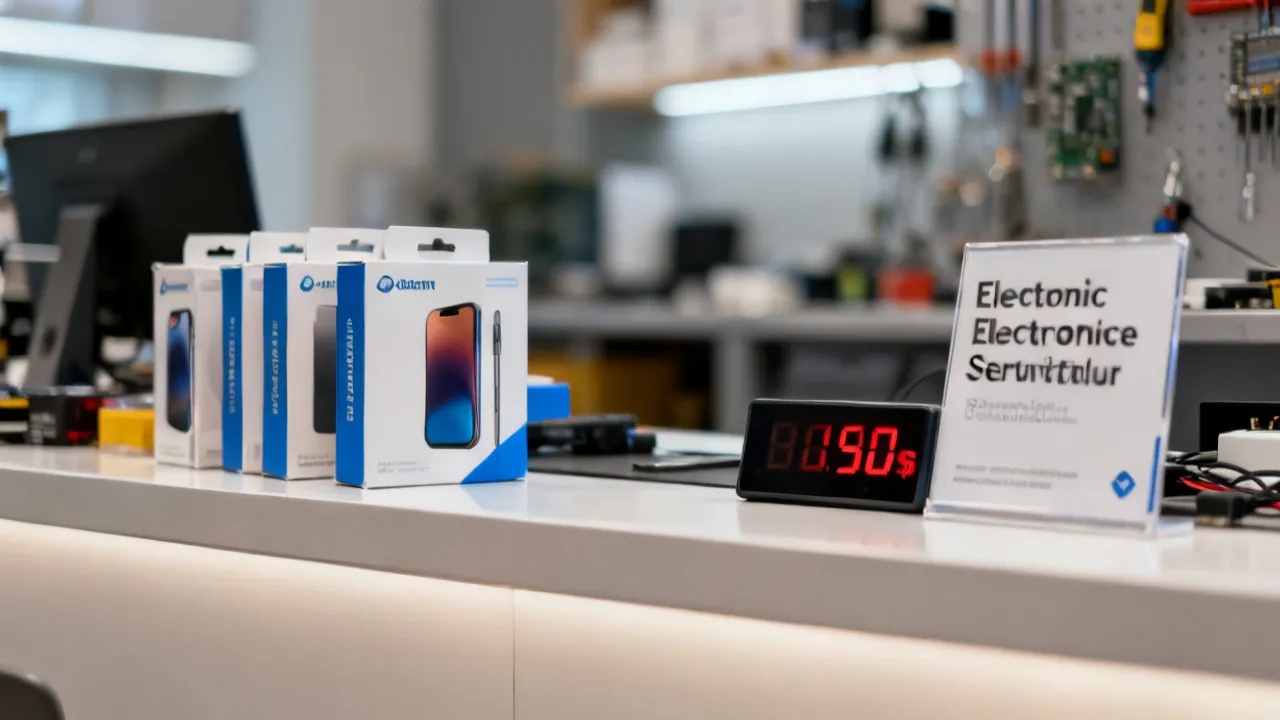
Why Pik997436266 Matters for Buyers (and What to Verify First)
If you’ve come across Pik997436266 during procurement or product research, treat it as a traceable identifier that should help you confirm the correct item, configuration, and commercial terms before you spend money. The very effective next step is to verify the identifier against official or documented product specifications provided by the supplier, then evaluate pricing and fulfillment conditions in a way that matches your use case.
In practical market research terms, an alphanumeric string like Pik997436266 often functions as an internal SKU, catalog code, batch tag, or listing reference. Even when it doesn’t represent a universal standard, it can still be useful—provided the seller can link it to a stable set of technical characteristics, packaging contents, and warranty/return policies. Because buyers frequently encounter multiple “similar” listings, early verification reduces the risk of receiving an incorrect variant.
What makes identifiers like Pik997436266 especially important is that buyers rarely purchase “just a code.” They purchase a set of expectations: correct model revision, correct packaging, correct compatibility, correct performance, and correct commercial conditions. A code that is not tied to documentation can become a source of confusion rather than clarity. Therefore, your job as a buyer is to make sure the identifier is a doorway to verifiable information, not a replacement for it.
Core Buyer Checklist: Match the Code, Then Confirm the Commercial Terms
When assessing Pik997436266, approach it like an auditor: confirm the match, then confirm the conditions. This is where price becomes meaningful. A low price without clear documentation can be a red flag; a higher price can be justified if the supplier offers traceability, tested quality, and well-defined shipping/returns.
From an industry perspective, buyers usually need to align five elements:
- Product identity: Does the supplier explicitly state what Pik997436266 refers to?
- Specifications: Are the technical parameters written clearly (e.g., model, size, materials, compatibility, ratings, or versions)?
- Packaging and contents: What exactly is included, and does it match your operational needs?
- Price structure: Is the “price” unit-based (per piece, per lot, per kit), and are there extra costs (handling, customs, insurance)?
- Supplier responsibility: Warranty terms, returns, and escalation steps in case of mismatch.
To expand that checklist into something you can actually use day-to-day, consider turning each element into an explicit question you send to the supplier. For example:
- Identity question: “Please confirm that SKU/listing reference Pik997436266 corresponds to [exact product name/model/revision].”
- Specification question: “Can you provide a datasheet or written specifications for the item identified by Pik997436266?”
- Packaging question: “What is included in the package for Pik997436266 (e.g., components, accessories, manuals, protective materials)?”
- Price question: “Please itemize the quotation: unit price, shipping, taxes/VAT, and any handling or documentation fees for Pik997436266.”
- Responsibility question: “If the delivered item does not match Pik997436266, what is your return/mismatch process and warranty coverage?”
This style of questioning forces a supplier to clarify ambiguities before money changes hands. It also creates written records that help if you later need to resolve a dispute.
About Pricing: How to Interpret “Price” Around Pik997436266
Even without publicly provided numeric pricing in your request, “price information” is still relevant because it influences how you evaluate supplier offers. In legitimate procurement processes, buyers rarely look at price in isolation. Instead, they normalize offers by:
- Unit basis: Confirm whether the price is per item, per unit, per carton/lot, or per service package.
- Total landed cost: Include shipping, taxes/VAT, customs duties (if applicable), and any handling fees.
- Service bundle: Some suppliers include testing, documentation, or protective packaging; others do not.
- Availability and lead time: A “cheaper” option with longer lead times may cost more operationally.
If you’re comparing suppliers for Pik997436266, ask for an invoice-style quotation that itemizes these components. This is a standard due-diligence practice in electronics and industrial procurement, and it helps you make an apples-to-apples decision.
To make this concrete, imagine two suppliers quote the same “price” for Pik997436266. Supplier A includes protective packaging, an inspection report, and a defined return window. Supplier B provides no documentation and uses minimal packaging. Even if the headline cost is lower at Supplier B, the total cost might be higher due to:
- Damage risk during transport (and rework/returns if damaged)
- Operational downtime if you cannot verify specs quickly
- Administrative burden if you need to escalate disputes without documentation
- Higher costs if you must source missing accessories separately
Thus, the buyer’s approach is not “find the lowest price,” but “find the lowest risk-adjusted total cost.” Identifiers like Pik997436266 become more valuable when the supplier ties them to documentation that reduces uncertainty.
Another subtle pricing issue buyers sometimes overlook is how “price” is expressed for bundles. For example, a listing might appear to be “just one item,” but the unit basis might be a kit that includes accessories you did not plan for—or excludes components you assumed were standard. Confirm the exact unit of sale behind Pik997436266.
Supplier Details: What Credible Suppliers Usually Provide
Because the request mentions supplier details, you should expect credible sellers to offer verifiable information, such as:
- Business identity: Company name, trading address, and contact channel.
- Traceability: Batch/lot or order documentation that ties back to the listing code Pik997436266.
- Documentation: Product datasheets, compatibility notes, or at minimum a written description that maps to the identifier.
- Quality controls: Clear inspection or testing procedures (even if basic, they should be stated).
- Policies: Returns, warranty coverage, and what happens if the supplied item doesn’t match the listing.
From an industry expert lens, the top suppliers are not merely “responsive”; they are consistent and documented. They reduce ambiguity by giving buyers a coherent chain from code → specs → packaging → fulfillment terms.
When you ask for supplier details, it helps to think about what you need them for if something goes wrong. For example:
- If you receive the wrong variant, you need an accountable entity to authorize returns.
- If the item fails performance expectations, you need documentation to support claims and RMA processes.
- If you must meet compliance requirements, you need to know whether the supplier can provide relevant declarations or paperwork.
In mature procurement environments, buyer communications are designed to create an evidentiary trail. Identifiers like Pik997436266 become a key part of that trail when suppliers reference the same code on invoices, packing lists, and shipping documentation.
Localization Note: “nearby” Use and Regional Considerations
Your instructions mention replacing any {city} or {country} references with "nearby." Since the provided keywords do not include explicit city/country placeholders, the article keeps location guidance general. Still, if you are sourcing Pik997436266 from vendors in your local market, consider regional factors such as transport reliability, local distribution schedules, language clarity in documentation, and how quickly disputes can be resolved through customer service channels.
For many buyers, the difference between ordering “nearby” and ordering internationally is not only shipping duration—it’s also how easily you can verify item condition on arrival and how smoothly returns can be handled.
Regional procurement can offer several advantages:
- Faster receiving and inspection: You can test or verify sooner and detect issues before production schedules are impacted.
- Lower logistics complexity: Fewer customs steps and less paperwork can reduce lead time variability.
- Simpler dispute handling: Communication may be faster if the supplier is reachable through local channels.
However, “nearby” sourcing can also have limitations. Sometimes local listings are repackaged versions of broader catalogs, and the internal identifier like Pik997436266 may not always map cleanly to the manufacturer’s naming scheme. This is why you still need the core verification steps—code-to-spec mapping and policy confirmation—regardless of distance.
Decision Framework: How to Choose the Right Offer for Pik997436266
Here is a practical, non-speculative framework you can use to evaluate offers that reference Pik997436266.
- Confirm the code-to-spec mapping: Request the supplier’s description that explicitly ties Pik997436266 to the correct product configuration.
- Validate compatibility: If you have a system or use case, match the specifications (dimensions/ratings/materials/requirements) against what you need.
- Normalize pricing: Ask for itemized total cost (including shipping/handling) and confirm unit basis.
- Assess supplier reliability: Check whether they provide documentation, clear policies, and predictable lead times.
- Reduce risk with conditions: Prefer offers that include a defined return/mismatch process and clear warranty terms.
This approach is aligned with standard procurement top practices: minimizing ambiguity, documenting requirements, and ensuring that the commercial contract reflects technical expectations.
To apply this framework more thoroughly, think in terms of risk categories. When buying anything referenced by Pik997436266, your risk typically falls into one or more of these buckets:
- Technical risk: You receive an incorrect variant or a product that doesn’t meet required specifications.
- Operational risk: Lead times or logistics don’t match your schedule, and you lose time to sourcing alternatives.
- Quality risk: The item fails early testing, lacks required documentation, or doesn’t perform as expected.
- Commercial risk: Returns, warranty claims, or dispute processes are unclear or slow.
- Compliance risk: You may need documentation for regulatory or internal auditing purposes.
Each verification step in the framework helps reduce one or more of these risks. For example, requiring code-to-spec mapping reduces technical and quality risks; requesting itemized quotations reduces commercial and operational surprises; verifying policies reduces commercial risk; requesting documentation reduces compliance risk.
Where Buyers Commonly Go Wrong (and How to Avoid It)
Even experienced purchasers can run into predictable pitfalls when a listing code like Pik997436266 is involved.
- Assuming the code is universal: Listing codes can be internal to sellers. Always require a datasheet-style description.
- Comparing only the headline price: Different shipping terms and packaging quality can distort the true cost.
- Not confirming “what’s in the box”: Kits and bundles vary; your use case may require components that are not included by default.
- Skipping policy review: If the supplier doesn’t clearly state return or mismatch conditions, the risk shifts to the buyer.
To avoid these pitfalls, you can add two additional practical habits to the process:
- Ask for the same identifier on multiple documents: In addition to the listing page, require that Pik997436266 appears on the quotation/invoice and on the packing list. This cross-document consistency is often a sign of organized fulfillment.
- Request a “minimum deliverable set” description: Ask the supplier to list exactly what you will receive: product name, quantity, accessory items, and documents. For some categories, this includes manuals, calibration certificates, inspection records, or compliance statements.
These habits are especially useful when suppliers offer many variants that look similar at first glance. A code like Pik997436266 can look “specific,” but it still needs to be linked to what actually arrives.
Comparison Table (Conditions, Requirements, and Practical Differences)
The table below compares typical purchasing approaches for an item referenced by Pik997436266. It is designed to help you decide what level of verification you should request based on your risk tolerance.
| Approach | What You Request | Risk Level | Top When |
|---|---|---|---|
| Code-only purchase | Only the identifier “Pik997436266” and a unit price | High (variant mismatch risk) | You have high redundancy or can test immediately upon receipt |
| Specification-verified purchase | Supplier-written specs tied to “Pik997436266,” plus packaging contents | Moderate to low | You need compatibility and predictable performance |
| Contracted quality and returns | Specification verification + written return/mismatch conditions + warranty terms | Low | Procurement for critical operations or longer lead time projects |
Notice that the differences between these approaches are not theoretical. Each one changes the probability and impact of a wrong delivery. When you increase documentation requirements tied to Pik997436266, you reduce the number of unknowns—and unknowns are where procurement costs hide.
Step-by-Step Guide: Buying Safely with Pik997436266
This step-by-step guide turns due diligence into a repeatable workflow. Use it whether you purchase from a local distributor “nearby” or from a wider network.
Step 1: Capture the exact listing reference
Write down the exact code Pik997436266, plus any additional tags shown on the listing (variant, color/size, revision, package type). Keep screenshots or order pages for auditability.
Also capture the context. For example, take note of whether the listing is described as “new,” “original,” “compatible,” “refurbished,” “bulk,” or “assorted.” If the supplier doesn’t define this clearly, your risk increases—even if Pik997436266 appears on the page.
Step 2: Ask for a spec sheet or equivalent
Request documentation that maps directly to Pik997436266. If the supplier cannot provide a consistent description, request the manufacturer’s datasheet or a formal product brief.
If the product is technical, a “spec sheet” should typically include key characteristics relevant to the category. Buyers often benefit from requiring the supplier to highlight which specs apply to Pik997436266 specifically, rather than sending general marketing material.
For traceability, ask the supplier to confirm whether the identifier is associated with:
- Manufacturer part number and revision
- Production batch/lot code
- Compatible ecosystem version (if applicable)
- Accepted tolerances or performance range (if applicable)
Step 3: Confirm what the price covers
Ask whether the price includes shipping, handling, and required documentation (for example: inspection report, invoice details, or compatibility notes). Confirm the unit basis (per piece, per kit, per lot).
To strengthen procurement clarity, request that the supplier’s quotation includes line items that explicitly name:
- Product description tied to Pik997436266
- Quantity and unit price
- Shipping method and shipping cost
- Any required documentation included in the price
- Any separate fees (packing, insurance, customs brokerage, handling)
Step 4: Evaluate lead time and shipping conditions
For many categories, lead time and packaging quality affect the risk of damage or mismatch. Ask how the item is protected during transport and how shipping damage claims are handled.
Even when the delivered item matches Pik997436266, poor packaging can cause failures upon arrival. If you are buying items that are sensitive to moisture, shock, static discharge, temperature, or other environmental factors, the shipping conditions become part of technical due diligence.
Questions you can ask include:
- What packaging materials are used?
- Is the item shipped in anti-static packaging (if relevant)?
- Are there protective seals or shock indicators?
- How is damage handled—replacement, refund, or claim process?
Step 5: Negotiate clear mismatch/return handling
Prefer terms stating what happens if the delivered item is not the one represented by Pik997436266. A clear process typically includes inspection at receipt and documented evidence requirements.
Return terms should be explicit about at least these points:
- Return authorization process (RMA) and who initiates it
- Time window for notifying mismatch or defects
- Whether return shipping costs are covered by the supplier or buyer
- Whether the supplier replaces the item or refunds payment
- Condition requirements (opened vs. unopened, required packaging, etc.)
When a mismatch is tied to a specific identifier like Pik997436266, written mismatch terms can be the difference between resolving quickly and spending weeks coordinating without clear outcomes.
Step 6: Receive, inspect, and document
Upon arrival, verify that the packaging and physical identifiers match the expected configuration tied to Pik997436266. Record condition and serial/batch markings where applicable.
This is where you create your best evidence. Practical inspection steps may include:
- Photograph the outer package condition upon receipt
- Photograph labels, barcodes, or printed identifiers that reference the item
- Verify count/quantity against packing list
- Verify any included accessories match what you were promised
- Perform functional or compatibility checks where feasible
If you plan to use the item in production, do not wait weeks to discover whether the received item matches Pik997436266. Early verification reduces the chance that you must handle returns under time pressure.
Reliable Sources and Industry Context
Because the request emphasizes avoiding unverified or exaggerated data, this article focuses on general, well-established procurement principles rather than uncertain market claims. For broader guidance on purchasing and supplier evaluation, buyers commonly consult resources from recognized bodies such as:
- ISO quality management guidance (for structured approaches to quality and supplier control)
- Procurement risk and contract top practices published by established industry organizations
- Government or standards documentation relevant to documentation requirements and consumer/procurement rights
If you share the product category behind Pik997436266 (e.g., electronics component, consumable, accessory, or software listing), I can tailor the verification steps to that specific domain and suggest the very appropriate standards and documentation to request.
In the meantime, it helps to understand how buyers translate standards into action. Even without citing specific clauses, ISO-oriented approaches often emphasize:
- Document control: ensuring the specification you rely on is stable and traceable
- Supplier performance monitoring: using repeat orders to evaluate consistency
- Corrective actions: having a defined method for resolving mismatches and preventing recurrence
These principles align closely with your task when you buy using an identifier like Pik997436266: you are building a traceable record and enforcing clarity at each step.
Additional Verification Tips Specific to Identifier-Based Buying
Many buyers treat SKU-style identifiers like Pik997436266 as self-explanatory. In practice, internal identifiers can be reused, repurposed, or updated without strong notice. You can reduce uncertainty by using a few additional techniques.
Ask whether Pik997436266 corresponds to a manufacturer part number
Instead of relying only on the seller’s code, ask for the manufacturer’s part number and revision. A credible supplier should be able to provide this, especially for regulated or technical items.
If the supplier can’t provide manufacturer details, ask what documentation they can provide that proves the item’s identity. Ideally, you want at least one of the following:
- Manufacturer datasheet or product brief
- Certificate of conformity or compliance statement
- Batch/lot traceability document
- Inspection/test report
Require proof of “revision level” if upgrades exist
For products where revisions matter (for example, firmware versions, hardware revisions, software build numbers, or component changes), ask explicitly whether Pik997436266 refers to a specific revision.
Even if two listings look similar, the revision can impact:
- Compatibility with existing equipment
- Performance characteristics
- Compliance status
- Warranty eligibility
Request sample photos of labels or packaging labels
Where feasible, ask for photos of the label that references Pik997436266—ideally from the same batch that will be shipped. While photos aren’t perfect proof, they can help you confirm that the supplier’s description aligns with what they actually send.
Confirm whether items are new, surplus, refurbished, or compatible
Identifiers like Pik997436266 can be used for multiple conditions. Ask:
- Is it new/unused?
- Is it refurbished or reconditioned?
- Is it original vs. compatible/aftermarket?
- Does it have warranty coverage consistent with the condition?
If the supplier’s response is vague (“new stock” without details), request more clarity before purchase. Clarity on condition reduces both quality and commercial risk.
Check whether your organization requires specific paperwork
Some buyers must comply with procurement documentation requirements for internal audits. Ask the supplier whether they can provide:
- Invoice with accurate description tied to Pik997436266
- Packing list with item details
- Serial/batch documentation where applicable
- Warranty statement and warranty start date
- Compliance documents relevant to the product category
These documents may not always be included automatically. When Pik997436266 is used, you want that identifier reflected in the official paperwork for easy reconciliation.
Practical Scenarios: How Buyers Should React
The best way to ensure you don’t get misled by an identifier is to imagine real scenarios and decide what you would do. Below are several common scenarios and the buyer actions that usually work.
Scenario A: Supplier only provides “Pik997436266” with a short description
If the supplier won’t provide a datasheet or adequate specs, treat Pik997436266 as insufficient. The safest action is to request additional documentation or cancel the purchase until the supplier provides clear technical and packaging details.
Buyers often get tempted to proceed when the code seems specific and the price is attractive. But proceeding without specifications increases the chance of misfit or failure. If the supplier cannot confirm what Pik997436266 means in practical terms, the supplier is asking you to trust without evidence.
Scenario B: Two suppliers both reference Pik997436266, but specs differ
If different suppliers describe different specifications for the same identifier, you have a conflict. Possible explanations include code reuse, mapping errors, or different product versions under the same label.
In that case, ask both suppliers for the manufacturer part number/revision and batch/lot traceability. You may ultimately decide to choose the supplier that provides consistent manufacturer documentation and clearer warranty/returns.
Scenario C: Price is significantly lower than market expectations
A much lower price can be legitimate (inventory clearance, faster shipping, strong supplier terms). But it can also be a signal that the listing may involve:
- A different revision than expected
- A different unit basis (e.g., per kit vs. per unit)
- Lower documentation or no inspection/testing
- Different condition (refurbished vs. new)
Before buying, require an itemized quotation and explicit confirmation of unit basis and condition. The best “anti-surprise” method is written documentation tied to Pik997436266.
Scenario D: Supplier offers strong specs but weak return policy
Sometimes suppliers can provide technical documentation but have return policies that are hard to use. If you’re buying a critical item, strong technical specs alone may not be enough.
For critical procurement, prefer written return/mismatch conditions. If the supplier cannot offer reasonable mismatch handling, you might accept higher risk only if the item is non-critical, replaceable at low cost, or you have your own test-and-validate process immediately upon receipt.
Scenario E: Shipping claims are unclear or the shipping method seems risky
For items sensitive to handling, unclear shipping conditions can cause damage even if you receive the correct item. Ask the supplier how they pack, how they protect, and how they handle damage claims.
If the supplier’s packaging method is inadequate for the item category, the transaction risk increases. In such cases, you may either:
- Request better packaging or insurance
- Use a different supplier with stronger fulfillment processes
- Adjust receiving procedures to inspect early and document any damage
Buyer Questions to Ask (Copy/Paste Template)
To make this guidance actionable, here is a copy/paste question set you can send to suppliers when you see Pik997436266. Adjust wording to your product category.
Identity and Documentation
- Please confirm what product Pik997436266 refers to (exact product name/model/revision).
- Can you provide the datasheet or official product brief tied to Pik997436266?
- Do you provide manufacturer part number and revision level? If yes, please list them.
- Can you provide batch/lot traceability documentation for the items you will ship?
Packaging and Contents
- What is included in the package for Pik997436266 (accessories, manuals, documentation, protective materials)?
- Are the items new, surplus, refurbished, or compatible/aftermarket?
- Do you include any inspection/testing documentation (if applicable to the category)?
Pricing and Terms
- Please provide an itemized quotation that includes unit basis, shipping cost, taxes/VAT, and any handling fees for Pik997436266.
- What is the total landed cost and the shipping method?
- What is the expected lead time for fulfillment of Pik997436266?
Warranty and Returns
- What is the warranty coverage for the item identified as Pik997436266, and when does the warranty start?
- If the delivered item does not match Pik997436266, what is your mismatch/return procedure?
- What is the return window, and who covers return shipping costs?
- How do you handle shipping damage claims (replacement vs. refund process)?
When you receive answers, confirm they reference Pik997436266 consistently. If the supplier begins referring to a different identifier or changes the description without updating paperwork, treat that as a warning sign.
FAQs
1) What does Pik997436266 mean?
Pik997436266 is top treated as a listing or item identifier. Its exact meaning depends on the supplier or catalog that uses it. Always request documentation that maps the identifier to specific technical specifications and packaging contents.
2) Is the price for Pik997436266 the same across suppliers?
Not necessarily. Prices can differ due to unit basis, shipping/handling terms, documentation included, packaging quality, and lead time. The very objective comparison uses itemized quotation totals rather than headline price alone.
3) How can I verify that I’m buying the correct variant?
Ask for a specification sheet or formal product description tied explicitly to Pik997436266. Then compare those specifications to your compatibility requirements. If possible, request photos of the packaging label or batch markings.
4) What supplier details should I insist on before purchasing?
Insist on clear business identification, written specs linked to the identifier, and documented policies for warranty/returns—especially a defined process for mismatch resolution if the item delivered does not match Pik997436266.
5) Should I buy locally “nearby” or order from farther away?
Local purchasing can simplify inspection and returns, while farther sourcing can sometimes improve availability or selection. Choose based on total risk: lead time, packaging protections, return handling, and documentation quality associated with the Pik997436266 listing.
6) What documents should accompany an order?
Typically, buyers should expect an invoice with item description matching Pik997436266, and any documentation stated in the quotation (such as inspection notes or warranty terms). The exact set depends on the product category.
7) How do I handle disputes if the item doesn’t match?
Document everything at receipt (photos of labels, condition, and packaging). Then follow the supplier’s stated mismatch/return process. If their policy is unclear, pause the process and request written confirmation before shipping back items.
8) What if the supplier says Pik997436266 is “internal” and won’t provide more details?
If the supplier won’t provide more details beyond an internal code, that typically indicates higher technical and commercial risk. You should request at minimum a datasheet-style description, manufacturer part/revision, and explicit packaging contents. If they cannot provide this, consider selecting another supplier.
9) Can I rely on the listing page alone?
Listing pages can be helpful, but they are not a substitute for verifiable documentation and clear policies. For purchases identified by Pik997436266, treat the listing page as a starting point and require the supplier to confirm details in quotation/invoice documents.
10) What is the minimum due diligence I should do even for low-cost items?
At minimum, confirm: (1) code-to-spec mapping for Pik997436266, (2) unit basis and what is included in the package, and (3) a basic return/mismatch policy. Even small purchases can cause operational disruption if the wrong variant is received.
Conclusion: A Practical, Objective Way to Approach Pik997436266
Approaching Pik997436266 with a disciplined verification workflow helps you avoid common purchasing errors—especially those related to variant confusion and misleading price comparisons. By confirming the identifier-to-spec mapping, normalizing pricing, reviewing supplier policies, and documenting receipt inspection, you can make a decision grounded in evidence rather than assumption. If you provide the missing context behind the identifier—such as the product category and the type of “price information” you’ve seen—I can refine this guide into a more targeted selection checklist.
-

A Guide to Cost-Efficient Small Electric Cars for Seniors
-
Mastering Debt Consolidation: Boost Your Credit Score and Manage Interest Rates
-
Your Guide to Loans, Credit Checks, and Interest Rates
-
Affordable Independent Living: Finding the Right Senior Housing
-
Guide to Senior Living Apartments: Affordable and Comfortable Environments