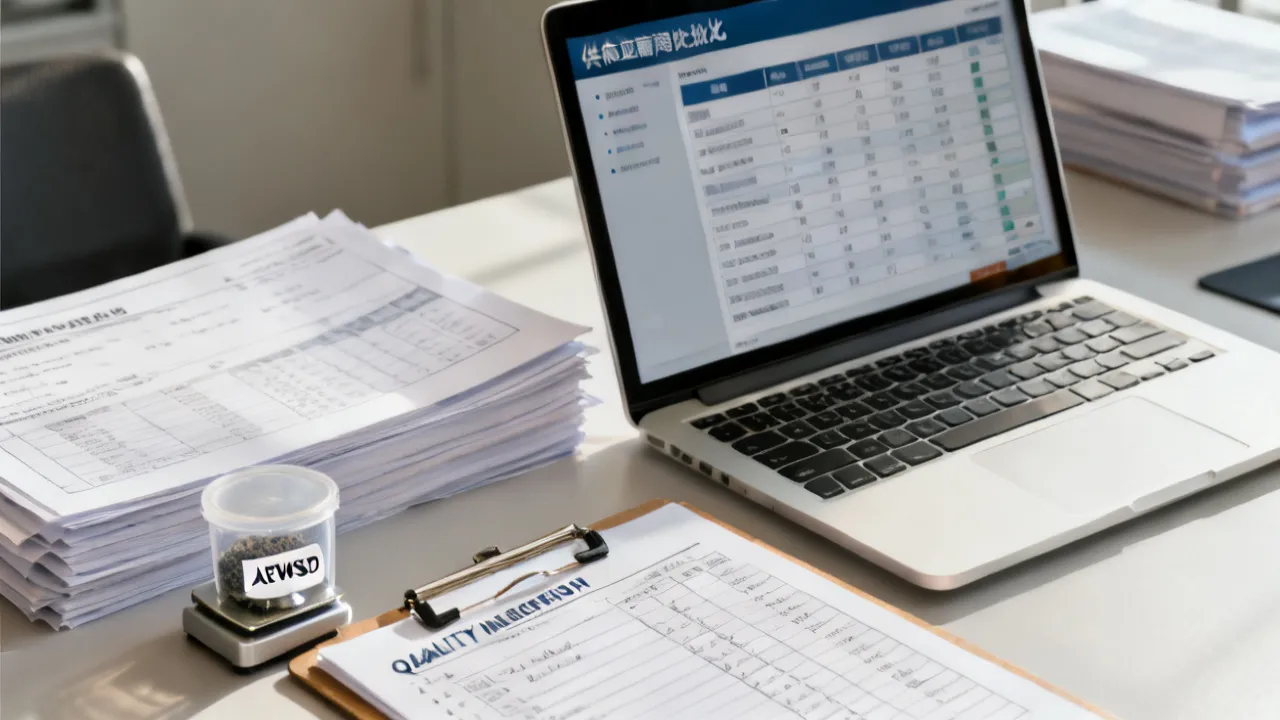
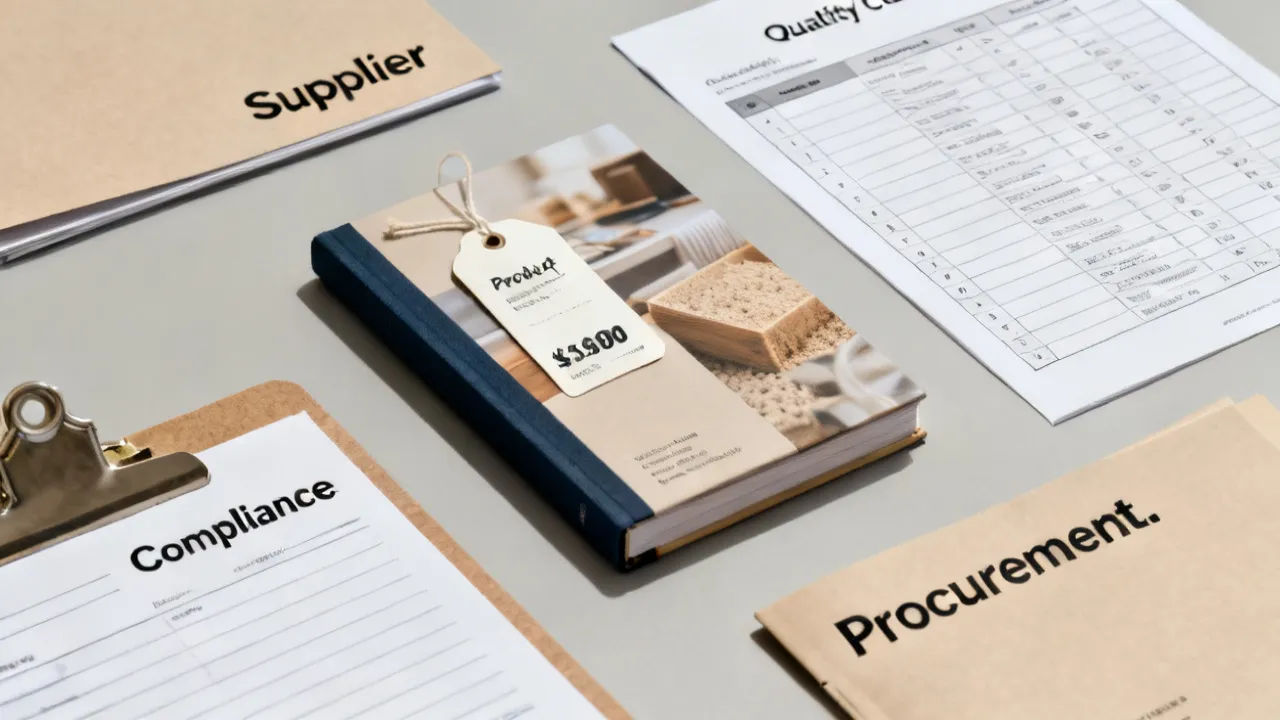
Guide to Understanding “2177” and Supplier Options
This guide explains how to evaluate “2177” products and choose reliable suppliers based on quality, documentation, and pricing signals. In objective terms, “2177” commonly functions as an internal or catalog reference used to describe a specific specification or variant. Supplier selection then hinges on traceability, compliance paperwork, and consistent lead times—factors that determine total cost of ownership.

Key Takeaway: Use “2177” as a specification marker, then vet suppliers by documented capability
When you encounter “2177”, treat it less like a marketing claim and more like a technical identifier—a reference that should map to a defined specification, variant, or part requirement. The very practical approach is to verify what “2177” means in your context (your product scope, tolerance needs, compliance requirements, and intended use), and then choose a supplier whose processes can reliably produce or source that exact configuration. In parallel, assess price information in a way that reflects traceability, testing, packaging, and logistics rather than unit cost alone.
Why “2177” Matters in Procurement and Product Planning
In many industries, catalog or internal codes like 2177 act as shorthand for a defined set of attributes: materials, dimensions, performance targets, surface treatments, certifications, or workmanship standards. Even when the code is familiar within a company, external suppliers may interpret it differently unless you require documentation.
From an expert procurement perspective, “2177” should trigger three immediate questions:
- What specification does it correspond to? (Drawings, datasheets, standards references, revision levels.)
- Is the supplier producing or merely reselling? (Original manufacturing vs. distribution affects traceability.)
- How is quality verified? (Incoming inspection plans, test reports, calibration records.)
Interpreting Price Information Without Misleading Assumptions
Price information is often presented as a single number, but procurement teams should treat the quoted figure as only one element of total cost. For goods connected to a specific identifier such as 2177, the real differentiators frequently include:
- Compliance documentation quality (certificates, traceability records, or test data)
- Batch consistency (ability to maintain the same spec across lots)
- Packaging and handling (damage risk, storage requirements, protective materials)
- Lead time reliability (not just the average, but variance and escalation pathways)
To keep decisions objective, compare suppliers using an “apples-to-apples” framework: same revision, same test method expectations, same packaging standard, and a clearly defined delivery Incoterm. Where possible, request a quotation breakdown showing line items like tooling, inspection, documentation, and logistics.
Supplier Selection: The Practical Criteria That Reduce Risk
Supplier evaluation is frequently discussed in broad terms, but the top outcomes come from applying measurable criteria tied to how “2177” will perform in your environment. Below are the very important areas to assess when selecting a supplier for a referenced specification.
1) Documentation and Traceability
A credible supplier should be able to provide documentation that ties the delivered items back to a defined process and measurable outcomes. For a code like 2177, the ideal evidence includes:
- Revision-matched technical documentation
- Material or batch traceability records
- Test or inspection reports aligned with your requirements
- Evidence of calibration where applicable
To make this actionable, procurement teams often request a “documentation package preview” before placing the full order. A preview can include sample inspection reports, a typical batch traveler or build record, a certificate format used by the supplier, and a statement describing what is verified at what stage (incoming, in-process, final). If the supplier cannot provide even a representative sample format, that gap alone becomes a risk indicator—because you may not be able to validate compliance later.
Traceability is not only about whether the supplier can identify a lot number. It is about whether that lot number can be mapped to:
- The specific raw materials or upstream subcomponents
- The process settings used to manufacture the items
- The test results and measured outcomes
- The packaging, labeling, and shipping conditions used
For 2177, you want to know if traceability is “paper-complete” or “audit-complete.” Paper-complete means they can generate documents after the fact. Audit-complete means records are generated at the time work is done and can be validated against production events.
2) Production or Sourcing Ownership
Whether the supplier manufactures the referenced product or sources it from a downstream factory affects what control you actually have. If your contract depends on “2177” quality, you should clarify:
- Who performs the key manufacturing steps?
- Who conducts the final inspection?
- How deviations are handled, and whether rework is logged
This is a core quality-control principle: if you cannot confirm where the critical work happens, it becomes harder to audit and harder to resolve nonconformities.
In practical terms, procurement teams often require one of the following for code-based specifications:
- Manufacturer-of-record commitment: a statement naming the factory responsible for production and final acceptance.
- Process responsibility clarity: a description of which operations are performed by the supplier versus their subcontractors.
- Flow-down controls: contract language requiring subcontractors to meet the same verification, recordkeeping, and change-control expectations.
Additionally, if the supplier only resells product associated with 2177, you may still be able to procure successfully—if the reselling chain provides full traceability, clear revision status, and inspection evidence from the manufacturer. But you should not assume this is automatically true; the reselling chain can add complexity, including more opportunities for documentation mismatch or packaging differences.
3) Quality Management Practices
Quality management maturity influences defect rates and response times. Rather than relying on claims, request concrete indicators: audit outcomes, corrective action history (at least anonymized), and the structure of their nonconformance workflow. Many organizations align with established quality management approaches such as ISO 9001; you can treat such alignment as a signal, but the deeper value comes from how the supplier demonstrates consistency in real documentation.
When assessing quality management practices for 2177, focus on “how they control the critical-to-quality characteristics.” Most specifications have features that matter most—tolerances, surface finish, chemical composition, performance testing, safety characteristics, etc. Ask how those characteristics are:
- Measured (method and equipment)
- Controlled (in-process checks, statistical process control, error-proofing)
- Verified at acceptance (final inspection plan)
- Handled when out-of-spec results occur (containment, rework, disposition)
Also ask for their approach to data integrity. For example, are test results recorded contemporaneously, stored securely, and traceable to a specific instrument calibration and operator record? If “2177” requires a particular test outcome, data integrity becomes part of compliance.
Another practical procurement angle: evaluate the supplier’s corrective action speed and escalation maturity. If nonconformities occur frequently, what happens next? Do they implement containment quickly? Do they identify root cause (not just symptom)? Do they share lessons learned across production lines and communicate implications to customers? For code-based specifications, the supplier’s corrective action maturity is often the difference between resolving a one-time incident and experiencing recurring spec drift.
4) Lead Time, Communication, and Change Control
Even when unit price is attractive, long or unpredictable lead times can increase operational costs—especially if “2177” is tied to a production schedule or regulatory submission timeline. Evaluate:
- Typical lead time and variability
- What triggers delays (and how early they communicate)
- Change control process if the supplier modifies materials or processes
Ask for their policy on substitutions and engineering changes; you want confidence that the delivered product remains equivalent to the agreed “2177” specification.
Change control deserves special attention because code identifiers can conceal complexity. A supplier might keep the same part number or code label while changing upstream materials (supplier switches), equipment, coating chemistry, or process parameters. Sometimes these changes are minor; sometimes they are not. Mature suppliers manage these changes through:
- Documented change review and approval
- Impact assessment on fit, form, function, and compliance
- Customer notification timelines
- Re-testing or re-qualification when needed
Procurement teams should require that substitutions affecting 2177 equivalency require written customer approval. Even if the supplier insists “it’s still compliant,” ask what test evidence supports that claim and whether your acceptance criteria will still be met.
Localization and “Nearby” Sourcing Considerations
You may see location terms embedded in supplier searches. If your keyword set references a city or country, treat it as “nearby” for planning purposes. Local or nearby sourcing can affect logistics lead times, customs complexity, and the practicality of receiving inspections. However, proximity should not replace verification: a supplier “nearby” is not automatically more reliable unless documentation, inspection outcomes, and change control are strong.
For organizations serving regional markets, it’s also worth considering local procurement norms—such as expectations around lead-time confirmation, labeling requirements, and the degree to which suppliers can support language-specific documentation and packaging instructions.
From a risk perspective, “nearby” sourcing can be a strategic lever when you need faster sampling, faster corrective action containment, or quicker updates during production changes. For example, if “2177” is needed to support an urgent customer order, local suppliers may allow you to bring in pre-production samples sooner. But again, local does not guarantee correct revision status or correct documentation. The same audit-ready expectations should apply regardless of geography.
Comparison Table: Quick Decision Framework (No Links)
The table below compares practical pathways to “2177” procurement and supplier selection. Use it as a supplement to your broader evaluation rather than a substitute for technical verification.
| Option | Top When | Key Checks | Conditions / Requirements |
|---|---|---|---|
| Direct manufacturer of the “2177” spec | You need strong traceability and tight control over quality | Spec revision match, process documentation, test records | Contract must define equivalency rules and document delivery timeline |
| Authorized distributor with audit-ready documentation | You need broader availability or faster procurement cycles | Batch traceability, incoming inspection method, documentation completeness | Require proof of sourcing chain and acceptable variation limits |
| Supplier that assembles/customizes to “2177” | The base components vary, but final assembly must meet the code requirements | Build records, final inspection reports, change control | Define which steps are “critical to quality” and how they’re verified |
| Multi-supplier strategy (risk-managed sourcing) | You need continuity when demand is uncertain | Cross-supplier comparability testing, consistent specification enforcement | Require a common acceptance test plan and lot-to-lot alignment |
Step-by-Step Guide: Evaluate “2177” and Supplier Fit
Below is a structured, step-by-step approach. It is designed to be objective and contract-ready, helping you avoid common failure points—especially when codes like 2177 represent specifications that can be misunderstood without formal documentation.
Step 1: Lock the specification definition for “2177”
Ask for the “2177” definition in writing: applicable drawings, standards references, revision numbers, and the exact performance requirements. If your internal team uses “2177” as shorthand, translate it into a clear specification sheet that your supplier can sign off on.
To further reduce ambiguity, include a “requirements matrix” that lists each requirement and its evidence source. For example: “Dimension X tolerance: verified by CMM measurement; evidence: inspection report; frequency: 100% for this characteristic.” “Material requirement: verified by certificates of analysis; evidence: CoA; frequency: per lot.” This matrix becomes the backbone of acceptance and later dispute resolution.
Step 2: Require a documentation package before purchase
Before committing, request a documentation set that typically includes the technical datasheet, compliance statements (as applicable), inspection/quality evidence, and packaging/labeling requirements. This is especially important if “2177” is linked to regulated usage or safety-critical applications.
In many real-world projects, procurement also benefits from requiring a “documentation timeline” so that paperwork arrives at the same time as goods. Some suppliers historically send documentation weeks later. If your compliance system requires documentation for release to production or shipment to your customers, late paperwork can stop operations.
Also consider requesting the supplier’s standard label and packaging specification for “2177.” Sometimes packaging affects compliance: labeling might require specific part numbers, revision markings, lot codes, traceability statements, or handling conditions. Packaging is not an afterthought; it is part of the traceability and safety chain.
Step 3: Normalize price comparisons
Compare quotes using consistent assumptions: same quantity, same spec revision, same packaging, same lead-time expectation, and the same documentation scope. When suppliers provide different test or inspection scopes, adjust the comparison so the “price information” reflects what you actually receive.
One tactic is to convert supplier proposals into a normalized cost model. Instead of comparing only total price, break costs into categories such as:
- Unit fabrication cost
- Inspection and testing cost (including sampling plan)
- Documentation preparation cost
- Packaging and labeling cost
- Logistics and handling cost
- Quality risk adders (e.g., expediting fees)
This helps you avoid the common situation where a lower quote later becomes more expensive due to additional inspections you must perform in-house because the supplier did not include required test evidence.
Step 4: Validate quality through sampling or pilot runs
Run a pilot order or sampling plan where feasible. Use a defined acceptance criterion and record results. If “2177” is performance-sensitive, ensure your acceptance testing matches the supplier’s stated test methodology or, at minimum, is clearly defined by your requirements.
Sampling plans should be based on risk. If “2177” is critical to safety or functional performance, you might require higher sampling frequency, more stringent acceptance criteria, or even full lot testing until the supplier demonstrates consistent performance over time. Document the sampling plan in advance, including:
- Sampling quantity and basis (AQL, custom plan, or risk-based plan)
- Testing method and instrumentation
- Acceptance and rejection thresholds
- Re-test and disposition rules for borderline lots
- Handling of deviations and nonconformance reporting timelines
When possible, request pre-production samples that represent the intended “production state.” Avoid samples that are made with different materials or processes than the eventual mass production plan.
Step 5: Confirm change-control governance
Ensure the supplier will notify you of changes that could affect “2177” equivalency. Contractually define whether substitutions require approval and how nonconformities are handled, including containment actions and corrective/preventive measures.
Make change control concrete. For example, define the “change triggers” such that the supplier must notify you if any of the following occur:
- Changes in material supplier or grade
- Changes in manufacturing equipment
- Changes in process parameters that could impact critical characteristics
- Changes in coating, treatment, curing, or finishing methods
- Changes in measurement instruments or calibration approach
- Changes in packaging materials or labeling formats
Then define the response pathway: what evidence they must provide, what tests they should run, and what approval steps your organization requires. This makes change control enforceable rather than aspirational.
Step 6: Establish ongoing verification cadence
Even after approval, define an ongoing verification approach: incoming inspection frequency, batch sampling strategy, and escalation triggers. This step is crucial when supplier processes vary or when demand shifts affect production scheduling.
Cadence should be tied to performance. For instance, if nonconformance rate remains low for a defined time window, you can gradually reduce inspection frequency. But if problems arise, increase sampling and require enhanced evidence until stability returns. The key is that the supplier should anticipate and support this cadence through timely reporting and transparent documentation.
Step 7: Monitor supplier performance using measurable indicators
Track practical metrics: on-time delivery, documentation accuracy, nonconformance rate, and resolution cycle time. If you use scoring, keep it tied to contract deliverables and verifiable outcomes.
To make performance monitoring robust, include:
- Documentation compliance: delivered documents match purchase order revision and include complete traceability/inspection evidence
- Quality outcomes: defect rates by critical characteristic
- Corrective action quality: root cause depth and recurrence rate
- Delivery reliability: adherence to promised lead time and shipment schedule
These indicators help ensure that “2177” remains consistent over time rather than becoming a moving target due to production drift or document mismatch.
Expert Considerations: How Industry Buyers Reduce “Specification Drift”
One of the very common procurement problems involving specification codes like 2177 is “specification drift”—where the delivered product gradually shifts due to material substitutions, process changes, supplier relabeling, or revision misunderstandings. Industry buyers reduce this risk by:
- Using revision-controlled documentation and requiring signed acceptance
- Applying lot traceability and batch record verification
- Establishing clear equivalency and substitution rules
- Using a consistent inspection plan aligned to the key quality characteristics
These controls are not theoretical; they are typical of mature sourcing programs because they directly address the root causes of mismatches between expectation and delivered reality.
Specification drift often shows up in three predictable ways:
- Documentation drift: the physical product may still look “close,” but the provided certificates reference a different revision, a different test standard, or an outdated specification definition.
- Process drift: the supplier quietly changes a process step, and the new output no longer meets your true performance envelope.
- Interpretation drift: different stakeholders interpret “2177” differently—one person sees it as “equivalent,” while another sees it as “must match exactly.”
To mitigate these, buyers typically enforce a “single source of truth.” In practice, this means your organization defines the authoritative spec and ensures that every supplier reference (drawings, purchase orders, acceptance criteria, and certificates) uses the same revision and requirement language.
Additionally, drift control improves when your organization establishes a “receiving gate” that includes both physical verification and document verification. For example, you might refuse to release goods if the lot traceability does not map to the expected batch record format, or if certificate fields are incomplete. This reduces the likelihood of silent substitution being accepted.
Practical Contracting Concepts for “2177” Buyers
Procurement often assumes that stating “2177 specification required” is enough. In practice, the best contracts convert that statement into enforceable expectations. Buyers can enhance clarity by including terms that cover:
- Revision control: specify which “2177” revision is required and that substitutions to other revisions require written approval
- Acceptance criteria: define testing methods, thresholds, sampling plans, and evidence required
- Documentation timing: require delivery of documentation by a specified date or with shipment
- Nonconformance handling: containment steps, response time, root-cause analysis requirements, and recurrence prevention
- Right to audit: allow inspection of records and, where needed, supplier process observation
- Liability and remedies: define what happens if goods fail acceptance or if spec drift is detected
Contracts are especially important when multiple stakeholders are involved—engineering defines requirements, procurement negotiates cost and delivery, quality performs inspection, and operations uses the goods. Without explicit contractual mapping, “2177” can become a vague label rather than a measurable requirement.
Another useful contracting concept is to include a “deviation authorization” process. If a supplier anticipates a nonconformity, they should not ship product expecting it to be accepted informally. Instead, the supplier must request a formal deviation and provide evidence. This prevents informal approvals that can later undermine compliance and complicate quality investigations.
Reliable Reference Points (Objective Background)
For objective sourcing governance, many organizations rely on established quality management and auditing concepts. While the exact term “2177” is context-specific, the evaluation principles are widely applied in quality-driven procurement.
- ISO 9001 provides a general framework for quality management systems and process consistency. (Source: ISO organization—general standard information.)
- Audit and corrective action practices are commonly reflected across supplier quality programs and are aligned with established quality management approaches.
If you need a compliance posture for your jurisdiction or industry segment, use the appropriate official standards for that domain and apply them consistently in your supplier qualification documents.
It can also help to distinguish between “management system compliance” and “product compliance.” A supplier can be certified yet still deliver nonconforming product if their internal processes are not aligned with your specific acceptance criteria. Therefore, treat ISO-aligned documentation as a starting point, then validate product evidence tied specifically to “2177.”
Deep Dive: What to Ask When You Don’t Know “2177” Yet
Sometimes “2177” arrives from a legacy source: a previous purchase order, a drawing note, a distribution list, or an engineering record. If you don’t know what it means, you still can act strategically. Instead of guessing, ask structured questions that force clarity.
Here are practical questions procurement and technical teams can use to interpret a specification marker like 2177:
- What drawing or standard is the basis for “2177”? Request the exact document name and revision level.
- What are the critical-to-quality characteristics for this code? Ask for the list of features that determine acceptance.
- What test method(s) verify each critical characteristic? Request method names, instruments, and frequency.
- Can you provide a sample certificate of conformity for “2177”? Ask that it match the revision you will receive.
- How does your team ensure lot traceability? Request a short description of batch records and identifiers.
- What happens if a measured characteristic falls outside tolerance? Ask for the disposition process.
- Do you allow substitutions? If yes, under what rules and approvals? Require written policy.
- Which packaging and labeling codes apply to “2177”? Ask for your standard packaging configuration.
These questions convert “2177” from a potentially ambiguous label into a set of measurable acceptance requirements. They also reduce the chance of procurement making a decision based on incomplete information.
Deep Dive: How to Evaluate Supplier Capability Beyond Certificates
Certificates can be helpful, but certificates alone do not prove capability. A supplier’s capability is demonstrated through repeatability, documented control of critical characteristics, and stable processes. When you assess suppliers for “2177,” you can increase confidence by looking for:
- Process qualification evidence: initial qualification results, requalification triggers, and method validation records.
- Control charts or process stability data: if relevant to your industry, ask for evidence of stability over time.
- Training and competence: documented training for operators performing critical steps.
- Equipment qualification: calibration and equipment capability evidence for instruments used in testing.
- In-process monitoring: how they prevent defects rather than only detecting them at the end.
For many procurement teams, requesting “process capability” data feels intimidating. But you can scope it intelligently. If your requirements are tight and failure is costly, it is reasonable to request stability indicators. If your requirements are less critical, you may still request documentation showing how the supplier controls and validates key parameters.
Even if you cannot obtain advanced statistical data, you can evaluate capability using “behavioral evidence”: how they handle deviations, how quickly they implement corrective actions, how consistent their documentation is, and how reliably they meet lead time commitments. Capability is not only measured at the lab bench; it is measured in operational consistency.
Deep Dive: Packaging, Handling, and Their Hidden Role in “2177” Compliance
Packaging might appear tangential to technical specification compliance. However, in many categories of parts—especially those involving coatings, surface treatments, sensitive materials, or contamination-sensitive assemblies—packaging directly affects quality outcomes. For “2177,” packaging evaluation should include:
- Protective materials: whether packaging prevents moisture, dust, scratches, or chemical exposure
- Handling instructions: whether labels specify handling methods that prevent damage
- Storage conditions: whether the supplier specifies environmental requirements
- Label completeness: whether lot number and revision are clearly identified on the packaging and documents
- Transport survivability: whether packaging is validated for shipping conditions
Why does this matter for procurement cost? Because poor packaging leads to damage and rework, which can erase the benefit of a lower quoted unit price. Packaging evaluation is therefore part of “true cost of quality.”
When comparing price quotes for 2177, ensure that packaging standards are identical. If one supplier includes protective packaging and the other includes minimal packaging, the price comparison is not apples-to-apples. Instead, normalize the quotes to your required packaging standard and request evidence of compliance with that packaging specification.
Deep Dive: Incoming Inspection Strategy for “2177”
Your organization’s incoming inspection strategy should reflect the risk associated with “2177.” If you treat every lot as identical risk, you may overinspect and waste resources, or underinspect and allow defects to pass into production. A balanced approach includes:
- Risk classification of characteristics: identify which characteristics are critical and require higher verification
- Sampling plan tiers: set different sampling intensity based on history and risk
- Document verification: verify that certificates and labels match purchase order revision and lot traceability
- Escalation triggers: define what events require increased sampling (e.g., quality issues, late documentation, high variability)
When possible, incorporate “document-to-product linkage” tests. For example, ensure that the lot number printed on packaging matches the lot number referenced in the inspection reports. This simple step catches a surprising number of issues—especially when suppliers relabel or consolidate shipments.
Over time, as supplier performance proves consistent, you can streamline inspections. But do not eliminate receiving verification entirely. Maintain at least a baseline level of document and sampling verification to detect early signals of spec drift.
Deep Dive: Multi-Supplier Strategy Without Losing Control
The comparison table includes a multi-supplier strategy option for continuity and risk-managed sourcing. Multi-sourcing can be beneficial, but it creates a new risk: variation between suppliers. To preserve “2177” consistency across suppliers, implement controls such as:
- Common acceptance test plan: a shared test plan and acceptance thresholds across suppliers
- Lot-to-lot alignment rules: if one supplier uses different measurement methods, confirm equivalency
- Cross-supplier sampling: periodic side-by-side checks to confirm comparability
- Shared documentation standards: require similar certificate formats, revision fields, and traceability identifiers
Additionally, consider maintaining a “preferred supplier” and a “secondary supplier” plan. The secondary supplier can be activated when lead times tighten or when demand spikes. This limits the burden of constant full-level testing across multiple suppliers. Still, you should ensure that the secondary supplier meets the same acceptance criteria and provides evidence of capability before switching supply.
Deep Dive: How to Handle Nonconformities Linked to “2177”
Nonconformities are inevitable in complex supply chains. The key is to manage them in a way that protects your operations and improves supplier performance over time. When a nonconformity occurs related to 2177, you should ensure the supplier’s response covers:
- Containment: stop shipment of affected lots and contain potentially impacted inventory
- Investigation: identify root cause using appropriate methodology
- Corrective action: implement changes that prevent recurrence
- Verification: demonstrate effectiveness of corrective actions through re-testing or re-qualification
- Communication: provide timely updates and evidence to relevant stakeholders
Procurement should also require a structured “nonconformance report” that includes the part identifier, lot numbers, inspection results, deviation description, and the actions taken. This ensures that your organization can track issues systematically and identify patterns (for example, recurring failures on a particular characteristic).
If nonconformities appear to be caused by documentation mismatch rather than physical product issues, treat that as a separate problem category. Sometimes the supplier can be technically correct but administrative processes fail, causing certificates that don’t match revisions. That still creates downstream compliance risk.
FAQs
Q1: What does “2177” mean?
“2177” typically functions as a reference code—often internal, catalog, or specification-based. Its exact meaning depends on the product category, revision, and the supplier’s documentation. The safest approach is to request the formal specification or datasheet tied to “2177” and confirm revision alignment.
Q2: How should I evaluate price information for “2177”?
Compare quotes using standardized assumptions: same quantity, same “2177” revision definition, same packaging, same documentation package, and the same acceptance testing scope. If one supplier includes inspection certificates and another does not, the unit price alone is not a fair comparison.
Q3: Should I prioritize suppliers “nearby”?
Proximity can help with logistics and communication, but it should not replace quality verification. Evaluate documentation completeness, traceability, change-control processes, and your ability to perform receiving inspection. Use “nearby” sourcing as a logistical advantage, not as proof of compliance.
Q4: What documentation should a supplier provide?
At minimum, request a revision-matched specification/datasheet and evidence that supports the claimed quality characteristics (e.g., inspection reports, batch traceability documentation, and compliance statements where applicable). Your exact needs depend on how “2177” is used in your product and the regulatory or safety context.
Q5: How do I prevent quality issues after the initial purchase?
Set up an ongoing verification cadence: incoming inspection sampling, defined acceptance criteria, escalation triggers, and a structured corrective action process. Confirm that the supplier has effective change-control procedures and will notify you about changes that affect “2177” equivalency.
Q6: Is it worth using multiple suppliers for the same “2177” spec?
Often yes, especially for continuity and risk management. However, multi-supplier strategy requires additional controls: cross-supplier comparability testing, consistent acceptance criteria, and strict governance of revision and substitution rules to avoid spec drift.
Conclusion: Treat “2177” as a specification promise—then demand supplier evidence
For buyers and technical teams, “2177” should serve as a prompt for clarity: define the specification precisely, then select suppliers based on verifiable documentation, traceability, and quality governance. By treating price information as only one component of total cost—and by using a structured evaluation process—you can reduce risk, improve consistency across lots, and make supplier decisions that stand up to operational scrutiny.
-

A Guide to Cost-Efficient Small Electric Cars for Seniors
-
Mastering Debt Consolidation: Boost Your Credit Score and Manage Interest Rates
-
Your Guide to Loans, Credit Checks, and Interest Rates
-
Affordable Independent Living: Finding the Right Senior Housing
-
Guide to Senior Living Apartments: Affordable and Comfortable Environments