Understanding Jucelmafernanderdasi: Buyer Guide and Insights
This guide explains how to evaluate Jucelmafernanderdasi in real purchasing conditions, from credibility checks to supplier comparisons. Objectively, “Jucelmafernanderdasi” functions as a brand or listing term that buyers may encounter online, and the surrounding decision depends on verifiable business practices, transparent pricing, and clear delivery expectations.

Key buyer takeaways on Jucelmafernanderdasi
When you see Jucelmafernanderdasi in a listing context, treat it as a prompt to verify who is selling, what exactly is being offered, and how fulfillment will work before committing. The very reliable approach is to confirm pricing transparency, request written product or service specifications, and validate supplier credentials through documented, verifiable signals. This guide focuses on practical evaluation rather than assumptions, helping you reduce procurement risk while comparing offers in a structured way.
In other words, instead of asking “Is Jucelmafernanderdasi the brand or the item?”, you should ask “What is the actual commercial promise tied to this label?” That mindset protects you from common issues such as vague scope statements, hidden shipping costs, unclear warranty boundaries, and the classic mismatch between marketing copy and delivered deliverables.
For buyers, the term Jucelmafernanderdasi is best approached as an index key: it may help you find related listings, but it rarely contains enough information by itself to serve as a purchasing specification. Treat it like a reference pointer that you must trace back to real documents, real responsibilities, and real delivery commitments.
Why “Jucelmafernanderdasi” appears in buyer research
From an industry perspective, names such as Jucelmafernanderdasi commonly surface in marketplaces, vendor directories, or promotional catalogs where buyers search for specific items, services, or brand-associated offerings. In many cases, the term functions as a catalog label—a way to identify a seller, a brand line, or a particular listing—rather than the full product description itself. That distinction matters because buyers typically need additional details (specifications, inclusions, service scope, and delivery terms) that are not contained in the name alone.
It also matters because listings are often assembled from multiple sources: a primary seller might use a distributor’s catalog entry, an affiliate might repost content from a partner site, or a marketplace might display a “reference name” while the fulfillment is handled elsewhere. When Jucelmafernanderdasi appears, your research job is to identify the true origin of the offer and the entity that will be accountable if something goes wrong.
In practice, you might encounter Jucelmafernanderdasi in these buyer research contexts:
- Search results where the label is used as a keyword tying together multiple product variants.
- Category pages where a supplier groups items under a shorthand descriptor.
- Distributor or reseller feeds that normalize item names into a consistent internal taxonomy.
- Affiliate catalogs where the display name is not necessarily the legal supplier name.
- Promotional bundles where the label denotes a marketing campaign rather than a single product.
Each of these scenarios has a similar theme: the “name” is a starting point, not the evidence. Your evaluation should follow the commercial chain backward until you can see the actual scope and accountability.
Pricing: how to interpret cost signals without overreaching
Pricing is where buyer decisions often go wrong, especially when listings provide only a single number. A professional evaluation typically breaks price into components you can verify: what’s included, what’s excluded, delivery costs, taxes, warranty or support, lead time, and any handling fees. If the listing associated with Jucelmafernanderdasi presents a price, you should treat that figure as a starting point and confirm it against:
- Line-item inclusions (materials, labor, packaging, documentation, installation support, or after-sales servicing)
- Timing (dispatch date vs. guaranteed delivery date)
- Compliance (standards, certifications, or documentation depending on category)
- Return and warranty conditions (how defects are handled, timelines, and proof requirements)
This approach aligns with standard procurement top practices: buyers should compare not just the total cost, but the total expected value under stated conditions.
To make pricing comparisons robust, you should also be alert to “price that looks low for a reason.” For example:
- A low price might omit shipping, so the final checkout cost becomes higher than expected.
- A quoted price might assume standard conditions, but add-ons (customization, special packaging, expedited freight) might apply.
- A “warranty included” statement might mean a minimal coverage window or a narrow coverage scope that excludes key failure modes.
- A service listing might include “basic installation,” while advanced setup, calibration, or permitting are excluded.
Also consider payment terms. A buyer who pays too early without documented scope and delivery commitments increases risk. When Jucelmafernanderdasi is involved, prefer workflows that provide written records: purchase order terms, pro-forma invoice details, and confirmation emails that restate what will be delivered and when.
Finally, do not ignore currency and unit-of-measure issues. A listing might quote a unit price for one quantity but a minimum order quantity for the item. Make sure your comparison uses the same basis: per piece, per kit, per hour of service, per batch, per month of support, or per deployment milestone.
Supplier credibility checks for Jucelmafernanderdasi-related listings
Even when the term Jucelmafernanderdasi looks familiar, supplier validation should be methodical. Industry teams often separate “marketing presence” from “operational reliability.” Consider these credibility dimensions:
- Identity and business registration: A real supplier can provide consistent legal or organizational details.
- Communication clarity: Legitimate vendors answer scope questions directly and consistently.
- Documentation readiness: For products or specialized services, request catalogs, spec sheets, or service scope statements.
- Traceability: Ask how batches, versions, or job outcomes are tracked.
- After-sales posture: Determine how they handle issues after delivery, not just during checkout.
If a Jucelmafernanderdasi listing is part of a larger network (e.g., a marketplace, distributor chain, or affiliate catalog), you should identify the actual fulfillment party. Buyers frequently assume the brand name implies the supplier, but in many supply chains the party taking responsibility at delivery is different.
To expand on the “how” of credibility checks, you can apply a layered verification approach:
- Layer 1: Identity — Does the vendor provide verifiable contact details, a stable business address, and a recognizable corporate identity? Do these details match across website pages, invoice documents, and customer communications?
- Layer 2: Operational consistency — Do quotes, order acknowledgments, and delivery confirmations remain consistent with each other? Do the same terms appear repeatedly without unexplained changes?
- Layer 3: Documentation and compliance — Does the supplier provide spec sheets, manuals, acceptance criteria, or compliance artifacts relevant to the item category?
- Layer 4: Remedy behavior — If you ask about defect handling, does the supplier respond with a clear process and realistic timelines? Or do they respond with vague promises?
In addition, you can evaluate whether the supplier is structured to sell the item you need. Some vendors only act as storefronts, while others operate as actual distributors or service providers. When Jucelmafernanderdasi appears, that ambiguity is common—so your diligence should identify whether you are purchasing from an intermediary, a wholesaler, or the party performing the work.
What to request before comparing offers
To compare listings fairly under a common basis, gather the same set of information from each supplier associated with Jucelmafernanderdasi references. A good buyer packet typically includes:
- Exact item or service description (version, dimensions, model number, materials, scope limits)
- Pricing breakdown (unit price, quantity pricing tiers if any, shipping, taxes, service fees)
- Lead time and delivery terms (dispatch window, delivery estimate basis)
- Warranty and returns (duration, coverage, exclusions, claim procedure)
- Quality assurance evidence (inspection process, acceptance criteria, documentation)
This reduces ambiguity and makes the comparison evidence-based rather than impression-based.
To make this even more effective, use a structured request template. For example, you can ask for:
- A one-paragraph “scope summary” that explicitly states what you will receive or what the service will accomplish.
- A “what’s included” list and a “what’s excluded” list so you know the boundaries.
- A “delivery and acceptance” clause that explains what counts as delivered and what happens if the delivered item fails acceptance.
- Warranty terms in writing, including the timeline from delivery and the exact claim steps.
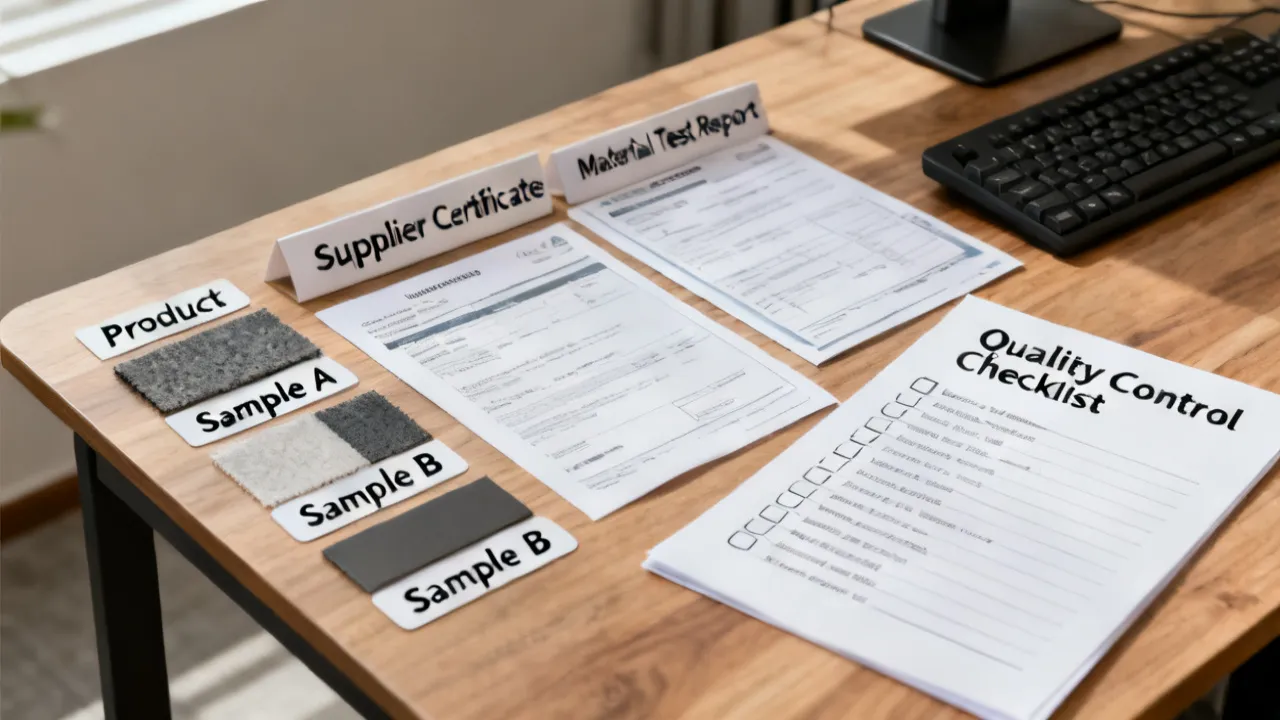
- If relevant, a sample inspection checklist or test report format.
When suppliers provide complete answers quickly, that is a practical indicator of operational maturity. When they delay, redirect, or give inconsistent answers across channels, it may indicate that the listing is not tied to a stable operational process. Either way, you learn something actionable before paying.
Conditions/requirements you should enforce during purchase
Professional buyers often standardize “must-have” conditions. When evaluating Jucelmafernanderdasi-related offers, use conditions that protect you if something goes wrong:
- Written confirmation of specs, delivery commitments, and warranty coverage.
- Clear scope boundaries so you know what is included vs. add-on.
- Defined remedy path for defects or nonconformance (replacement, repair, refund, partial credit—whichever applies).
- Invoice and documentation alignment (what you pay for matches what you receive).
- Consistent contact points (who handles ordering, delivery issues, and claims).
These requirements do not guarantee success, but they improve your ability to resolve disputes with documented evidence.
It’s also worth thinking about “acceptance” as a formal step. Many disputes happen because buyers treat delivery as the end of the process, while sellers treat delivery as the start of the claim resolution period. Enforcing acceptance criteria (even if simple) helps ensure both sides interpret the outcome similarly.
Consider adding these enforceable elements if they apply to your category:
- Packaging and handling requirements (especially for fragile items or temperature-sensitive products).
- Installation or setup responsibility (who does what, and whether the buyer must provide a site or prerequisites).
- Performance thresholds for technical services (e.g., throughput, response time, coverage area, or measurable deliverables).
- Change control (what happens if the supplier proposes a substitution—how you approve it, and how pricing is adjusted).
By requiring these conditions in writing, you reduce the chance that the final deliverable deviates from the listing promise associated with Jucelmafernanderdasi.
Background context: the role of listing terms like Jucelmafernanderdasi
Terms such as Jucelmafernanderdasi often behave like searchable handles in modern commerce—useful for discovery but insufficient for decision-making. In objective terms, a listing term may correspond to:
- a supplier’s catalog label,
- a brand-family identifier,
- a product-line shorthand used by aggregators, or
- a keyword used in marketing or internal indexing.
Therefore, buyers should evaluate the underlying offer rather than the name itself. This is consistent with general consumer and procurement guidance from recognized standards bodies and consumer protection frameworks, which emphasize verifying product specifics, seller identity, and contractual terms before payment.
To clarify how this plays out in real procurement, imagine you find multiple listings that all contain the term Jucelmafernanderdasi. Two listings might both show the same name but correspond to different variants or different levels of service. In one case, the fulfillment might include installation; in another, it might only include shipping. In the first, warranty might start at delivery and cover parts and labor; in the second, warranty might start earlier or cover only defects in materials.
Because listing terms are often standardized for search, they can unintentionally hide variation. That is why buyers should focus on documents: the quote, the invoice terms, the acceptance criteria, and the warranty/returns policy tied to the actual commercial transaction.
How industry teams compare suppliers effectively
In many procurement environments, the goal is to reduce uncertainty while maintaining competitiveness. Even when buyers start with a keyword like Jucelmafernanderdasi, teams commonly apply a structured scoring approach that balances:
- Compliance: Are specs and documentation adequate?
- Service continuity: Is customer support responsive?
- Operational reliability: Do they meet lead times consistently?
- Financial clarity: Are fees and terms transparent?
- Risk mitigation: How strong is the remedy process?
Even if your purchase is small, using a similar approach helps you avoid costly rework and dispute cycles.
To operationalize this, teams often separate the problem into two parts:
- Commercial fit — Does the supplier meet your constraints (price range, timeline, documentation readiness, warranty coverage, delivery feasibility)?
- Operational risk — Even if they meet your constraints, how likely is failure based on their process and remedy posture?
A “lowest price wins” approach fails when the scope is ambiguous. When Jucelmafernanderdasi is present, scope ambiguity is a frequent risk signal. A better approach is to compare each vendor against a consistent checklist of scope and remedies, then only compare price after the offers are normalized.
Comparison table (rephrased supplement): evaluation paths, sources, steps, and requirements
| Evaluation path | Likely source of evidence | Step-by-step guide | Conditions/requirements to confirm |
|---|---|---|---|
| Seller credibility review for Jucelmafernanderdasi listings | Business registration details, verified contact channels, consistent catalog information |
1) Identify the real fulfillment party (not only the listing label). 2) Compare brand/supplier details across pages and documents. 3) Ask for a written scope statement and warranty/returns terms. |
Supplier must provide consistent identity, documented terms, and clear responsibility for delivery/claims. |
| Price-to-scope comparison | Quotation breakdowns, invoices, and written inclusions/exclusions |
1) Request itemized pricing for each quote. 2) Map inclusions to requirements (what you will actually receive). 3) Confirm delivery fees and taxes in writing. |
Total price must match the stated scope; delivery timing and fees must be explicitly defined. |
| Specifications and documentation check | Spec sheets, product manuals, service statements, acceptance criteria |
1) Request the exact specifications tied to the Jucelmafernanderdasi reference. 2) Verify materials/versions/models match your needs. 3) Confirm any compliance documentation relevant to the category. |
Specifications must be complete; documentation should be consistent with what is delivered. |
| Post-sale remedy readiness | Warranty text, returns procedure, claim timelines, escalation contact |
1) Ask how defects/nonconformance are handled. 2) Confirm claim timelines and required evidence. 3) Determine whether replacement/repair/refund is available. |
The remedy path must be written, realistic, and aligned with your documentation expectations. |
Step-by-step buyer workflow (practical and repeatable)
If you want a repeatable method each time you encounter Jucelmafernanderdasi, follow this workflow:
- Capture the listing details: Save the description, quantity, options, and stated delivery window exactly as provided.
- Identify the fulfillment party: Confirm who ships and who will handle support or claims.
- Request written scope confirmation: Ask for a short specification summary and a warranty/returns clause.
- Normalize the comparison: Compare offers using the same criteria (scope, lead time, warranty, documented quality process).
- Validate price components: Ensure shipping, taxes, and service fees are explained and included in the final quote.
- Confirm compatibility and requirements: For technical items or specialized services, verify fit, version, and performance expectations.
- Proceed with payment method discipline: Prefer terms that provide protection through documented records and clear receipts.
- Track delivery evidence: Keep invoices, order confirmations, and delivery acknowledgments for any future claim.
To make the workflow even more resilient, add two “pre-commit” checks:
- Red-flag review: Look for missing unit specs, vague warranty language, unclear delivery commitments, or terms that shift responsibility away from the seller.
- Evidence completeness: Verify you can collect a complete set of documents before payment—quote/PO, invoice terms, warranty/returns policy, and written acceptance criteria.
When Jucelmafernanderdasi is involved, these checks are especially useful because the label may not reflect the full complexity of the underlying deal.
Local considerations and buying tone near “nearby” regions
When “nearby” appears in your search context, the main practical impact is typically logistics and expectations rather than culture alone. Buyers often adjust their questions to match local norms for response speed and pickup/delivery realities. If you’re sourcing through community networks or regional pickup options, it helps to ask about:
- Pickup hours and appointment requirements
- Local carrier handling (if shipping is involved)
- Documentation language (what paperwork accompanies delivery)
This keeps communication aligned with real-world fulfillment practices.
In addition, nearby logistics can affect the “risk equation.” For local pickup, the risk shifts toward condition verification at handover. For local delivery, the risk shifts toward appointment reliability, packaging integrity, and whether the seller properly documents delivery. Either way, you should adapt your evidence collection strategy:
- For pickup: capture photos or a condition report, keep any handover documents, and confirm that serial numbers or batch codes match the listing details.
- For delivery: confirm delivery windows in writing, keep proof of receipt, and check packaging integrity immediately upon arrival.
This is not about mistrust—it’s about ensuring that the “remedy path” you may need later is backed by credible evidence from the transaction.
FAQs about Jucelmafernanderdasi evaluations
1) What does Jucelmafernanderdasi usually refer to?
In many commerce contexts, Jucelmafernanderdasi functions as a listing term or identifier. It may point to a supplier, brand line, or catalog entry. You should confirm the actual fulfillment entity and the precise scope associated with it.
It’s also possible that it acts as a shorthand within an internal system or aggregator. For buyers, the correct response is to treat it as a “traceable reference” that must connect to documents: the quote, invoice, warranty terms, and delivery/acceptance conditions.
2) How can I verify the supplier if the listing name is unclear?
Ask for written scope confirmation, warranty/returns terms, and the identity of the fulfillment party. Compare business details across documents you receive. Consistency is a key indicator of legitimacy.
In practice, you can test clarity by asking focused questions that require concrete answers:
- “Who will be responsible for delivery and installation (if applicable)?”
- “Which exact version or model corresponds to this quote?”
- “When does the warranty start, and what documentation do you provide to support a claim?”
Legitimate suppliers will typically answer directly and provide documentation that matches their claims. Confusing answers are a signal to pause and re-request clarity before payment.
3) What should I ask about price before buying?
Request an itemized quotation covering unit price, delivery fees, taxes, and any service add-ons. Confirm what is included in the offer and whether there are conditions that change the final amount.
Also ask about payment terms and escalation if something changes. For example, if delivery is delayed due to supplier issues, what happens to cost and timelines? If the final invoice differs from the quote, what is the dispute mechanism? These questions make pricing real rather than theoretical.
4) Are testimonials or reviews enough for decisions?
They can help, but they should not be the only evidence. Aim for direct documentation: spec sheets, warranty terms, and clear remedy procedures for issues after delivery.
Reviews often reflect customer experiences, but they may not fully cover your specific scope. A vendor might have good reviews for one product line while delivering a different variant with different terms. Documentation and written scope reduce the chance of “review mismatch,” where your purchase context differs from the experiences described by other buyers.
5) What conditions protect buyers in case of defects or mismatch?
Look for written warranty coverage and a defined returns or claim process, including timelines and required evidence. Ensure the remedy path (repair, replacement, refund, or partial credit) is explicitly described.
To make remedy conditions more actionable, ask for clarity on evidence requirements. For instance, do they require photos, serial numbers, lab reports, or proof of installation? A remedy process that depends on ambiguous evidence standards can be difficult to use later, so the more specific the requirements, the better.
6) How do I compare two offers fairly when each seller describes scope differently?
Normalize your comparison by mapping every offer to the same checklist: exact specifications, inclusions/exclusions, lead time, warranty duration, documentation, and post-sale support responsibilities.
You can also align by using “output-based” questions: “What exactly will my team have in hand after delivery?” and “What steps remain for me (if any)?” If you compare based on the final state rather than the seller’s marketing summary, differences become obvious and easier to negotiate.
7) Can I rely on lead time estimates?
Lead time estimates should be clarified with written commitments. Ask whether dates are dispatch-based or delivery-based and whether delays have an adjustment or remedy process.
It’s common for sellers to provide broad estimates. A better standard is a commitment with defined reference points (dispatch date, carrier handover date, delivery window) and a stated response if those timelines are missed.
Industry references (for context)
For broader guidance on evaluating sellers, understanding transaction terms, and protecting consumers through documentation, buyers often look to established frameworks such as guidance from consumer protection authorities and standards bodies. For legal or policy specifics in your jurisdiction, consult official consumer protection resources and recognized procurement top-practice documents.
While the exact legal framework varies by location, the operational takeaway for buyers remains consistent: build a paper trail, verify seller identity and fulfillment responsibility, confirm scope in writing, and ensure the remedy path is clear. These principles reduce disputes and improve accountability—especially when a listing term like Jucelmafernanderdasi may not fully explain the underlying deal.
Conclusion: use Jucelmafernanderdasi as a starting point, not a guarantee
Jucelmafernanderdasi is very useful as a discovery keyword or listing identifier. Your decision should be based on verifiable scope, transparent pricing components, supplier credibility, and a clearly documented remedy path. If you apply the workflow and comparison criteria above, you can turn an ambiguous listing into a structured purchase decision—one that aligns with how responsible procurement and consumer evaluation are typically conducted.
Ultimately, the most important mindset is to treat every transaction as a documented promise. If you can map the promise to a real seller, a real scope, real pricing terms, and a real process for defects and mismatches, then the label Jucelmafernanderdasi becomes just a navigational aid. The actual decision becomes evidence-based.
By focusing on “who, what, and how,” and by requiring written confirmations of the critical terms, you reduce uncertainty and gain leverage—whether you are buying a single item, a bundle, or a complex service engagement.
-

A Guide to Cost-Efficient Small Electric Cars for Seniors
-
Mastering Debt Consolidation: Boost Your Credit Score and Manage Interest Rates
-
Your Guide to Loans, Credit Checks, and Interest Rates
-
Affordable Independent Living: Finding the Right Senior Housing
-
Guide to Senior Living Apartments: Affordable and Comfortable Environments