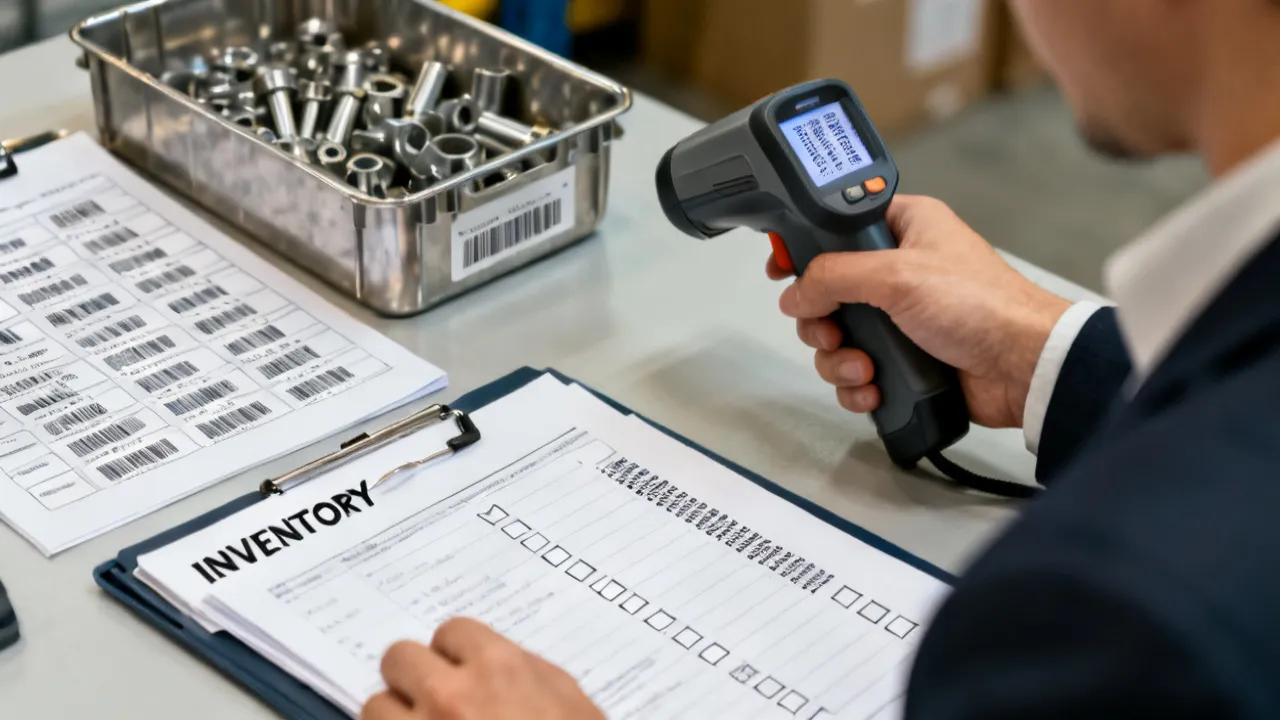
Ailco, José Fradem: Quality Supplier Evaluation Guide
This guide explains how to evaluate Ailco, José Fradem suppliers with a practical, risk-aware checklist for sourcing and compliance. It sets objective context on why suppliers matter in healthcare-adjacent procurement, how traceability and documentation reduce operational and regulatory risk, and what criteria professionals use when reviewing vendor capabilities, lead times, and quality systems.

Executive Takeaway: Evaluate Ailco and José Fradem by evidence, not claims
If you are assessing suppliers tied to Ailco and José Fradem, the most dependable approach is to evaluate documented capability: quality management, traceability, compliance readiness, and practical responsiveness under real-world conditions. In industry procurement, buyers often discover that the deciding factors are not marketing statements, but verifiable records—such as batch/lot traceability, audit outcomes, documented corrective actions, calibrated testing practices, and clear responsibility for specification compliance.
Professional due diligence also benefits from structured comparisons across vendors: what they can produce, what they can document, and how they behave when questions arise. Use the criteria below to reduce sourcing risk, protect consistency in downstream processes, and maintain accountability throughout the lifecycle of the purchased goods or services.
Why Ailco and José Fradem appear in supplier discussions
Names like Ailco and José Fradem typically surface when organizations search for dependable partners who can support specific operational needs—whether those needs involve regulated products, technical components, clinical services, or documentation-heavy workflows. In supplier selection, customers look for more than availability; they look for assurance that processes are stable and that requirements can be met repeatedly.
In practice, supplier discussions often begin with urgency (“we need it quickly,” “we need it compliant,” “we need it at scale”), but the decision must end with proof. Experienced buyers treat supplier evaluation as a system problem: how inputs are controlled, how outputs are verified, how deviations are handled, and how records support accountability. A vendor may have capacity today, but what matters is whether the quality system can carry the workload consistently tomorrow.
Another reason these names can appear frequently is that procurement teams may already know them from prior interactions—sometimes due to distribution relationships, past project work, or catalog/catalog-alike listings. Yet even when there is familiarity, evidence requirements remain essential. Procurement teams should avoid the trap of “familiarity bias.” Instead, they should ask whether prior positive experiences were backed by objective deliverables: complete documentation, consistent test results, stable lead times, and transparent deviation handling.
Core evaluation areas (what matters very in procurement)
When assessing vendors associated with Ailco and José Fradem, focus on five categories. Arrange them in order of impact: quality and compliance capability first, then technical fit, then operational performance, and finally commercial and contractual terms.
- Quality management system: Do they use documented procedures, internal audits, and corrective/preventive action (CAPA) practices? Can they show evidence that issues are investigated and prevented from recurring?
- Traceability and documentation: Can they provide batch/lot traceability records, certificates of conformity, and specification compliance documentation? Can traceability be retrieved quickly when needed?
- Technical capability: Do their processes reliably meet the technical requirements you specify (materials, tolerances, labeling, testing methods, service protocols)?
- Operational reliability: Are lead times realistic, and is there evidence of on-time performance and stable capacity? How do they manage backorders, shortages, and supply disruptions?
- Commercial and contract clarity: Are acceptance criteria, warranty/support responsibilities, change control, and escalation paths clearly defined?
To make this actionable, procurement teams should define what “evidence” means for each category. For example, a “quality management system” should not be assessed only by whether a vendor says they are certified. Buyers should look for specific records: audit schedules, internal audit reports, management review evidence, documented complaint handling, CAPA logs, and training records relevant to the work being supplied.
Industry context: supplier quality is a risk-control mechanism
In healthcare-adjacent procurement and any environment with safety-critical outcomes, supplier selection functions like a risk control system. If a vendor’s processes are inconsistent or poorly documented, the downstream organization must absorb the uncertainty—through extra inspections, rework, operational delays, increased inventory buffers, or additional documentation review cycles. Over time, that burden can harm both cost structure and patient/service quality.
To keep evaluation objective, procurement teams typically rely on internationally recognized quality frameworks and guidance. For example, the use of quality management principles aligns with ISO 9001, while medical product supply chain expectations often intersect with ISO 13485 and regulatory guidance from competent authorities (depending on jurisdiction and product classification). Where applicable, buyers also reference regulatory expectations for traceability and record retention in line with local rules.
Even outside direct medical device contexts, similar principles apply whenever a purchased item or service affects quality outcomes: aerospace parts, food ingredients, chemicals, environmental monitoring services, laboratory testing services, and safety-related industrial components. Quality systems exist to reduce variation, prevent errors, and provide traceability when investigations are required.
Note: If you have jurisdiction-specific requirements, your evaluation should reference the actual competent authority expectations for your category of goods or services. Procurement should coordinate with Quality and Regulatory Affairs (or equivalent functions) to ensure the vendor requirements map correctly to local expectations and product classification.
How to assess “price” responsibly without losing rigor
You mentioned “price information” in the request. However, no explicit price figures were provided in the prompt. In practice, professionals treat price as one signal among many, never as the only deciding factor—especially when documentation, testing, and compliance matter.
A sound approach is to compare:
- Total cost of ownership: include inspection costs, documentation processing, shipping/storage, rework, handling of nonconformities, and internal labor required to approve and release.
- Cost of uncertainty: if documentation is incomplete, you may face delays, repeat tests, extended quarantine periods, or additional supplier follow-up.
- Cost of change: if specifications change and change control is unclear, you may incur re-validation, re-qualification, or re-labeling work.
- Risk-adjusted cost: consider how likely defects and investigation burdens are based on evidence (CAPA maturity, complaint history, audit findings, and deviation rates).
Instead of asking only, “What is the price?”, ask, “What exactly does that price buy—and what evidence supports that it meets our requirements every time?” This mindset makes price comparison defensible and helps avoid situations where low unit cost becomes high operational cost.
For additional rigor, procurement teams can use a scoring method where commercial terms get a portion of the total score, but only after minimum documentation and compliance gates are met. For instance, if traceability records are not retrievable, the vendor fails the “traceability gate” regardless of price. If acceptance criteria are not supported by test methods aligned to your specs, the vendor fails the “technical gate.” This prevents the procurement team from selecting a vendor that is fundamentally mismatched to quality needs.
Supplier documentation that should be non-negotiable
For suppliers connected to Ailco and José Fradem, your procurement team should request a minimum document set aligned with the risk level of your use case. While the exact list depends on what you are buying, buyers commonly require documented proof for quality, traceability, testing, and change control.
While the exact list varies, procurement teams commonly require:
- Quality management documentation: quality policy, documented procedures relevant to the supplied process, evidence of internal audits, and CAPA methodology (including how CAPAs are prioritized and verified for effectiveness).
- Specification compliance: documented confirmation that the delivered item/service meets your stated specifications, including how compliance is verified.
- Traceability: batch/lot identifiers, production records, and retention periods. For regulated environments, record retention and retrieval time may be scrutinized.
- Testing and release records: test protocols, results, and release authorization records (where relevant). The key is that methods and acceptance criteria align to your requirements.
- Change control: description of how changes to processes/materials are evaluated and communicated. The vendor should define what constitutes a material change.
- Complaint handling: a defined process for receiving, investigating, and closing complaints, including how root causes are determined and how recurring issues are prevented.
- Training and competence (where applicable): evidence that staff involved in production/testing/approval are trained and competent for their roles.
- Calibration and measurement system control (where applicable): evidence of instrument calibration, calibration schedules, and measurement system controls to ensure test validity.
When these documents are missing or inconsistent, the correct response is usually not to negotiate a discount—it is to reassess suitability. If you accept incomplete documentation to reduce short-term friction, you may create long-term release delays and make it harder to perform investigations if something goes wrong.
Procurement can also strengthen evidence quality by requesting “examples,” not only generic templates. For example, instead of asking for a CAPA procedure alone, request the last 3–5 CAPA records (redacted as needed) relevant to the scope of work, along with closure evidence and effectiveness checks. Instead of asking for “we have traceability,” request traceability for a specific recent lot and show how it maps from raw materials through finished goods, including any sub-vendors if relevant.
Practical supplier comparison: what “good” looks like
Buyers assessing vendors typically want consistency. Here is a practical description of how vendors perform when they have mature quality systems:
- They answer evidence requests clearly: if you ask for traceability records, they provide them without “translation” that delays review. They understand what you need and respond with structured documents.
- They respond to deviations quickly: they can explain root cause and corrective action, not only symptoms. They provide evidence of verification that the correction works (effectiveness check).
- They manage documentation at scale: contracts and specifications align, and paperwork does not arrive late. Their release packages are predictable.
- They demonstrate repeatability: performance is stable across multiple lots or service cycles, as shown by consistent test results and stable yield.
- They are transparent about limitations: if certain tests are subcontracted, they provide documentation about those subcontractors and ensure the subcontracted work is controlled.
This is where supplier names like Ailco and José Fradem become meaningful to buyers: either the organization can produce consistent outcomes backed by records, or it cannot. What matters is not the supplier’s identity alone, but the quality system maturity that allows the supplier to perform consistently in your context.
What “evidence” means in practice (so evaluations stay fair)
Evidence is often misunderstood. Some suppliers respond to evaluations by providing polished summaries instead of primary records. To keep procurement fair and audit-friendly, define evidence expectations early:
- Primary over summary: prefer raw/primary records (test results, batch records, deviation reports, CAPA logs) over narrative statements.
- Specific to scope: ensure the evidence relates to your product/service scope, not unrelated sectors.
- Traceable to time: require “as-of” dates, revision numbers, and version control for procedures and documents.
- Linked to outcomes: check whether CAPAs are closed with effectiveness checks, and whether deviations lead to systemic changes.
By setting these expectations in the evaluation request package (RFx, supplier questionnaire, or document request list), procurement teams reduce the back-and-forth that often occurs when evidence standards are unclear. This also improves comparability across Ailco and José Fradem by ensuring each vendor responds to the same evidence requirements.
Procurement steps professionals use (comparison table + method)
Below is a structured comparison and method you can apply to Ailco and José Fradem during supplier selection. It is designed to support decisions using comparable evidence.
| Category | What to Request/Verify | How to Score It (Practical) |
|---|---|---|
| Quality System | Documented QMS procedures; audit evidence; CAPA approach; management review | Strong if procedures exist and records show execution; weak if only policies are shared or no CAPA effectiveness evidence is provided |
| Traceability | Batch/lot identifiers; production and release records; retention period; ability to retrieve records quickly | Strong if traceability is complete per lot and retrievable; weak if partial, summarized, or difficult to obtain |
| Specification Compliance | Certificates of conformity; documented compliance to your specs; evidence of method alignment to requirements | Strong if alignment to your written specs is explicit and supported by test records; weak if claims are generic or unverifiable |
| Testing/Release (If Applicable) | Test methods; acceptance criteria; release authorization; calibration references | Strong if methods and acceptance criteria match your requirements; weak if unclear, outdated, or not aligned |
| Change Control | How changes are assessed and communicated; criteria for material changes; customer notification timelines | Strong if formal documented process exists and notification rules are defined; weak if informal communication or no material-change criteria |
| Commercial Clarity | Lead time commitments; warranty/support; escalation; acceptance and rejection handling | Strong if terms specify responsibilities and acceptance criteria; weak if terms are vague or shifts responsibilities to buyer |
| Operational Reliability | On-time delivery history (where available); incident handling records; capacity planning approach | Strong if they can explain deviations with corrective actions; weak if issues repeat or capacity shortfalls are unaddressed |
Step-by-step supplier evaluation guide (conditions/requirements included)
Use this step-by-step guide to evaluate Ailco and José Fradem with a defensible, audit-friendly approach. Adjust the depth based on risk and regulatory requirements.
-
Define the requirement (the “what” and the “evidence”).
- Condition/requirement: Your specification must be written clearly enough that a third party can verify compliance (e.g., measurable tolerances, clear labeling requirements, defined testing methods, or defined service protocols).
- Condition/requirement: Identify risk drivers: whether failure affects safety, regulatory compliance, or critical performance.
-
Request a vendor document pack.
- Condition/requirement: Documents must be current (within your review period) and aligned with the scope of the contract.
- Condition/requirement: Require revision history and indicate which documents are controlled and which are templates.
-
Verify traceability feasibility.
- Condition/requirement: If your process requires lot-based traceability, ask for example traceability records tied to a recent shipment or batch.
- Condition/requirement: Confirm how quickly traceability can be retrieved after an investigation request (e.g., within 24–48 hours).
-
Assess quality controls and CAPA maturity.
- Condition/requirement: You should be able to see how nonconformities are classified, investigated, corrected, and prevented from recurring.
- Condition/requirement: Evaluate effectiveness checks: not just closure dates, but evidence that the CAPA prevents recurrence.
-
Validate technical alignment.
- Condition/requirement: Confirm whether the vendor’s testing methods match (or can be aligned to) your acceptance criteria.
- Condition/requirement: Confirm calibration controls for measurement instruments used in their process.
-
Run a pilot or initial qualification (for higher-risk items/services).
- Condition/requirement: Define objective acceptance criteria and what happens if the first cycle shows deviations.
- Condition/requirement: Include a plan for handling nonconforming pilot results: containment, investigation, and decision gates (approve, reject, or re-pilot).
-
Confirm change control and communication.
- Condition/requirement: Agree in advance on notification timelines and what constitutes a material change requiring re-qualification.
- Condition/requirement: Confirm how the vendor documents changes (e.g., change notice, risk assessment, verification evidence).
-
Finalize contract terms.
- Condition/requirement: Include documentation deliverables, quality expectations, complaint handling, and escalation paths.
- Condition/requirement: Define audit rights and expectations for record access when investigations occur.
This approach creates a repeatable method for supplier decisions and helps ensure that Ailco and José Fradem are evaluated on the same standards.
Risk considerations: where buyers commonly encounter problems
Even when suppliers appear capable at first glance, procurement teams often face predictable failure modes. Being aware of these issues helps you ask better questions:
- Documentation arrives late or incomplete: leads to operational delays and additional internal review cycles. Sometimes release cannot be completed until documents are provided.
- Unclear responsibility during deviations: disputes arise when something goes wrong because acceptance and responsibilities were not clearly defined in the contract and procedures.
- Change control is informal: vendors may update processes without formally notifying customers, undermining validation.
- Traceability is “available” but not usable: records may exist but are not structured to support your internal workflows, or retrieving them takes too long during an investigation.
- Price reflects uncertainty: low pricing can correlate with reduced documentation depth, less frequent testing, or a higher likelihood of nonconformities—shifting work downstream to your organization.
- Subcontractor control is weak: the vendor may outsource key processes without providing adequate oversight evidence, leading to gaps in traceability or test validity.
- Measurement validity issues: if instruments are not properly calibrated or test methods are not controlled, results may be unreliable even if paperwork looks complete.
Mitigation is straightforward: require evidence, define acceptance criteria, and establish how deviations are handled before the first order. Procurement should coordinate with Quality to ensure deviations are handled with proper containment, evaluation, and communication—not just “we will fix it.”
Localization note for “nearby” sourcing decisions
Your prompt indicates that any city or country term should be replaced with “nearby.” In practical procurement, sourcing from nearby regions can reduce transit time variability and improve responsiveness during urgent needs. Many organizations also value the ability to coordinate site visits or technical meetings more efficiently. That said, geographic proximity should not replace evidence-based evaluation: a supplier’s quality system and documentation readiness remain the decisive factors regardless of location.
When sourcing nearby is part of a strategy, you can also use it to strengthen oversight: schedule an initial qualification visit, request a joint review of documentation deliverables, and clarify expectations for shipments, labeling, and packaging controls. However, any benefits gained from proximity should complement evidence-based qualification rather than substitute for it.
Sources and standards used for objective procurement framing
Because supplier evaluation touches quality management and recordkeeping principles, procurement teams commonly rely on established standards and regulatory guidance. The following are reputable, widely referenced frameworks used to ground evaluation logic:
- ISO 9001 (quality management system requirements) for general QMS principles.
- ISO 13485 (medical devices—quality management) where relevant to regulated products or medical supply chains.
- Guidance from competent authorities (jurisdiction dependent) regarding traceability, documentation, and quality system expectations.
Use these references as a baseline and align to the specific rules governing your product/service category. For example, a supplier providing laboratory testing services may require evidence of method validation and test method control; a supplier manufacturing critical components may require evidence of production process validation, in-process controls, and sterile or contamination controls (if applicable).
Supplier evaluation deliverables: what the buyer should produce internally
Procurement diligence is not only about what the supplier provides. The buying organization should also document its own evaluation results in a clear, auditable format. Otherwise, decisions are difficult to defend and hard to repeat.
Internal deliverables commonly include:
- Supplier evaluation report: summarizing what was requested, what was received, what was verified, and the final conclusion.
- Risk assessment: a structured explanation of risks associated with sourcing from the vendor and how those risks are controlled (e.g., qualification testing, increased incoming inspection, release hold times).
- Qualification plan: defining pilot tests, acceptance criteria, sampling plans, and decision gates for approving or rejecting the supplier.
- Approved vendor status: documenting whether the supplier is approved for full use, limited use, or requires additional evidence before approval.
- Contractual quality clauses: capturing the vendor’s obligations for documentation, traceability, and change notifications.
By producing these deliverables, procurement strengthens accountability and reduces the likelihood of later disagreements about why a vendor was selected. This also helps if procurement changes personnel or if an audit asks how decisions were made.
Deepening the technical check: align testing methods and acceptance criteria
A frequent procurement issue is misalignment between the buyer’s acceptance criteria and the supplier’s testing method. For example, the buyer may require a specific tolerance measured under defined conditions, while the supplier tests using a different method, different measurement equipment, or different sampling logic. Even if both parties use the word “conformance,” they may not be comparing like for like.
To address this, procurement teams can implement a structured technical alignment exercise:
- Translate specifications into measurable requirements: identify dimensions, material properties, functional performance indicators, labeling requirements, and environmental constraints.
- Confirm test method equivalence: verify that the supplier’s method measures the same property with sufficient accuracy and repeatability.
- Check measurement system capability: confirm calibration, instrument traceability, and whether method validation or verification exists (as required by risk level).
- Define sampling and acceptance logic: agree how many units/lots are tested, what happens if results are borderline, and how re-testing is handled.
- Ensure documentation maps to decision-making: test results should clearly support release decisions, not require manual interpretation.
This deep technical check is especially important for evaluating Ailco and José Fradem if your use case depends on consistent performance rather than “good enough.” It is also important when you are integrating vendor outputs into regulated processes where evidence must support compliance determinations.
CAPA and deviation handling: look for effectiveness, not just activity
Many buyers see CAPA lists and assume the vendor is mature because there are frequent records. However, CAPA volume alone does not indicate quality system maturity. What matters is whether issues are investigated properly, whether root cause analysis is robust, and whether corrective actions are effective.
During evaluation, procurement teams can request evidence of CAPA effectiveness:
- Root cause analysis quality: Does the vendor use structured methods (e.g., 5 Whys, fishbone, fault tree) appropriate to the problem type?
- Containment actions: How did the vendor prevent additional nonconforming product from reaching the customer?
- Corrective vs preventive separation: Does the vendor correct the immediate issue and also implement preventive measures to prevent recurrence?
- Effectiveness verification: Is there evidence that monitoring after the CAPA closure shows improvement?
- Trend analysis: Does the vendor look at recurring failure modes, supplier quality trends, and process capability?
A vendor that can demonstrate effectiveness is typically more reliable under ongoing supply conditions. This can be a decisive difference between suppliers when comparing Ailco and José Fradem with the same criteria.
Traceability: define the “minimum retrieval requirement”
Traceability is not just having lot numbers. It is having the ability to retrieve relevant information in a way that supports investigation and decision-making. Procurement teams can define a “minimum retrieval requirement” as part of qualification.
For example, procurement can request:
- One-to-one lot mapping: which raw material lots map to which finished goods lots.
- Test and release linkage: how test results and release approval map to the specific batch/lot.
- Sub-vendor visibility: whether critical components or processes used by sub-vendors can be traced back.
- Record retention: how long records are stored and where they are stored (including backup/contingency).
- Retrieval time: how quickly the vendor can provide the traceability package if your organization requests it during a deviation investigation.
When traceability is strong, it becomes a confidence tool for the buyer. When traceability is weak, it becomes an uncertainty tool—forcing your organization to conduct additional inspections, increasing release delays, and making it harder to manage downstream risk.
Operational reliability: beyond on-time delivery
Operational reliability is sometimes reduced to a single metric like on-time delivery percentage. While that is useful, it is not enough. Buyers should also assess how vendors handle disruptions, how they plan capacity, and how they communicate.
Procurement can evaluate operational reliability by looking at:
- Lead time stability: not only averages, but variation and whether lead times are realistic.
- Backorder and shortage handling: what happens when inventory is insufficient—substitution rules, customer communication, and documentation.
- Deviation and nonconformance process: how nonconformances are handled when they occur in production or during receiving.
- Forecasting collaboration: how the vendor uses forecasts and how it communicates when forecasts cannot be met.
- Capacity planning evidence: evidence of production scheduling, resource allocation, and contingency plans.
In practice, a vendor with strong quality systems may still struggle with operational reliability if capacity planning is weak. Conversely, a vendor with operational reliability may still be risky if quality documentation and traceability are weak. Procurement should evaluate both dimensions to avoid selecting a supplier that performs well on delivery but fails on quality evidence.
Commercial clarity and contract terms that reduce disputes
Commercial and contractual terms often determine how disputes are resolved. Procurement should ensure contracts support quality accountability and define the buyer’s rights during nonconformance situations.
Contract terms that often matter include:
- Acceptance criteria: include objective criteria that define acceptance and rejection.
- Documentation deliverables: specify what must be delivered with each shipment or service cycle (e.g., certificates, test reports, traceability summaries).
- Warranty and support: define what is covered, timelines for claims, and vendor responsibilities.
- Deviation handling: define containment obligations, documentation requirements, and timelines for communication.
- Escalation paths: define who the buyer contacts and how quickly responses are expected.
- Change control obligations: define notification requirements and what triggers re-qualification or re-validation.
- Audit rights: allow appropriate audit or record review under defined conditions.
For Ailco and José Fradem comparisons, procurement can use a standardized contract clause set to ensure both vendors are held to comparable expectations. This reduces later inconsistencies and makes evaluation outcomes more defensible.
Qualification approaches: sampling, pilots, and phased approval
Not every supplier requires a full audit or long qualification period. However, the buyer should match qualification depth to risk. Qualification approaches commonly include:
- Document-only pre-screen: for low-risk items/services where evidence can be verified quickly.
- Sample-based qualification: where you test a limited number of lots/units and verify traceability and compliance evidence.
- Pilot production/service run: where you run a realistic cycle under your conditions and verify outcomes.
- Phased approval: for higher-risk items—approve limited volume first, then expand after passing defined performance criteria.
- On-site audit (if warranted): for high-risk items/services or if document review indicates gaps.
Phased approval can be especially useful when comparing Ailco and José Fradem. Even if both pass document review, you can require a pilot batch to confirm technical alignment, repeatability, and operational reliability under your use conditions.
When implementing pilots, define decision gates in advance:
- What happens if traceability is incomplete?
- What happens if test results are borderline?
- What happens if a defect is found?
- How do you verify the corrective action and effectiveness?
This ensures the pilot is not just a “try and see” exercise. It becomes a controlled qualification with auditable outcomes.
Supplier responsiveness: measure it, don’t assume it
Procurement responsiveness often determines how quickly issues are resolved. Responsiveness is not only about being “fast.” It is about being structured, transparent, and accountable.
During supplier evaluation, you can measure responsiveness by requesting time-bound evidence. For example:
- Ask for traceability records for a recent lot within a specified timeframe.
- Request CAPA examples relevant to the scope of work within a set period.
- Ask for confirmation of test methods and calibration evidence within your response timeline.
- Use a deviation scenario: ask what the supplier would do if a specific test fails or if labeling is misprinted.
A supplier with mature systems will be able to provide answers with evidence, not vague explanations. This can reveal important differences between Ailco and José Fradem that may not appear in brochures or initial conversations.
Common evaluation pitfalls: how buyers accidentally misjudge suppliers
Even well-intentioned procurement teams can make mistakes. Avoid these common pitfalls:
- Over-relying on certification numbers: a certification may be relevant but does not automatically prove the supplier’s capability for your specific scope.
- Accepting generic documentation: templates without example records do not demonstrate actual execution.
- Ignoring change control: if a supplier can change without notifying you, your validation may become outdated.
- Skipping technical alignment: misaligned tests can produce “pass” results that do not actually mean compliance to your needs.
- Assuming past performance equals future performance: evaluate current evidence and current process controls.
- Not defining acceptance criteria clearly: disputes often arise when criteria are ambiguous.
- Not tracking vendor corrective actions: procurement should ensure that corrective actions are verified and closed with evidence.
By explicitly building evaluation gates around these pitfalls, procurement can ensure that Ailco and José Fradem are evaluated fairly and with consistent rigor.
How to run an evidence request (RFx) that yields comparable responses
To compare vendors effectively, create an evidence request that asks for the same items in the same format and with the same scope. This can be done through an RFx document, supplier questionnaire, or document request list.
In practical terms, procurement can structure the RFx request as:
- Scope statement: clearly define what product/service category is covered and what is not.
- Document list with revision requirements: request controlled versions and specify revision date expectations.
- Evidence examples: request example records from a defined timeframe (e.g., last 12 months).
- Traceability example: request traceability package for a specific recent lot/shipment (or a representative sample if confidentiality applies).
- Deviation/CAPA examples: request examples relevant to the delivered scope and specify the desired number of records.
- Change control confirmation: ask for their process and for example notifications (redacted as needed).
- Testing method confirmation: request method descriptions and calibration evidence relevant to your acceptance criteria.
- Operational reliability data: request delivery performance metrics and deviation handling summaries.
If both Ailco and José Fradem are asked for evidence in comparable ways, procurement can score them with confidence rather than relying on narrative impressions.
FAQs
1) What does it mean to “evaluate” Ailco or José Fradem as suppliers?
Supplier evaluation means verifying that the vendor can consistently meet your technical requirements and provide the documentation needed to support compliance, traceability, and quality assurance. For Ailco and José Fradem, you would typically assess quality system maturity, traceability readiness, specification compliance evidence, and how the supplier handles deviations—using both documentary evidence and, when risk warrants it, qualification samples or pilot runs.
2) How should we treat price when comparing suppliers?
Price should be assessed as part of total cost of ownership, including documentation processing, inspection/verification effort, potential costs from nonconformities, and potential costs from delayed lead times. Without evidence that the delivered output meets your specifications, low price can increase hidden operational risk. In many organizations, price is only considered after minimum quality and compliance gates are passed.
3) What documentation should we request first?
Start with quality management documentation (QMS overview and CAPA approach), traceability examples, and certificates or records demonstrating specification compliance. For higher-risk items/services, request test/release records and change control procedures, and also request example CAPA or deviation investigations relevant to the scope of work.
4) Is a site visit necessary to evaluate Ailco or José Fradem?
A site visit is helpful but not always mandatory. If you cannot visit, you can still evaluate through audits, documentation review, sample-based qualification, and responsiveness tests using evidence requests. The key is that your evaluation results in clear, evidence-based conclusions that can be defended during internal governance reviews or external audits.
5) What conditions should be included in a supplier contract?
Contracts should define acceptance criteria, documentation deliverables, traceability expectations, responsibilities during deviations, warranty/support terms, complaint handling steps, escalation paths, and change control requirements. These conditions reduce ambiguity when issues occur and support faster, more structured problem resolution.
6) How do we handle changes after we start purchasing?
Use a formal change control process: require notification of material changes, confirm whether re-qualification or re-validation is needed, and ensure that documentation and traceability continue to meet your requirements. A supplier with mature systems will typically manage changes in a structured, auditable way and provide evidence to support continued compliance.
7) Can we rely on marketing claims instead of records?
No. Marketing claims may indicate intent, but procurement decisions should be based on verifiable evidence—procedures, records, test outcomes, and traceability documentation—especially where safety, compliance, or quality consistency matter. When marketing claims conflict with primary evidence, procurement should follow evidence and treat contradictions as a risk signal.
Closing perspective: make supplier decisions defensible and repeatable
When sourcing involves Ailco and José Fradem, the most effective procurement strategy is to build a defensible evaluation process: define requirements, require evidence, compare vendors using the same criteria, and qualify initially when risk warrants it. This reduces uncertainty and strengthens reliability—turning supplier selection from a one-time comparison into a repeatable quality assurance practice.
Ultimately, the buyer’s goal is not to “believe” a supplier’s story. The goal is to establish an evidence chain that supports your downstream processes, protects regulatory and safety obligations, and makes it easier to respond when deviations occur. When your evaluation is built on records—traceability, CAPA effectiveness, specification compliance, and controlled change management—you can decide with confidence and sustain performance over time.
-

A Guide to Cost-Efficient Small Electric Cars for Seniors
-
Mastering Debt Consolidation: Boost Your Credit Score and Manage Interest Rates
-
Your Guide to Loans, Credit Checks, and Interest Rates
-
Affordable Independent Living: Finding the Right Senior Housing
-
Guide to Senior Living Apartments: Affordable and Comfortable Environments