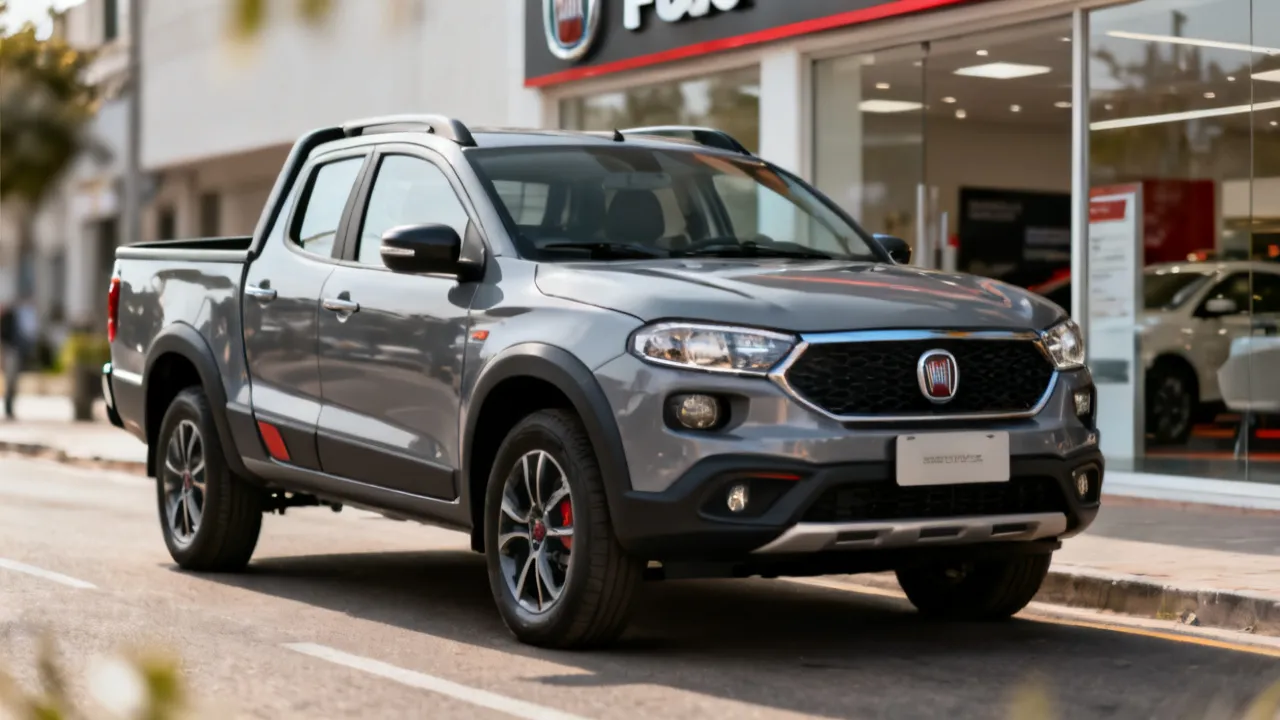
Fiat Toro Guide for Smart Used-Car Decisions
This guide explains how to evaluate and find a Fiat Toro and other vehicles on sale efficiently, using reputable U.S. car-trading platforms. “Fiat toro” refers to the Fiat Toro model name used by shoppers during searches. Background information covers how listings are structured across major marketplaces, what to check before buying, and how to compare costs objectively without relying on promotional claims.

Start Here: How to Evaluate a Fiat Toro Listing Before You Pay
If you’re searching for Fiat toro (often written as “Fiat Toro” in listings and search results), the fastest way to avoid costly mistakes is to treat every “on sale” offer as a data-check project. Begin with the vehicle identification, confirm condition claims against documentation, and compare total ownership cost—not only the advertised price.
From an industry perspective, very buyer regret comes from mismatched expectations: the listing looks good, but the history, mechanical baseline, or title status doesn’t support the price. Your goal is to verify that the deal is “true,” then negotiate from evidence.
When done properly, evaluating a listing is less about “hoping it’s fine” and more about building confidence through verifiable details. The more uncertain the listing, the more you should slow down. The more complete and consistent the information is, the more you can move quickly.
Because used-car inventory changes daily, the best deals often go to shoppers who can act quickly and accurately. That combination—speed plus verification—is exactly what this guide helps you practice.
What “Fiat Toro” Means in the Market
The phrase Fiat toro typically refers to the Fiat Toro model that appears across used and pre-owned inventory channels. In practice, buyers encounter it in two contexts:
- Search intent: shoppers type “Fiat toro” to locate relevant trims, model years, and mileage ranges.
- Listing metadata: dealership sites and auto marketplaces index model names, enabling filters for price, distance, body style, drivetrain, and sometimes accident history indicators.
Because inventory changes daily, a listing that is “on sale” today may not exist tomorrow—so the key is to establish a repeatable checklist and move quickly once the vehicle passes verification.
Also, pay attention to how the vehicle is described: the listing may use variations in wording (for example, “Toro,” “Fiat Toro,” or even incorrect capitalization). That doesn’t necessarily mean the listing is wrong. What matters is that the vehicle’s VIN, trim designation, model year, engine type, mileage, title status, and disclosed condition align across every data point you can verify.
In some marketplaces, “on sale” vehicles can include dealer promotions, clearance pricing, or vehicles whose price has dropped after appraisal. Sometimes that’s a straightforward discount. Other times it’s a signal that there’s an issue the seller wants to move fast. Your job is not to assume either scenario is true until you confirm.
Where to Find Cars on Sale: Trusted Official Car-Trading Websites
Major marketplaces and dealer networks publish vehicle availability and listing details on their official pages. Below is a comparison table to help you understand where to search (without including links inside the table).
| Website | What You’ll Typically Find |
|---|---|
| cars.com | Large, frequently updated marketplace listings for new and used vehicles, often with filters for price, mileage, and location. |
| carmax.com | Dealer-sourced used inventory and structured buying flow; useful for shoppers who want consistency in how offers are presented. |
| caronsale.com | A directory-style approach to browsing vehicles listed for sale; helpful for discovery across multiple sellers. |
| autotrader.com | Extensive listing aggregation with search tools to compare inventory by distance and price band. |
source: www.cars.com, www.carmax.com/cars, www.caronsale.com/en, www.autotrader.com (Source of listing-platform information.)
Next step: Use these sites to narrow “Fiat toro” results, then verify each candidate with independent checks before negotiation.
In addition to these sites, consider the listing quality you’ll encounter. Some sellers post full service histories and multiple angles of the vehicle. Others post minimal images, vague descriptions, or photos that don’t clearly show important details (such as tire tread, underbody condition, door jamb labels, or any repaired areas). Your verification process should account for the quality of how the listing is presented.
When you use multiple platforms, you can also compare whether the same vehicle is being advertised by the same seller at different prices. If you find identical photos, similar descriptions, or the same VIN being offered for different amounts, that’s a clue worth investigating. Price discrepancies can happen for legitimate reasons, but they can also reflect different bundles of included items, different states of readiness (for example, “available now” vs “needs work”), or even different conditions being reported.
How to Find a Cheap Car (or a Legit “On Sale” Deal) Step by Step
To locate a cheap car on sale while keeping risk low, use a process designed around how listings are compiled and how pricing is set. Treat it like a sourcing workflow used by professionals.
Professional buyers do not simply “fall in love with the price.” They treat the listing as a hypothesis: the seller claims this car is worth X. Your job is to confirm whether that hypothesis is accurate using evidence.
That evidence typically comes from five buckets:
- Identity and title: VIN, title type, prior ownership, brand history.
- Mechanical baseline: inspection, scan tool output, and wear patterns.
- Maintenance proof: service receipts, consistent odometer history, warranty information.
- Market comparison: what similar Fiat Toro units sell for under similar conditions.
- Total cost: taxes, fees, insurance, registration, and near-term repairs.
When any of these buckets is missing, the deal becomes harder to evaluate. That doesn’t automatically mean the vehicle is bad—just that you need stronger proof before paying.
Step 1: Define your target range (price + total cost)
Set a budget that includes not only the listed price but likely next costs such as sales tax, registration, insurance adjustment, and immediate maintenance. Dealers and marketplaces present “asking price,” while your final cost depends on location and vehicle specifics.
Many buyers focus only on the sticker price and then get surprised by the “out-the-door” total. For example, even if you negotiate the price down, taxes and dealer documentation fees may still be calculated from the final negotiated price. Additionally, insurance premiums can be significantly different depending on trim level, mileage, and your driving record.
To calculate your true target range, create a simple estimate:
- Vehicle purchase price: your negotiated amount.
- Estimated sales tax: based on your state/local rate (and sometimes trade-in rules).
- Dealer fees: documentation fee, title fee, handling fee (ask for the list).
- Registration: depends on state and vehicle year.
- Insurance estimate: request a quote using the exact VIN if possible.
- Immediate maintenance reserve: set aside for fluids, filters, tires, brakes, battery, or common wear items.
When you set a reserve buffer, you can negotiate with clarity. You won’t be forced into last-minute decisions when you learn the real total cost at signing.
Also, consider the cost impact of delayed repairs. A “cheap” purchase can become expensive if the vehicle needs critical work soon. For instance, if a listing hides brake wear or tire issues, your “cheap” price can flip into a significantly higher total cost within months.
Step 2: Filter using objective constraints
On platforms such as cars.com or Autotrader, you can typically constrain results by:
- Price range
- Mileage band
- Distance from your area (“nearby” in this guide)
- Body style and drivetrain options where available
Industry guidance: prioritize a narrow shortlist with enough similarity (trim, mileage, and condition level). Comparing apples-to-apples makes negotiation easier.
To further improve accuracy, filter by “trim level” and “fuel type” where available. If you ignore trim differences, you can accidentally compare vehicles with different equipment that affects value. For example, some trims may include safety tech, convenience features, or different wheel/tire packages that alter repair costs.
If a platform allows search by “accident history” or “reported damage,” use it carefully. Those indicators are not perfect, but they can help you avoid obviously risky candidates. If the listing doesn’t provide accident info, you can still request it via VIN history and verify independently.
Step 3: Read the listing like a document, not a sales pitch
When you open a “Fiat toro” listing, scan for:
- Title / ownership notes: salvage or rebuilt indicators (if shown), prior owner counts (where available), and any disclosed issues.
- Service history cues: maintenance records, whether the seller states recent work, and consistency of odometer statements.
- Warranty coverage details: whether any portion is transferable or time-limited.
- Photo authenticity: verify whether images match the description and whether key components appear to be included clearly.
Reading the listing like a document means you look for internal consistency. Ask: do the photos match the listed features? Does the description mention something that’s contradicted by the photos? Are there contradictions between what the seller says and what the vehicle history might indicate?
Examples of listing red flags include:
- Inconsistent mileage claims: listing says one mileage, but photos show different odometer readings.
- Vague condition language: “good condition” with no specifics, despite a low price.
- Missing details: no mention of tires, brakes, service records, or known issues.
- Unclear title status: “clean title” claimed, but the history report requested by VIN doesn’t support it.
- Generic photos: photos appear reused from another vehicle (especially if the interior patterns, dash wear, or accessory brands don’t align).
On the other hand, listings that help you evaluate include: VIN displayed, service history summarized, clear photos of underbody areas, tire tread close-ups, and a consistent description of any repairs.
Do not overlook minor details. Tire brand and tread wear can hint at driving style and maintenance habits. Brake dust patterns can indicate how often brakes were used or whether a brake job may be due soon. Interior wear on driver controls can indicate whether the mileage claim is realistic.
Step 4: Confirm the vehicle identification and history
Before you invest time, confirm the vehicle identification details (typically via VIN) and request a vehicle history report if it’s not already provided. A “cheap” price can be justified by legitimate factors (high mileage, normal wear, minor cosmetic issues) or can signal problems that will become expensive later.
For a professional workflow: don’t negotiate purely on the listed price—negotiate based on documented condition, recorded history, and findings from inspection.
Here’s how to treat VIN verification like a real checklist:
- VIN matches: the VIN shown in the listing matches the VIN the seller provides in messages and matches the VIN on the vehicle at viewing.
- Title type: confirm whether the title is clean, rebuilt, salvage, or other brand categories. Title branding affects financing, insurance, resale value, and sometimes registration.
- Odometer records: check whether recorded odometer readings are consistent over time.
- Accident reports: note whether reported damage is minor or severe and whether repairs appear consistent with what’s visible.
- Ownership history: frequent ownership changes can indicate recurring issues (not always, but worth considering).
- Service records: some history reports include service-related entries; compare them to what the seller says about repairs.
If the seller refuses to provide the VIN before you begin, or refuses to allow a history report, you should treat that as a significant barrier. A legitimate sale is usually straightforward when the buyer asks for verification.
Also consider regional differences. Some vehicles may be more or less common in your area depending on import rules, prior ownership patterns, and local availability. That can affect market price and the cost to repair parts. When parts availability is limited, the total cost of ownership may be higher even if the purchase price is low.
Step 5: Use an inspection to turn uncertainty into leverage
Arrange a pre-purchase inspection (PPI) with an independent mechanic—especially for vehicles advertised as discounted. Inspections help you confirm:
- Engine/transmission behavior (idle quality, shift smoothness, leak checks)
- Suspension and steering wear (alignment, bushings, tire unevenness)
- Brake condition (rotor thickness cues, pad wear)
- Electrical and sensor functionality (warning lights, scan tool results)
If inspection reveals work is required, you can negotiate for price adjustment or maintenance concessions, rather than absorbing costs yourself.
To get the most value from an inspection, ask the mechanic to focus on items that are common wear patterns for the Fiat Toro and the specific mileage band you’re looking at. Even if you don’t know the exact “common issues,” you can request a thorough check of:
- Fluid condition: engine oil clarity, coolant condition, transmission fluid condition (color and smell can reveal neglect).
- Underbody inspection: rust, impact points, and signs of underside repairs.
- Exhaust system: leaks, muffler condition, and sensor wiring integrity.
- Belts and hoses: cracking, swelling, and wear that indicates replacement is near.
- Battery and charging: battery health check and alternator output test.
- Cooling system: check for leaks and verify temperature regulation under test conditions.
- HVAC check: if equipped, ensure airflow, blend doors, and basic cooling/heating performance are normal.
- Test drive validation: confirm whether the issue described by the seller (if any) is present or absent.
Important: ask for a written report from the inspection. A verbal summary can be ambiguous. Written documentation helps you negotiate because it gives you tangible evidence rather than relying on impressions.
Another leverage tactic: provide the mechanic’s report to the seller and request a response. A cooperative seller may offer to fix items or credit you. An uncooperative seller may avoid committing. That reaction itself is information.
If the seller promises “it’ll be fixed” after you buy, insist on documentation before payment (for example, written agreement specifying what will be repaired, by when, and under what warranty). Otherwise, you may end up paying for issues that were effectively already known.
Step 6: Compare “on sale” offers using a structured checklist
When multiple Fiat toro options exist nearby, use a scoring approach:
- Verification score: documentation quality and history clarity
- Condition score: inspection findings and visible wear
- Cost score: likely near-term expenses plus financing/insurance impacts
- Risk score: red-flag signals (title issues, inconsistent descriptions, delayed disclosures)
This is how professionals reduce buyer’s remorse: you buy the top total package, not the loudest discount.
To make scoring useful, define what each score means before you start. For example:
- Verification score (0–5): 0 = missing VIN/title info; 5 = full history + consistent documentation + clear title.
- Condition score (0–5): 0 = major unresolved mechanical faults; 5 = inspection shows no major issues.
- Cost score (0–5): 0 = high expected next-year costs; 5 = low expected immediate maintenance.
- Risk score (0–5): 0 = major title/accident red flags; 5 = no concerning risk signals.
Then compute a final value like: Total Score = Verification + Condition + Cost + Risk. The highest total score is your best candidate, even if it’s not the cheapest sticker price.
In many real-world cases, the “best deal” is not the lowest price but the best combination of price, condition, and verifiable history. A slightly higher price with a clean inspection can be cheaper in the long run.
Conditions and Requirements to Keep Your Purchase Safe
Below is a practical comparison of requirements that typically apply when buying a used vehicle from major marketplaces or dealer inventory sources.
| Requirement | Why It Matters | What to Ask For |
|---|---|---|
| Vehicle history documentation | Helps validate prior ownership and potential accident/salvage relevance. | VIN-based history report; clarity on any title notes. |
| Independent pre-purchase inspection | Finds hidden mechanical or wear issues not obvious in photos. | Compression/leak checks, scan tool report, brake/suspension evaluation. |
| Title and registration verification | Avoids problems that can affect registration and resale. | Confirm status before payment; ensure paperwork consistency. |
| Transparent pricing breakdown | Prevents “cheap price” from turning into unexpected fees. | Itemized fees, taxes, doc charges, and any optional add-ons. |
Note: exact requirements vary by seller and state/local rules; always confirm details with the seller and any financing provider.
To further protect yourself, also consider these additional “safety requirements” that are often overlooked:
- Return policy / buyback policy (if applicable): Some platforms or dealers offer limited inspection periods or warranty coverage. Ask what the policy covers and how to activate it.
- Warranty terms in writing: If a vehicle includes a dealer warranty, get the term length, coverage items, deductible, and exclusions.
- Payment and timing rules: Ensure you know when you can take delivery, how keys will be provided, and what steps happen between payment and paperwork.
- Proof of repairs: If repairs were promised, ask for receipts or invoices for completed work.
- Accurate listing equipment match: Verify features such as infotainment specs, seat materials, wheel/tire package, and any included extras (floor mats, tonneau cover, etc.).
These additions reduce confusion and help you spot sellers who may be attempting to rely on verbal agreements rather than written commitments.
Expert Perspective: Why “Cheap on Sale” Can Be a Trap (and How to Defuse It)
In the used-car market, pricing is shaped by multiple variables: demand cycles, seasonality, mileage, trim popularity, service readiness, and the seller’s need to move inventory. A deal may be genuinely strong, but it can also reflect upcoming maintenance or paperwork complexities.
From an expert buying standpoint, the top “cheap car” outcomes happen when you:
- Verify first, then negotiate.
- Inspect consistently for every candidate, even if one listing appears “too good.”
- Document everything (in writing), especially if the seller promises repairs or additional equipment.
In other words, you’re not chasing a number—you’re purchasing a condition profile.
Let’s go deeper into the most common “trap mechanics” behind low-priced listings:
1) Under-disclosure of title history
Some listings may state “clean title” while the VIN history indicates otherwise. Sometimes the seller doesn’t understand title branding terminology. Other times the listing description is inaccurate. Either way, your best defense is VIN-based verification and confirmation of title paperwork before payment.
2) Mechanical debt disguised as “cosmetic”
A seller might frame issues as minor: “a little rough ride,” “needs brakes soon,” or “service light is on.” Those statements can mask expensive problems. An inspection and scan tool evaluation are how you translate vague language into specific repair estimates.
3) The “recent repairs” story without receipts
“Just replaced the battery” or “fresh oil change” can be true but still doesn’t mean the vehicle is in good overall shape. Without receipts, there’s nothing to confirm the maintenance quality or whether other systems were neglected.
4) Tire and brake wear used as a hidden cost
Sometimes a vehicle is “cheap” because it needs tires or brake service now. If tires are near replacement and brakes are worn, your near-term costs can be substantial. Even if those repairs aren’t catastrophic, they affect the total value.
5) Financing and insurance surprises
Some vehicles qualify for better financing than others, depending on credit, lender rules, and title status. Similarly, insurance premiums can spike due to trim level, safety ratings, or repair costs. A low purchase price can be negated by high insurance costs.
Defusing these traps is mostly about evidence:
- Ask for VIN early.
- Request a history report.
- Schedule a PPI.
- Get written agreements for promised work.
- Compare total cost, not just sticker price.
Practical Buying Strategy for Fiat Toro Shoppers
If your interest is specifically in a Fiat toro, treat it as a model-selection decision plus a sourcing decision:
1) Model-match efficiently
Look for the trim and configuration that align with your needs (cargo utility, drivability expectations, and expected maintenance patterns). If you’re comparing multiple vehicles, keep your comparison set consistent.
When comparing Fiat Toro listings, pay attention to the following factors that can change ownership experience and repair cost:
- Drivetrain and engine configuration: Different configurations can impact parts cost and service frequency.
- Wheel/tire package: Wheel sizes affect tire costs and availability.
- Infotainment and electronics: Repairs for electronic systems can vary widely.
- Safety features: Parking sensors, cameras, and driver assistance components can affect repair cost if damaged.
If you’re not sure what to prioritize, consider your likely usage: daily commuting, road trips, towing, off-road use, weather exposure, and how long you plan to keep the vehicle. Your use-case should drive your acceptable risk tolerance.
2) Prioritize documentation completeness
When two similar listings compete, choose the one with clearer records and fewer unresolved questions. In practice, incomplete documentation often correlates with higher uncertainty and higher negotiation friction.
What “documentation completeness” means in real life:
- Clear VIN listing: allows history check and consistent identity verification.
- Service records (or credible summary): show maintenance pattern and attention to wear items.
- Warranties described precisely: with duration, coverage, exclusions, and transferability.
- Title documentation: no confusion about whether it’s clean, branded, or pending paperwork.
- Receipts for major repairs: especially if the listing says it “just got serviced.”
If documentation is missing, you can still buy—but you must compensate by strengthening the inspection and negotiation. For example, if records are missing, insist on a more thorough inspection and possibly extend the list of items you want checked (cooling system, scan for stored codes, underbody inspection, etc.).
3) Negotiate from inspection findings
Use your mechanic’s notes to set an evidence-based offer. This approach typically results in a fairer deal for both sides and reduces the risk of paying for issues that should have been priced in.
To negotiate effectively, separate findings into categories:
- Immediate safety items: brakes, tires, major leaks, electrical faults that impair driving.
- Near-term maintenance: fluids, belts, suspension wear, exhaust work.
- Cosmetic or comfort items: minor dents, worn interior trim, non-critical wear.
Then link each category to a price or concession. For example:
- If brakes are near replacement, ask for a specific dollar credit or a reduction equivalent to brake replacement (parts + labor).
- If the scan tool shows stored codes requiring diagnosis, ask for a credit to cover diagnosis and likely repairs.
- If tires are unevenly worn, request either tire replacement or a reduction based on the cost of replacement tires and alignment.
When you negotiate with specifics, sellers are more likely to respond quickly. Vague negotiation leads to “back-and-forth” because the seller can’t see the exact justification.
4) Use “total ownership cost” thinking during negotiation
Many negotiations fail because buyers anchor on the sticker price instead of the entire ownership package. If a listing is cheaper but has higher expected near-term costs, a “discount” might not be real value.
Calculate a simple total cost scenario:
- Offer price: what you propose.
- Out-the-door amount: price + tax + fees.
- Expected repairs in next 6–12 months: from inspection and reasonable estimates.
- Insurance difference: request quotes and see if it changes your affordability.
Then negotiate to ensure the overall cost aligns with your budget—not just the purchase price.
Expanded Checklist: What to Do Before You Pay (Day-by-Day Workflow)
Sometimes it helps to see the process as a timeline. Below is a day-by-day approach you can follow when evaluating a Fiat Toro listing.
Day 1: Shortlist and data collection
1) Create your shortlist of Fiat Toro listings within your filter settings (price, mileage, distance).
2) Record the listing details: price, mileage, dealer name/seller name, location, and whether the VIN is provided.
3) Immediately message or call the seller for:
- VIN
- Title status confirmation
- Whether there are any known mechanical issues
- Whether service records exist
- Whether you can arrange an independent inspection
4) If any of these answers are evasive or refused, note that. Refusal to provide basic verification information is often a sign of higher risk.
Day 2: Verification and initial research
1) Run a VIN-based vehicle history report. Compare it to the listing claims.
2) Compare the listing price to similar Fiat Toro listings with similar mileage and trim. Look for large gaps that need explanation.
3) Estimate insurance costs using the VIN (or at least the exact trim). If insurance is dramatically higher, it changes your true budget.
4) If the seller claims major repairs were done recently, request receipts. Don’t accept vague “it was fixed” without documentation.
Day 3: Physical inspection preparation
1) Schedule your PPI with a mechanic you trust. Provide them the VIN, listing details, and any issues the seller mentioned.
2) Ask the mechanic ahead of time whether they can perform a scan tool check and produce a written report with codes.
3) Prepare your negotiation targets. If your inspection budget is separate, plan what you will do if repairs are required.
4) If the seller offers a warranty, ask for the exact terms before the inspection so your mechanic can focus on whether issues are already covered.
Day 4: Review inspection results and negotiate
1) Read the mechanic report carefully. Identify what’s safety-related, what’s near-term, and what’s optional.
2) Request additional clarification from the mechanic if needed (for example, the difference between a minor coolant seep and a major leak).
3) Present the report to the seller. Make a negotiation offer tied to the evidence.
4) Ask for written confirmation of any agreed repairs/credits. If the seller agrees verbally but won’t write it down, consider that a risk.
Day 5: Final paperwork and payment readiness
1) Confirm the title paperwork matches what you were told: clean title or branded status and any lien information.
2) Review the final “out-the-door” number and compare it to your budget.
3) Confirm that any included items (like warranties, accessories, or repair credits) appear on the final agreement.
4) Only then proceed with payment and signing documents.
What to Ask the Seller (High-Impact Questions)
Many buyers ask general questions like “How’s the car?” or “Any issues?” Those questions are easy for sellers to answer vaguely. Instead, ask questions that force clarity.
Here are high-impact questions tailored to evaluating a Fiat Toro listing:
- Can you provide the VIN so I can run a history report?
- Is the title clean, branded, rebuilt, or salvage?
- Do you have service records for oil changes, major maintenance, and recent repairs?
- Have any warning lights been on recently? If yes, what were the causes?
- Are there any active leaks (oil, coolant, transmission fluid)?
- What is the tire age and brake condition (pads/rotors)?
- Has the vehicle been in any accidents that were repaired? Provide repair invoices if available.
- Are you allowing an independent pre-purchase inspection and can we schedule it before payment?
- If the inspection finds issues, how do you handle repairs or price adjustments?
- Can you provide itemized pricing including documentation fees and add-ons?
The responses you receive matter. A cooperative seller will typically provide VIN and allow inspection. A problematic seller may stall, refuse, or provide vague answers. Your job is to treat those responses as data.
How to Spot Inconsistent Photos and Descriptions
Photos and descriptions can be a goldmine or a trap. Here’s how to analyze them without needing special tools.
Interior checks
- Driver seat wear: heavy wear on the driver bolster can suggest high use regardless of listed mileage.
- Steering wheel wear: compare it to the vehicle’s mileage claim. Extreme wear may indicate the odometer could be off or the car has been heavily used.
- Pedal wear: check the condition of gas and brake pedals for consistency.
- Infotainment operation: if photos include a screen, ensure it appears functional and matches the described features.
Exterior checks
- Panel alignment: mismatched gaps can hint at prior body work.
- Paint consistency: color mismatch around repaired areas can be a sign of respray.
- Wheel and tire alignment: uneven tire wear can hint at alignment issues.
- Lighting condition: check for cracked headlights, foggy lenses, or inconsistent replacement.
Photo quality clues
- Too few photos: fewer photos means less transparency. Ask for more angles or photos of critical areas.
- No tire close-ups: demand pictures showing tread patterns and tire condition.
- No engine bay photos: ask for engine bay pictures, even if it’s just to confirm components visible.
Remember: photos can’t confirm title status or mechanical health, but they can confirm whether the seller is being transparent. Lack of evidence is itself an evidence category.
Total Cost of Ownership: The Part Buyers Often Ignore
A “cheap on sale” Fiat Toro can be a great value only if it stays affordable to operate. Total ownership cost includes costs you might not consider at first glance.
Here’s a practical way to think about total ownership cost in the context of a used Fiat Toro listing:
1) Insurance premiums
Insurance is influenced by vehicle model, trim, repair cost, and your driving record. A lower purchase price does not always mean lower insurance. Ask for a quote using the VIN so you aren’t surprised later.
2) Fuel and maintenance schedule
Different configurations can impact fuel economy. Maintenance costs vary depending on how the vehicle has been treated. A vehicle with incomplete records might have hidden maintenance debt.
When the listing shows inconsistent maintenance history, assume you may need to catch up on fluids and filters sooner rather than later.
3) Tires and brakes
Tires can be among the biggest near-term costs. If tires are unevenly worn, you may also need alignment work. Brake condition can be similar: near-term brake replacement changes your immediate budget.
4) Electrical and sensor components
Modern vehicles have sensors that can trigger warning lights. Some sensor issues are inexpensive; others require labor and diagnostics. Scan tool results from the inspection are important for understanding whether electrical issues are present.
5) Repair cost risk after an accident or flood claim
Even if repairs look clean, some accident-related repairs can have delayed issues: corrosion, misalignment, or hidden damage in components not easily visible.
This is why title and history checks matter. A cheap price can sometimes reflect hidden repair complexity.
6) Financing affordability
If you plan to finance, your monthly payment depends on the interest rate, term length, and down payment. Even if the purchase price is low, financing terms can make the vehicle unaffordable.
Request or estimate financing terms early to confirm affordability. If the seller’s price is lower but the title is branded or the lender requires more down payment, your total cost could be higher.
Deal Structure Tips: How to Protect Yourself in Negotiation
When you negotiate a Fiat Toro listing, the deal structure is as important as the final price. Some buyers focus entirely on price and forget that the agreement’s terms determine how protected they are.
1) Insist on written terms for promised repairs
If the seller promises to fix something after you sign, ask for:
- What exactly will be repaired
- Where it will be repaired (seller shop or independent)
- Timeline for completion
- What happens if it can’t be completed
- Any warranty or proof of repair
2) Use inspection contingency (when possible)
If your local rules or dealer policies allow, include an inspection contingency in writing. That way, if the inspection reveals major defects, you are not forced into buying without recourse.
3) Request itemized fees
Dealers can add fees that increase cost without changing the vehicle condition. Ask for itemized totals for documentation fees, add-ons, and any optional packages. Then compare those totals to what you expected.
4) Confirm the vehicle is exactly the one you inspected
For listings with multiple units or broker processes, confirm the exact VIN of the vehicle you are paying for. Ensure it matches the VIN on the inspection paperwork.
5) Beware of add-ons that inflate cost
Some sellers add protective packages, “tint,” “warranty upgrades,” or accessories. If those weren’t included in the listed price, they should be optional. Determine whether they’re valuable to you or just added profit.
Common Fiat Toro Buyer Mistakes (And How to Avoid Them)
Even careful buyers can make mistakes—especially when the listing price looks unusually low. Here are mistakes that lead to regret and how to avoid them.
Mistake 1: Skipping VIN verification because the listing “looks clean”
Visual cleanliness doesn’t confirm title status or past accidents. Always verify VIN history.
Mistake 2: Believing “it’s just minor cosmetic damage” without proof
Cosmetic damage can come from more severe impacts. Inspect and verify using scan tool and underbody checks.
Mistake 3: Negotiating without an inspection or estimate of repair costs
If you negotiate without evidence, the seller can claim your concerns are speculative. An inspection provides grounded leverage.
Mistake 4: Assuming a “warranty” covers everything
Warranties vary widely. Get details in writing. Confirm what’s excluded, what’s covered, and how to file claims.
Mistake 5: Ignoring insurance and registration impacts
Your budget might support a low purchase price, but not the monthly ownership costs. Quote insurance early and verify registration estimates.
Mistake 6: Paying before confirming paperwork
Never pay without confirming title status and ensuring the final agreement matches the deal you agreed to.
FAQs
Is “Fiat toro” the same as “Fiat Toro” when searching for cars on sale?
In very marketplace contexts, “Fiat toro” is simply a shorthand or variant spelling used in search. The listing platform typically indexes the vehicle as “Fiat Toro,” so focus on verifying the exact model name, trim, and VIN shown in the listing.
What’s the top way to find cheap cars nearby without losing control of risk?
Use major marketplaces to narrow the field by price and distance (“nearby”), shortlist the very comparable vehicles, then confirm vehicle history and schedule an independent inspection. Cheap prices should always be validated by documentation and mechanical checks.
Should I buy a car directly from a marketplace listing or contact the dealer?
Marketplace listings usually point you to the seller or dealer for final sale terms. Regardless of where you start, ask the seller for itemized pricing, title status confirmation, and the ability to complete a pre-purchase inspection.
How do I know whether an “on sale” price is a genuine discount?
Compare the listing price against similar vehicles with similar mileage and documented condition. If the discount is significant, investigate why—especially through vehicle history and inspection results—rather than relying on promotional framing.
What documents should I request before making an offer?
Request the VIN, vehicle history report (or equivalent documentation), maintenance/service records if available, and clear answers about title status. If repairs are promised, request them in writing before payment.
Can I skip the inspection if the seller offers a warranty?
You can’t always skip it. A warranty might cover some issues, but not all. Additionally, warranties don’t prevent future problems that weren’t yet detected. If the car is discounted, an inspection is still the best way to prevent expensive surprises and to confirm the warranty terms apply to what you actually need.
What if the seller refuses an independent inspection?
If the seller refuses an independent pre-purchase inspection, treat that as a high-risk signal. You can try to negotiate for a different inspection window or ask for third-party evaluation options, but if they remain unwilling, you should generally avoid proceeding. Without inspection, you lose the evidence required for safe negotiation.
Is a “clean title” enough to guarantee there are no problems?
No. A clean title doesn’t guarantee the vehicle was maintained well, and it doesn’t remove the possibility of mechanical wear. You still need a history report, scan checks, and a physical inspection to confirm the condition.
Reference Links
- https://www.cars.com/
- https://www.carmax.com/cars
- https://www.caronsale.com/en
- https://www.autotrader.com/
Disclaimer
1) The above information comes from online resources, and the data is as of October 2023.
2) For more information, please refer to the official website.
-

A Guide to Cost-Efficient Small Electric Cars for Seniors
-
Mastering Debt Consolidation: Boost Your Credit Score and Manage Interest Rates
-
Your Guide to Loans, Credit Checks, and Interest Rates
-
Affordable Independent Living: Finding the Right Senior Housing
-
Guide to Senior Living Apartments: Affordable and Comfortable Environments