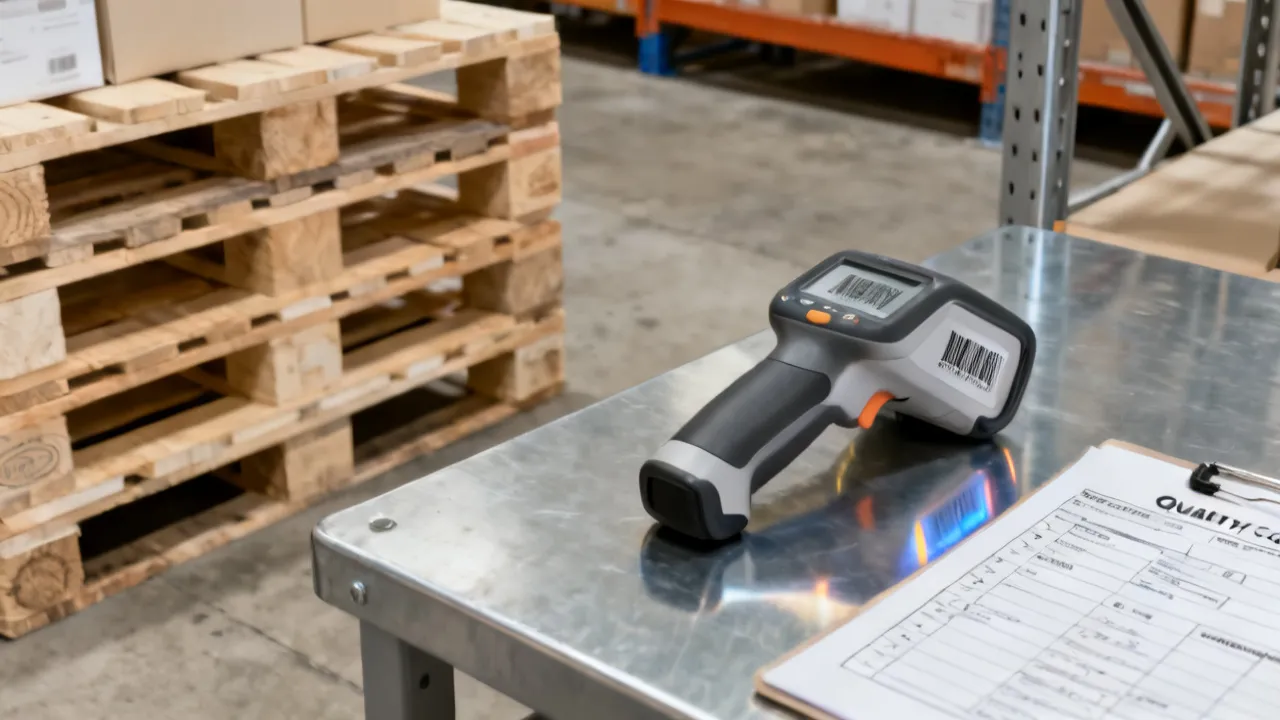
Understanding Identifier 39196734841 for Supplier Traceability
This guide explains how the identifier 39196734841 supports supplier traceability, quality checks, and documentation workflows. Objectively, identifiers like this are commonly used to reconcile inventory, audit manufacturing batches, and reduce errors in procurement. The article breaks down how to interpret the number in a compliance context, what stakeholders should verify, and which records matter very.
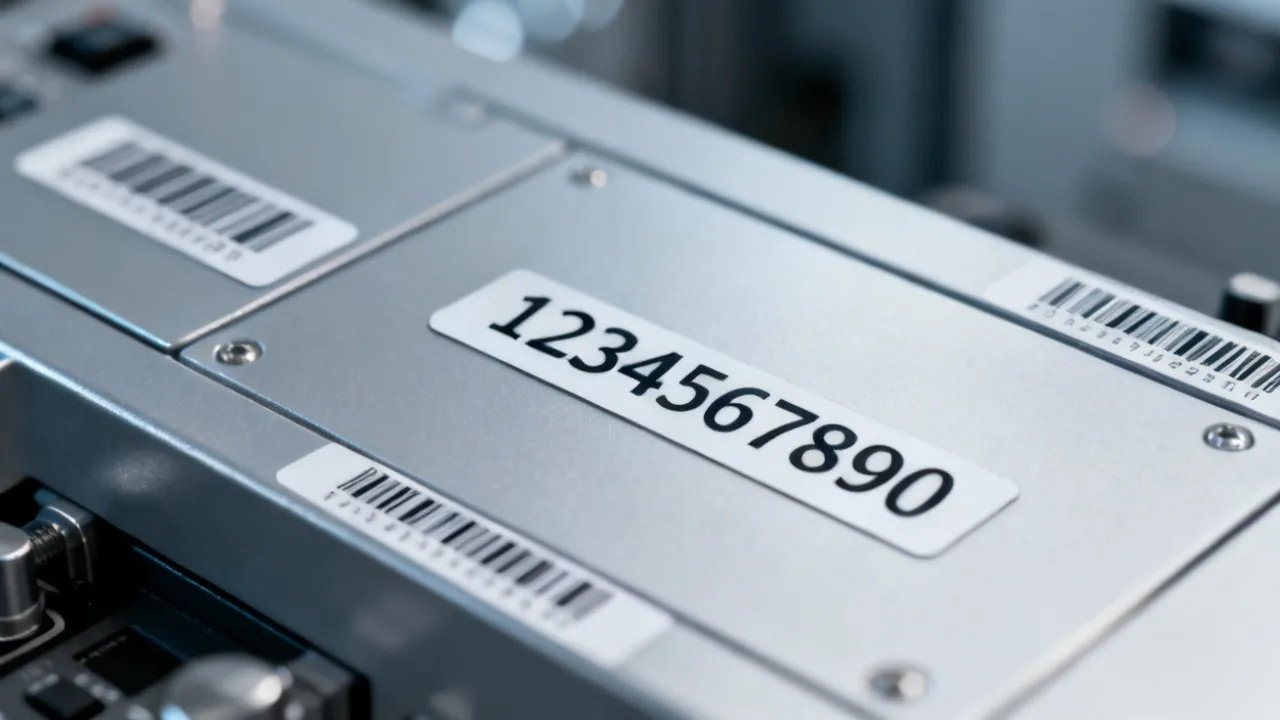
Why 39196734841 Matters for Traceability and Compliance
If you encounter the identifier 39196734841 in procurement or logistics documents, treat it as a traceability key—a practical bridge between orders, receiving records, and quality documentation. In many supply chains, a consistent identifier helps prevent mismatches between what was ordered, what was shipped, and what was actually received. For buyers and compliance teams, the value is straightforward: it improves auditability, supports root-cause investigations, and makes it easier to verify that the correct materials or components are connected to the correct batch or documentation set.
In parallel, the presence of additional keyword fragments such as '' '' '' and '' '' '''' ''' (as provided) suggests that this content may be used as part of a broader indexing or cataloging system. Even when those fragments do not form a readable product description on their own, they can still function as metadata—helping systems categorize documents, shipments, or records. The safest approach is to focus on the identifier as the anchor for verification, then use accompanying fields (supplier, batch, part number, invoice, and receiving timestamp) to confirm consistency.
It is also useful to recognize that traceability identifiers are often a “shared language” between separate organizations—buyers, suppliers, carriers, warehousing providers, and quality departments. When everyone uses the same shared language, the supply chain becomes easier to control and easier to explain to regulators and auditors. When identifiers are inconsistent, incomplete, or recorded at the wrong time, the chain of evidence becomes weak. In regulated or high-risk industries (pharmaceuticals, medical devices, food, aerospace, chemicals), weak evidence can become not only an operational inconvenience, but a compliance risk.
Even outside strict regulatory environments, internal governance—such as customer contract commitments, product stewardship requirements, or warranty and recall preparedness—often benefits from robust traceability. In that broader view, 39196734841 is not merely a string of digits; it is an operational control that can help reduce expensive mistakes like mis-shipment, wrong-lot inventory, duplicate billing, and delayed corrective actions.
Industry Expert View: How Traceability Identifiers Are Used in Practice
From an industry operations perspective, identifiers like 39196734841 typically appear in one or more of these contexts:
- Procurement reconciliation: linking a purchase order line to a shipment or goods-received record.
- Quality assurance workflows: connecting incoming materials to inspection results and acceptance criteria.
- Regulatory or internal audits: enabling evidence-based review of supply chain actions.
- Incident investigations: supporting faster containment when defects, labeling issues, or documentation gaps occur.
Crucially, traceability is not only about having a number—it’s about how consistently it’s captured across the lifecycle. For example, when a warehouse scans an identifier but the quality team logs a different reference, the number becomes less useful. That’s why professional teams focus on controlling the “handoff” between systems: order management, shipping, receiving, inventory control, and quality records.
In practice, that handoff control often includes a mixture of process design and data governance. Process design might include clear responsibilities (who scans, who verifies, who approves exceptions). Data governance might include naming conventions, field mapping standards, and validated rules for parsing identifiers out of documents or electronic messages.
Consider a common scenario: a supplier provides a packing list with one reference identifier, but the label affixed to cartons uses another identifier (or the same identifier but with formatting differences). A receiving operator may scan the carton label, log the scanned value, but the receiving system may require the reference to match what appears on the packing list or purchase order. Without a controlled mapping mechanism, the identifier becomes a source of friction rather than a traceability key. Experienced teams address this through onboarding checks and reconciliation controls that are built into the receiving workflow.
Another common scenario is the “system gap.” The supplier might send an electronic shipping notice (ASN) containing 39196734841, but the internal ERP receipt transaction might not store the identifier in the same field, or the quality management system might use a different field entirely. The identifier still has value, but only if the organization implements the right crosswalks—preferably automated—and ensures those crosswalks are version-controlled and reviewed during updates.
Where “Metadata” Fits: Interpreting the Provided Keyword Fragments
The keyword fragments in your input—represented as '' '' '' and '' '' '''' '''—do not read as standard product terms. In many databases, however, placeholder fragments or quoted segments may represent:
- taxonomies or category codes
- internal indexing tokens
- document tags used by search engines or content systems
- formatting artifacts from source imports
Objectively, the presence of these tokens indicates that your identifier may be embedded in a structured dataset. The practical takeaway: verify field meaning in your source system rather than guessing. A disciplined approach reduces the risk of misclassification, especially when multiple numbering schemes coexist (e.g., supplier part numbers vs. batch numbers vs. internal lot IDs).
It’s also worth noting that many tracing systems treat “metadata” differently than they treat “primary identifiers.” A metadata field might be used to help search, filter, or route work items, but it might not be relied upon as the final evidence of chain-of-custody. In that context, 39196734841 likely functions more like a primary or “key” field, while the quoted fragments may function as secondary fields that support indexing or categorization.
If you are implementing or auditing a traceability workflow, one of the best practices is to define a clear data model: which fields are required, which fields are optional, what each field is supposed to represent, and how systems should behave when fields are missing or inconsistent. For instance, if the quoted fragments are sometimes present and sometimes absent, your data model should specify whether that impacts acceptance or whether it is purely informational metadata.
When those fragments originate from a source import, another risk appears: ingestion artifacts can introduce extra spaces, empty strings, or truncated values. Those can cause matching failures in downstream systems even if the underlying business intent is correct. Therefore, the practical approach is to treat 39196734841 as the anchor and normalize surrounding fields through controlled parsing rules.
Supplier Details and Price Information: Why They Must Be Verified Together
You requested integration of “price information” and “supplier details,” but no explicit price or supplier entity was provided alongside the identifier in the prompt. In real-world traceability work, however, these elements are verified together because they jointly confirm whether documentation is coherent.
Here is the objective logic used by experienced procurement and quality teams:
- Price helps detect mismatched commercial terms (e.g., wrong SKU, wrong condition, or wrong contract line).
- Supplier identity confirms chain-of-custody and accountability.
- Identifier 39196734841 helps confirm that the transaction refers to the correct physical and documentation batch.
Even when price is “just financial,” it can reveal problems: for instance, an invoice that references a different reference number or an unexpected unit price may indicate that items were swapped during picking, consolidated shipment handled incorrectly, or a wrong line was processed. Because such outcomes affect audit readiness, teams treat pricing references as part of traceability evidence.
From a compliance standpoint, the concept is that “traceability” is not confined to technical inspection results. Traceability in procurement-to-receiving workflows also includes contractual and documentary integrity. If the invoice is inconsistent with the receiving record, it suggests either a documentation gap or a processing error. Both can undermine confidence in the chain-of-custody.
Let’s expand the reasoning into concrete examples:
- Wrong line processing: A receiver logs 39196734841 for one purchase order line, but the invoice is posted to another line with a different SKU or material description. The mismatch indicates a possible mis-reconciliation between physical receipt and financial settlement.
- Supplier substitution: The goods were purchased from Supplier A, but the invoice shows Supplier B or a different supplier code. If 39196734841 is tied to Supplier A’s batch documentation, this discrepancy can be a red flag.
- Unit-of-measure issues: If the invoice uses a different unit of measure (e.g., pricing per case vs. pricing per piece), quantity calculations may appear inconsistent. In turn, receiving might still show the correct identifier but the actual count or packaging could be wrong.
- Contract conditions: Certain contracts specify handling conditions, certifications, or included documentation. If the price reflects a different contract or different conditions, the traceability evidence may be incomplete.
Because of these risks, teams often build reconciliation steps that bring together multiple evidence sources: the PO (commercial commitment), the ASN (shipment intent), the packing slip (shipping reality), the receiving record (physical acceptance moment), the quality acceptance record (technical acceptance), and the invoice (financial settlement). 39196734841 becomes the linkage thread across those sources.
Operational Conditions: When 39196734841 Should Be Checked
To use 39196734841 effectively, it should be checked at key workflow moments. The critical condition is consistency: the same identifier should appear across documents or be linked through an approved mapping process.
- Before ordering: confirm which identifier system your supplier uses and whether 39196734841 is expected on PO lines, packing lists, or certificates.
- At shipment readiness: confirm the identifier is applied to the correct packaging level (item-level vs. case-level vs. pallet-level).
- At receiving: scan or log 39196734841 against the receiving record, then ensure the quality team receives the same reference.
- Before releasing inventory: validate inspection results and approval records are associated with the identifier.
- During audits or reviews: demonstrate linkage between procurement, logistics, and quality evidence.
In many operational environments, checks at the wrong time can create “false confidence.” For example, if a team verifies 39196734841 only at the time the purchase order is created, that does not ensure the goods received were actually tied to that identifier. Likewise, verifying only at receiving may not ensure that the invoice or quality acceptance records correspond to the same reference. Therefore, a well-designed process treats the identifier as a thread across time, not as a one-time check.
Another practical consideration is packaging granularity. Many identifiers are printed at the pallet level but need to be traceable down to case or even item level for quality or regulatory needs. If 39196734841 is printed only on cartons, but your acceptance criteria require item-level traceability, your process may need an internal lot/batch mapping strategy or repackaging scheme. That strategy must be controlled and documented. Otherwise, the identifier helps only partially, and you may still fail to demonstrate full traceability.
For compliance, the “moment of record” matters. If your receiving record captures 39196734841 after the fact (for example, entered later based on a manual note), auditors may question whether the record accurately reflects what happened at the time of receiving. Many regulated environments prefer scan-based capture or timestamped capture with limited manual entry. Where manual entry is necessary, a controlled exception process helps preserve data integrity.
Decision Guidance: How to Validate Traceability Links Without Overclaiming
It’s common for organizations to assume that “the identifier exists, so traceability is guaranteed.” Professional practice is more careful. The existence of 39196734841 should trigger verification, not blind confidence. A reliable validation method checks:
- Completeness: all required records reference the identifier (or a formally approved cross-reference).
- Uniqueness: whether the identifier corresponds to a single batch/order context or can repeat across systems.
- Timeliness: whether the identifier is recorded at the correct step (e.g., receiving rather than post hoc).
- Consistency of formatting: leading zeros, spacing, truncation, or OCR errors.
This is also where internal controls matter. Many organizations adopt document control policies, scanning rules, and exception-handling steps to manage discrepancies. These controls are not glamorous, but they are what keep traceability useful when something goes wrong.
To avoid overclaiming, it helps to distinguish between three levels of confidence:
- Identifier presence: the number appears in a record, but linkages across records may be incomplete.
- Linkage integrity: the identifier is present and connected across the required steps (PO → shipment/ASN → receiving → quality acceptance).
- Evidence adequacy: the linkage is complete, timestamped appropriately, and supported by quality and compliance records that satisfy internal and regulatory evidence expectations.
Professional teams typically aim for the third level, but they often start by validating the first and second. If they cannot reach the third due to missing documents or unresolved mapping differences, they do not conclude that traceability is “good”—they treat the situation as an open exception that requires controlled remediation.
There is also a subtle risk in uniqueness. Some systems create identifiers that are unique only within a supplier’s context or unique only within a time window. If an internal database assumes global uniqueness but the identifier repeats across batches, traceability could become misleading. Validation should therefore include a rule for uniqueness scope: is 39196734841 intended to be globally unique, or only unique within a supplier, facility, or document type?
Formatting consistency is another common failure mode. A numeric identifier might be printed without leading zeros on one document and with leading zeros on another. Or the identifier might be captured via OCR, where a digit is misread (e.g., “1” mistaken for “7”). Automated normalization can help, but it must be controlled and validated—otherwise you risk “correcting” identifiers to the wrong value.
Localization and “Nearby” Requirements
Your prompt includes guidance to replace any appearance of {city} or {country} in keywords with the term “nearby.” In the provided keywords, there are no explicit city or country placeholders to replace. If you later provide location-specific keywords, the article will adapt the terminology accordingly, using “nearby” rather than naming a specific city/country.
From an implementation perspective, this guidance indicates that your content pipeline or indexing system might substitute location variables at render time. That means the traceability guidance might be used in a content system that dynamically constructs keyword sets based on location. In such pipelines, it becomes even more important that your traceability anchor—39196734841—is not accidentally altered by templating rules. Templates that do substitutions for location placeholders can also introduce formatting changes if not carefully engineered. Ensuring that the identifier remains untouched by templating prevents unintended mismatches in downstream search or cataloging.
Supplemental Comparison Table, Source Notes, and Practical Steps
Below is a supplement section designed to support decision-making around identifiers like 39196734841. Per your request, the table does not include links.
| Approach | What to Verify | Recommended Conditions/Requirements | Typical Outcome if Correct |
|---|---|---|---|
| Document linkage check | That 39196734841 appears consistently across PO, packing list, receiving record, and quality acceptance documents. | Use controlled reference fields; prevent manual re-entry where possible; require audit trail for any corrections. | Fast reconciliation and clear audit evidence. |
| Packaging-level validation | Whether the identifier is item-level, case-level, or pallet-level, and that receiving uses the same packaging granularity. | Define scanning rules per packaging type; confirm supplier labeling standards during onboarding. | Reduced mis-receiving and fewer “identifier mismatch” holds. |
| Exception handling review | How discrepancies are handled when 39196734841 is missing, unreadable, or differs from expected references. | Require documented root-cause steps; establish quarantine/release criteria; train receiving and quality staff. | Controlled risk and consistent corrective actions. |
| Inventory and ERP alignment | That the identifier maps correctly to inventory records and downstream systems (e.g., inspections, batch records). | Use approved crosswalks; validate data mappings during system updates and integrations. | Stable reporting and fewer downstream documentation errors. |
To make the table actionable, teams often add a “minimum viable evidence” checklist. That checklist typically includes the identifier linkage across a minimal set of documents and records. If any element is missing, the item does not enter inventory release (or is released only under a controlled risk model). For example, in a regulated scenario you might require that quality acceptance evidence includes inspection results, acceptance criteria, and explicit linkage to the identifier. In an unregulated scenario you might require less detail but still require a receiving timestamp and a consistent reference.
Additionally, operational teams frequently implement “discrepancy thresholds” that determine what severity level a mismatch creates. For example:
- Low severity: formatting differences that can be normalized (e.g., whitespace) without changing the numeric value.
- Medium severity: identifier present but does not match expected reference—requires investigation and correction through controlled procedure.
- High severity: identifier missing from quality acceptance record or receiving record—requires quarantine, escalation, and possibly supplier confirmation.
This severity model prevents all mismatches from being treated the same way. It also ensures that the most critical evidence gaps are addressed first, reducing the risk of shipping or releasing materials that are not fully traceable.
Sources (for General Traceability Practices)
For objective background on traceability concepts and quality management approaches, professionals commonly reference international standards and regulatory frameworks. Examples include:
- ISO 9001 (quality management systems) for structured processes, documentation control, and corrective actions.
- ISO 22005 (traceability in the feed and food chain) for traceability principles and recordkeeping concepts.
- GxP-aligned expectations (where applicable in regulated industries) for robust documentation and audit trails, typically reflected in guidance from recognized regulators.
Because traceability requirements vary by industry and jurisdiction, your internal policy and applicable regulations should determine the final checklist—not the presence of a number alone.
In day-to-day execution, standards like these typically translate into practices such as documented procedures for receiving and acceptance, training requirements for staff who handle traceability-critical operations, internal audit programs that check data integrity, and corrective action processes that respond to root causes when evidence is incomplete. The identifier 39196734841 becomes the point where those practices meet concrete data.
Step-by-Step Guide: Using 39196734841 in a Traceability Workflow
Step 1: Identify where 39196734841 should appear
Determine whether 39196734841 is expected on the PO line, packing slip, label, certificate, or electronic shipping notification. This prevents a common failure mode: teams search for the identifier in the wrong document category.
In implementation terms, you should list the expected “source of truth” for 39196734841. Sometimes the supplier’s label is the source of truth; sometimes the ASN is the source of truth; sometimes the PO is the source of truth. The best practice is to decide that in advance and write it into receiving instructions. If the receiving process is designed to treat the label as the truth but the quality record is designed to treat the ASN as truth, then mismatches become inevitable. Those mismatches are solvable, but only if the discrepancy path is clear and controlled.
Step 2: Confirm the identifier format rules
Check whether the identifier is numeric-only, whether leading zeros may be relevant, and whether scanning/OCR can introduce truncation. If your system supports both “human-readable” and “machine-readable” formats, validate that they map correctly.
A practical way to validate formats is to sample a set of documents and compare what appears in each place. For example, if 39196734841 appears in a label and in an ASN, verify that the ASN contains exactly the same numeric sequence and not a truncated or prefixed variant. Also verify that the identifier is stored in the correct datatype in your system. Storing a numeric identifier as an integer can strip leading zeros; storing as text preserves formatting.
If OCR is involved (e.g., extracting the identifier from a certificate PDF), test the OCR quality and confirm that misread characters are handled. Many teams use automated validation rules like checksum validation (if available) or pattern validation (length, allowed characters). If those are not available for your identifier, then strict length validation becomes a valuable substitute: if 39196734841 is always 11 digits, then any captured value with a different length should trigger an exception before it contaminates records.
Step 3: Validate supplier identity and contract alignment
Before treating the traceability record as complete, verify that the supplier information corresponds to the purchasing document. If supplier identity differs from the invoice/PO records, the identifier may be associated with a different fulfillment context.
Supplier validation often includes multiple checks:
- Supplier name and supplier code match the PO.
- The document type aligns (e.g., certificate provided by the supplier expected for that PO line).
- Ship-to and sold-to information match if relevant to your contractual model.
- The expected documentation set is complete (certificates, statements of conformity, inspection reports).
When the supplier is wrong, 39196734841 can become a deceptive anchor—because a number can match while the evidence context is wrong. That is why teams do not rely on the identifier alone. They rely on the identifier plus supplier evidence.
Step 4: Reconcile commercial and logistic references
Even without explicit price details in your prompt, reconciliation still matters. Confirm that invoice references, quantity received, and shipping references align with the traceability record. Price and quantity mismatches often correlate with wrong-line shipments or documentation errors.
This step often includes:
- Matching the PO line to the receiving transaction.
- Matching the shipment reference or carrier tracking record to the receipt record (where your organization uses those fields).
- Matching invoice line items to the receiving quantities and the identifier linkage.
While 39196734841 anchors technical traceability, commercial reconciliation ensures that financial settlement aligns with the physical facts. For example, if a supplier invoice indicates fewer items than were received, that can indicate return shipments, partial deliveries, or documentation errors. When investigation is required, the traceability identifier is the fastest way to isolate which specific batch or documentation set is involved.
Step 5: Perform quality association checks
If the identifier is meant to link to inspection or acceptance criteria, ensure the quality team logs the same reference in the quality management system. If there is a cross-reference mechanism, confirm it is controlled and auditable.
Quality association checks commonly include:
- Inspection lot creation uses the same identifier as the receiving record.
- Acceptance criteria are applied to the correct lot or batch.
- Any deviations, nonconformities, or waivers reference the identifier and the receiving record.
- Final disposition (approved/rejected/quarantined) is recorded with a traceable link.
This is critical because “traceability” without quality linkage is often incomplete. A system might store 39196734841 but fail to store which inspection test results were performed for that identifier. In that case, you may not be able to defend quality decisions during an audit.
Step 6: Conduct an evidence-ready review
For internal audits, assemble a minimal evidence set: order reference, receiving record, quality acceptance record, and the identifier linkage. The goal is to make the chain of custody and review straightforward for auditors.
An evidence-ready review is essentially a test of your ability to answer questions quickly:
- What was ordered (PO line, SKU, quantity)?
- What was shipped (ASN/packing list, shipment date)?
- What was received (receiving date, warehouse location, quantity received)?
- What was accepted (inspection results, acceptance criteria, release status)?
- How does 39196734841 connect these elements?
If you cannot answer these questions quickly and consistently, the problem might not be the identifier. The problem could be workflow fragmentation: data stored in multiple systems without reliable crosswalks. Therefore, the evidence-ready review is not only an audit activity; it is also an operational diagnostic tool.
Step 7: Define what to do when the identifier fails
Create a controlled procedure for exceptions: missing labels, unreadable scans, or mismatched references. “Hold and investigate” is typically safer than completing receiving without evidence. The exact thresholds depend on your industry controls.
Exception procedures should be written and trained. At minimum, they should specify:
- Who can authorize receipt in an exception state.
- What evidence is required to proceed (e.g., supplier confirmation, alternate document set, manual verification).
- How you correct records when mismatches are found.
- How you prevent recurrence (root-cause analysis and corrective/preventive action).
- How long items remain quarantined and how release decisions are documented.
When 39196734841 is unreadable or missing, teams should treat the situation as a traceability gap until resolved. The identifier is a key; when the key is missing, you do not yet know whether the door is truly closed or simply locked incorrectly.
FAQs
Q1: What is 39196734841 in practical terms?
In practical terms, 39196734841 is top treated as a traceability identifier used to connect procurement, receiving, and quality records. Its exact meaning (batch, lot, document reference, or packaging label ID) depends on how your supplier and systems define it.
To determine meaning precisely, you typically trace the identifier to its first origin: where it is created, where it first appears, and how it is referenced in source documents. For example, if the identifier appears on the certificate of analysis (CoA) and is used in the ASN, it may function as a batch identifier. If it appears only on carton labels, it may function as a packaging label ID. If it appears in procurement documentation only, it may be a contract or document reference rather than a technical batch identifier.
Q2: Can 39196734841 guarantee quality by itself?
No. Quality assurance relies on documented processes, inspection criteria, and approval records. The identifier supports traceability, but it must be linked to the correct quality evidence.
In other words, the identifier is a connector, not the content. Quality assurance evidence is the content—test results, calibration status (where applicable), acceptance criteria, and final disposition. Without that content, a traceability key only tells you where the investigation should look, not what the quality outcome actually was.
Q3: What if 39196734841 appears in some documents but not others?
That is a traceability discrepancy. Professional teams typically quarantine the affected items (per internal policy), investigate the missing linkage, and either correct the record using controlled procedures or confirm whether a cross-reference mapping is required.
It helps to distinguish two scenarios:
- Legitimate variance: a controlled mapping exists (e.g., supplier uses one reference for shipping and another for quality). If mapping is approved, the discrepancy is resolvable without treating items as unknown.
- Uncontrolled variance: there is no approved mapping, or the mismatch suggests swapping, incomplete documentation, or mis-scanning. In that case, it is safer to treat the linkage as unreliable until corrected.
Because 39196734841 may be embedded in structured datasets with metadata tokens, you may also encounter scenarios where the identifier is present but not indexed correctly. That’s why validation should include both “presence in the document” and “presence in the correct field in the system.”
Q4: How should suppliers and buyers align on the identifier?
Alignment is achieved by defining where the identifier appears (label level, document type, electronic messages) and confirming scanning/recording rules. Onboarding sessions and written labeling/specifications are common methods to reduce misalignment.
In supplier onboarding, buyers often provide a “label and documentation specification” that describes:
- Where the identifier is printed (carton label, pallet label, master carton, shipping document).
- Required character set, length, and formatting rules.
- Whether leading zeros must be preserved.
- How the identifier appears in electronic messages (ASNs) and which field receives it.
- How changes are communicated (e.g., when suppliers shift from one lot format to another).
When those specifications exist and are followed, receiving exceptions decrease sharply. When they are missing, organizations tend to rely on manual reconciliation, which increases error likelihood and increases audit burden.
Q5: Does price information affect traceability identifiers?
Price information usually does not validate technical traceability on its own, but it can reveal mismatches in order lines, quantities, or contract terms. When discrepancies occur, price-related inconsistencies can be a signal that references (including 39196734841) may not correspond to the correct shipment context.
To expand: price inconsistencies can be a proxy indicator of deeper documentation problems. If the invoice references a different quantity than the receiving record, you may have partial shipments, returns, or mis-postings. If the unit price differs from the contract, you may have contract misapplication or unauthorized substitutions. In each case, the traceability identifier helps isolate the impacted batch/document set, allowing targeted investigation rather than broad guesswork.
Q6: How long should traceability records be retained?
Retention periods depend on industry regulation, company policy, and contract requirements. For regulated contexts, retention often aligns with audit windows and compliance expectations. Consult your internal compliance team and applicable standards.
Retention is not only about storage. Retention also depends on accessibility. Auditors need to be able to retrieve evidence quickly. Therefore, even if your system stores data for the required time, you also need retrieval mechanisms (searchability, indexing, and controlled export procedures) so that 39196734841 can be used to assemble evidence during audits.
Conclusion: Treat 39196734841 as a Traceability Anchor
For buyers, warehouse teams, and quality stakeholders, 39196734841 should be approached as a traceability anchor—a reference that enables consistent linkage across the procurement-to-quality workflow. When verified properly, it strengthens audit readiness, supports controlled investigations, and reduces the operational friction caused by documentation mismatches. When not verified, it risks becoming “just another number.” The professional standard is therefore clear: validate the identifier’s role, confirm consistent evidence linkage, and ensure exception handling is governed by documented requirements.
Ultimately, traceability is a system property, not a single field property. The identifier 39196734841 is a powerful starting point, but the organization’s discipline—how it captures data, how it links records, how it handles exceptions, and how it presents evidence—determines whether the traceability program is truly compliant and operationally reliable.
If you want to further operationalize this, the most practical next step is to map exactly where 39196734841 originates and where it must appear. Then define the acceptance criteria for linkage completeness and the exception workflow when linkage is incomplete. Done well, 39196734841 becomes more than an identifier; it becomes a dependable bridge between documents, systems, and accountable actions throughout the supply chain.
-

A Guide to Cost-Efficient Small Electric Cars for Seniors
-
Mastering Debt Consolidation: Boost Your Credit Score and Manage Interest Rates
-
Your Guide to Loans, Credit Checks, and Interest Rates
-
Affordable Independent Living: Finding the Right Senior Housing
-
Guide to Senior Living Apartments: Affordable and Comfortable Environments